

A new documentary featuring guitarist James “Munky” Shaffer pulls back the curtain on the raw, chaotic, and “primitive” recording sessions that gave birth to Nu-Metal.
For over three decades, Korn has been synonymous with a specific kind of sonic dread—a down-tuned, gritty, and atmospheric wall of sound that defined a generation. But as a new full-length documentary, How Korn Found Their Sound, reveals, that legendary tone wasn’t crafted with high-end gear and polished production. Instead, it was born out of broken equipment, a “psychotic” producer, and a lot of uncomfortable trust.
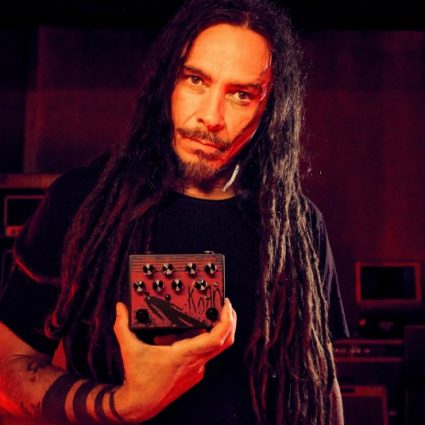
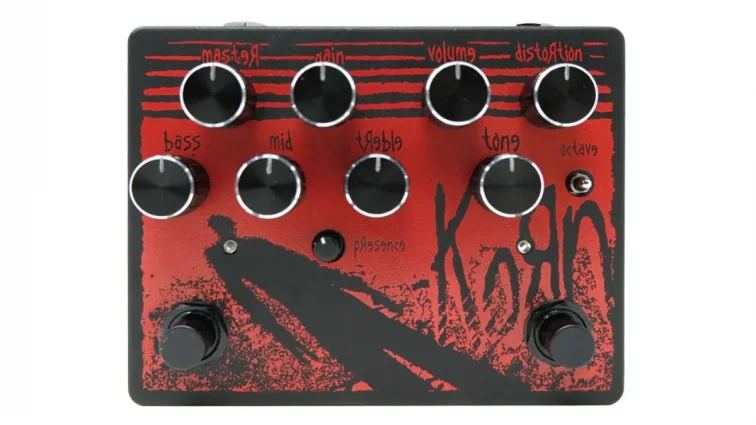
Filmed in Los Angeles at Dave’s Room for Distortion Inc and Sam Grant Productions, the documentary features an in-depth conversation with Korn founding guitarist James “Munky” Shaffer. Here are the biggest takeaways from the film about the evolution of the Korn sound. This full documentary follows the shorter film used to promote the Indigo Sludge Preamp + Fuzz release last year.
1. The “Psychotic” Guidance of Ross Robinson
Munky reflects on the band’s early days at Indigo Ranch with producer Ross Robinson, describing him as a “madman” who would run around the room conducting the band in a “psychotic way” to capture raw energy.
While the band, then in their early 20s, wanted to use their first record deal to buy shiny new equipment, Robinson forced them in the opposite direction.
“I want new shit! Why do you want all this old shit?” Munky recalls asking Robinson, who insisted on “crusty” vintage Marshalls and beat-up cabinets, to capture the “aura and emotion” of the performance rather than a polished, sterile studio sound.
2. Embracing the “Dirty” and “Mid-Range.”
One of the most surprising revelations is how much the band initially disliked their now-iconic tone. “It sounds so dirty,” the band complained during the first sessions.
Robinson pushed them to embrace a mid-range-heavy, “bity” sound that Munky says took time to get used to. Because they were tuning so low, the mid-range was essential to keep the notes from becoming a muddy mess. That “crusty underneath grit” became the foundation the band has used on every album since.
3. Why Korn Still Rejects the “Click Track.”
In an era where most modern metal is snapped to a digital grid, Korn remains stubbornly analog. Munky explains that the band still plays live without a click track (with a few exceptions for atmospheric samples).
“I always love it because it feels like the train’s going to come off the tracks at any moment,” Munky says of their live shows [[11:42]]. This human element—mistakes and all—is what gives Korn its signature intensity.
4. “DJing” with Guitar Pedals
While many guitarists now use MIDI-programmed racks to switch effects automatically, Munky refuses to give up his floorboard. He describes himself as “old school,” preferring to “DJ” with his tones by tweaking delay times and phasers by hand mid-song.
“Jonathan calls it DJing,” he laughs, noting that he often uses over 35 different pedals across a single album to create the “f***ed up noises” that fans expect.
5. The “Left Arm” of Korn: The Head Hiatus
The documentary also touches on the challenging period when co-guitarist Brian “Head” Welch left the band. Munky describes the experience as “walking around without your left arm”.
During this time, he had to evolve as a musician, leaning on Jonathan Davis’s ears and various producers to fill the massive sonic space Head left behind.
Watch the Full Documentary
Whether you’re a gearhead looking for technical details on ’90s Marshalls or a fan of Nu-Metal history, How Korn Found Their Sound is an essential watch.

More Information
#Korn #Documentary
This article may contain affiliate links to Andertons, DeathCloud, Donner, Fender, Gear4Music, Positive Grid, Sweetwater, and Thomann that help finance the running costs of GuitarBomb. We will receive a small commission if you buy something through these links. Don’t worry; you pay the same price, and it costs you no extra to use these affiliate links for your purchases.


