

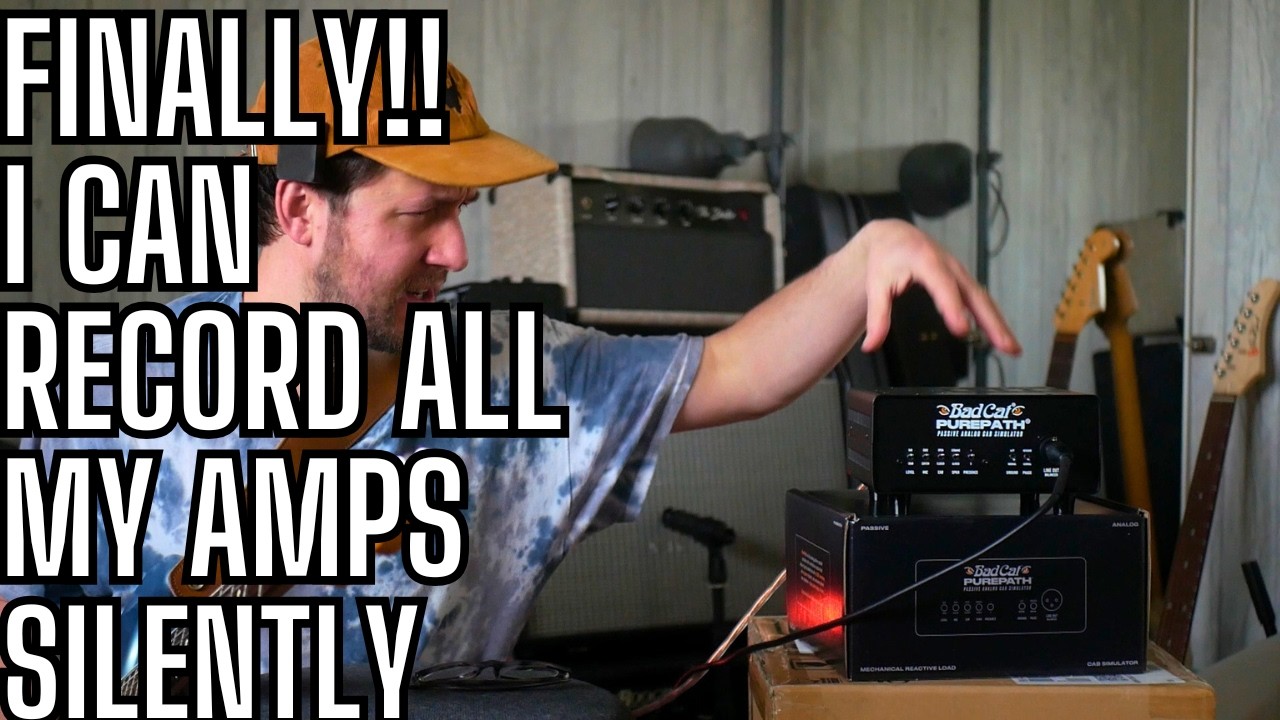
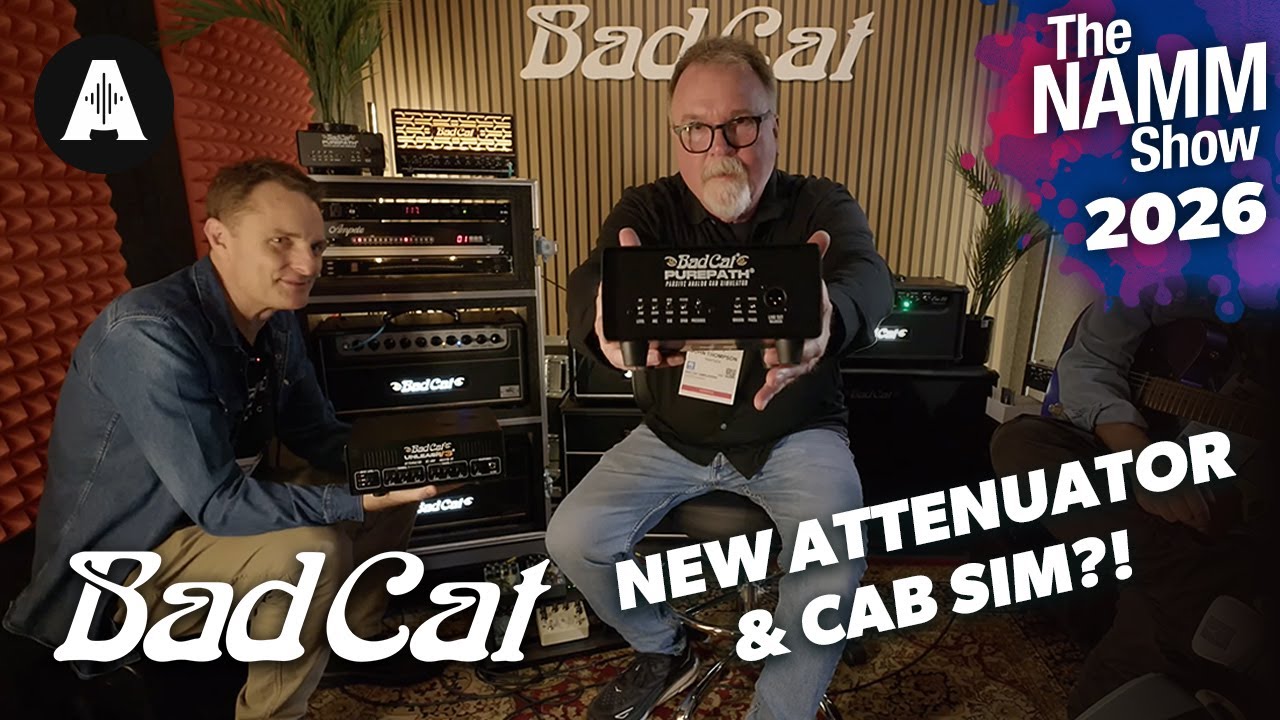
The digital era just met its match. While the industry has spent a decade chasing the perfect Impulse Response (IR), Bad Cat has pivoted back to physics. The Bad Cat Purepath Passive Analog Cab Simulator—fresh off its “Best in Show” win at NAMM 2026—is a bold statement that the best way to simulate a speaker is to actually behave like one.
Designed by the legendary Bruce Egnater, the Purepath isn’t a digital processor; it’s a mechanical reactive load. It captures the complex impedance curves and physical “push-back” of a real speaker cabinet without a single line of code or a power cable in sight.
The Death of Digital Latency
For years, guitarists have settled for the “good enough” feel of DSP. The Purepath eliminates the digital middleman. Because it is 100% analogue, there is zero latency. The interaction between your tube amp’s output transformer and the Purepath is instantaneous, preserving the “sag” and touch-sensitivity that usually disappears the moment you plug into an interface.

Key Features at a Glance
-
Mechanical Reactive Load: Physically mimics the movement of a real speaker cone.
-
Bruce Egnater Design: Engineered by one of the greatest minds in tube amp history.
-
Passive Operation: No power supply required—ever.
-
Tone Shaping: 5 mini toggles offering 10 distinct analog voicing options.
-
Dual Mode: Use it as a silent standalone load or as a DI through an extension cab.


Specifications
| Feature | Details |
| Technology | Fully Analog / Passive |
| Load Type | Mechanical Reactive |
| Control | 10 Voicing Options (via 5 toggles) |
| Build | All-metal chassis, Made in USA |
| Dimensions | 178 x 190 x 102 mm |
| Weight | 2.72 kg |
| Price | £449.00 |
FAQ: Everything You Need to Know
Does it require a power supply?
No. The Purepath is entirely passive. It runs off the power coming from your amplifier’s speaker output.
Can I use this with my 100W head?
Yes. It is designed to handle high-voltage tube amp outputs, acting as a safe reactive load for silent recording.
Are there IRs (Impulse Responses) inside?
Strictly no. The cabinet simulation is achieved through analog filtering and mechanical components, meaning you never have to browse menus or update firmware.
Can I still use my physical cabinet?
Absolutely. The Purepath features an “internal load” or “speaker out” option, allowing you to use it as a DI box while still pushing air on stage.
The Verdict
The Pros:
The feel is undeniable. If you’ve ever felt “disconnected” from your guitar while using a plugin or a digital load box, the Purepath is the cure. The lack of a power requirement makes it a dream for tidy studio setups and fly-dates alike.
The Cons:
At £449, it’s a premium investment. Players who rely on having 500 different “virtual” microphones and rooms might find the 10 analog voicings limiting—though most will find those 10 voices sound more “organic” than any library of files.
Final Thought:
The Bad Cat Purepath is a masterpiece of “less is more.” It honors the heritage of tube amplification while solving the modern problem of silent stages. It’s not just a tool; it’s a tactile extension of your amplifier.
Where To Buy
Available now at Andertons – £449
Available to order at Thomann – €499
More Information
#Bad Cat Amplifiers #Purepath
This article may contain affiliate links to Andertons, DeathCloud, Donner, Fender, Gear4Music, Positive Grid, Stew Mac, Sweetwater, and Thomann that help finance the running costs of GuitarBomb. We will receive a small commission if you buy something through these links. Don’t worry; you pay the same price, and it costs you no extra to use these affiliate links for your purchases.


