

We are taught the “rules” of the pedalboard early on: guitar goes into the tuner, then into the drive, then into modulation, then into delay, then into the amp. But the most iconic sounds in guitar history were often born when someone broke those rules.
From David Gilmour plugging his pedals in backwards to Kevin Shields destroying his preamp with reverb, the “wrong” settings often produce the right sounds.
Below are 7 “Super Secret Settings”—hacks, signal chain swaps, and knob abuses—that turn standard stompboxes into completely new instruments.
1. The “Seagull” Effect (Reverse Wah)
Famous User: David Gilmour (Pink Floyd – Echoes)
This is perhaps the most famous “secret” trick in rock history. During the breakdown of Echoes, Gilmour created a high-pitched, wailing seagull sound. He didn’t use a synthesizer; he used a standard Wah pedal plugged in backwards.

How to Do It:
-
Disconnect everything. This works best if the Wah is the only thing connected, or at least first in the chain.
-
Reverse the inputs. Plug your guitar cable into the OUTPUT jack of the Wah.
-
Connect to Amp. Plug a cable from the INPUT jack of the Wah to your amp.
-
Engage the pedal. Turn the Wah on (toe down to click the switch).
-
The Secret Sauce: Use your guitar’s Tone Knob. The pedal will create a high-pitched squeal, but adjusting your guitar’s tone control will change the pitch of the scream, allowing you to “play” the seagull cries.
Note: This works best with vintage-style Wah circuits (like a Vox V847 or Cry Baby without a buffer).
2. The “Shoegaze Wall” (Reverse Reverb Before Dirt)
Famous User: Kevin Shields (My Bloody Valentine), Neil Halstead (Slowdive)
Traditional logic says Reverb goes last so it stays clean. Shoegaze guitarists flip this logic. By placing a reverb before a heavy fuzz or distortion pedal, you distort the reverb tail itself.
This compresses the wash of sound, creating a massive, wall-of-sound texture where you can’t hear the pick attack.

The Settings:
-
Signal Chain: Guitar – Reverb – Fuzz/Distortion – Amp.
-
Reverb Setting: Select Reverse Reverb or Gated Reverb. Set the Mix/Wetness to 100% (or as high as it goes).
-
Drive Setting: High gain. A Big Muff or Rat-style distortion works best.
Why it works: The distortion pedal compresses the dynamic range of the reverb, pulling up the quiet “trails” of the reverb to the same volume as your dry signal, creating a sustaining, synthesizer-like pad.
3. The “Spaceship Launch” (Self-Oscillation)
Famous User: Radiohead, The Mars Volta
Analog delay pedals (and digital ones that emulate analog circuits) have a quirk: if you feed the output back into the input loud enough, it creates a feedback loop that gets louder and louder.
You can use this to create sci-fi risers and chaotic noise climaxes.

The Settings:
-
Pedal Type: Analog Delay (e.g., MXR Carbon Copy, Boss DM-2), Digital Boss DD-8, or Tape Echo.
-
Feedback (Regen): Turn this knob to 100% (Max).
-
Wait for the Loop: Play a note. As the repeats get louder and start to distort, stop playing. The pedal is now “singing” on its own.
-
The Trick: While it oscillates, slowly turn the Time/Rate knob.
-
Turning it Left (Faster) makes the pitch go Up (Takeoff).
-
Turning it Right (Slower) makes the pitch go Down (Landing).
-
Warning: This can get extremely loud. Keep your hand near the amp volume or a killswitch!
4. The “Velcro” Fuzz (Voltage Starve)
Famous User: Jack White, Wilco, Billy Gibbons
Expensive “boutique” fuzz pedals often feature a “Bias” or “Gate” knob to create a sputtering, broken-speaker sound (often called “Velcro Fuzz”).
You don’t need a boutique pedal to get this; you just need to starve your pedal of power.

How to Do It:
-
The Tool: Use a power supply with a “Sag” output (like Voodoo Lab Pedal Power 2) or use a nearly-dead 9V battery.
-
Target Pedal: Simple analog Fuzz faces, Tone Benders, or Overdrives. (Do not try this on digital pedals; they will just turn off).
-
The Result: As the voltage drops below 9V (down to 6V or 4V), the transistors struggle to stay open. The note will sustain for a moment and then abruptly cut to silence, creating a glitchy, gated, synthetic fuzz tone.
5. The “Metallic Filter” (Flanger Manual Mode)
Famous User: Tom Morello, Adam Jones (Tool)
Most people use Flangers for the “jet plane” swooshing sound. But if you freeze the swoosh, you get a unique metallic filter that sounds like a distinct, hollow cocked-wah.

The Settings:
-
Rate / Speed: Turn this to 0 (Minimum).
-
Depth / Width: Turn this to 0 (Minimum).
-
Manual / Delay Time: This is the secret knob. Slowly sweep this knob while playing.
-
The Sound: You will hear a “comb filter” effect. Find a specific spot that produces a nasal, metallic resonance, and leave it there. It creates a cutting, industrial rhythm tone that stands out in a mix better than a standard EQ.
6. The “Poor Man’s Synth” (Octave + Fuzz + Chorus)
Famous User: St. Vincent, Muse
You don’t need a dedicated guitar synthesizer pedal to sound like a synth. You just need to remove the “guitar” characteristics (attack and decay) from your signal.

The Signal Chain:
-
Compressor: Max sustain, fast attack. (Squashes the dynamics).
-
Octave Pedal: Set to -1 Octave or +1 Octave (100% wet, no dry signal if possible).
-
Fuzz: High gain, gated if possible. (Creates the square wave synth texture).
-
Chorus/Vibrato: High depth. (Adds the “oscillator drift” of an old analog synth).
Why it works: The octave pedal disguises the guitar’s natural pitch, the fuzz turns the sine wave into a square wave, and the chorus mimics the tuning instability of vintage Moog or ARP synthesizers.
7. The “Helicopter” (Square Wave Tremolo)
Famous User: Tom Morello (Guerrilla Radio), Green Day (Boulevard of Broken Dreams)
Standard tremolo creates a gentle volume swell (sine wave). “Secret” tremolo settings turn your guitar into a rhythmic chopper.

The Settings:
-
Wave Shape: Set to Square (hard chop) rather than Sine or Triangle.
-
Depth: Turn to 100% (Max). This ensures the volume goes to absolute zero silence between pulses.
-
Rate: Sync this to the tempo of the song (e.g., 8th notes or 16th notes).
-
The Hack: If you strike a power chord and let it ring, the pedal will chop it into a machine-gun rhythm. Pair this with a fuzz pedal for an industrial, aggressive texture.
Summary Checklist for “Secret Settings”
| Effect | The Trick | Key Setting | Sound Result |
| Wah | Reverse Inputs | Guitar into Output | High-pitched Seagull scream |
| Reverb | Place Before Dirt | 100% Wet / Reverse | Shoegaze “Wall of Sound” |
| Delay | Self-Oscillation | Feedback at Max | Sci-fi Spaceship Rises |
| Fuzz | Voltage Starve | Low Battery / Sag | Gated “Velcro” Fuzz |
| Flanger | Manual Mode | Rate at 0 | Static Metallic Filter |
| Tremolo | Killswitch | Square Wave / Max Depth | Helicopter Chop |
Power Starving How-To Guide
Power-starving pedals (often called “Voltage Sag”) is a great way to find that elusive, lo-fi “broken” tone, but doing it wrong can lead to a dead pedal or a fried power supply.
Here is how to safely starve your pedals to get that “Velcro” fuzz sound.
1. The Golden Rule: Analog Only
Before you touch a knob, you must identify if your pedal is Analog or Digital.
-
Analog (Safe to Starve): Fuzz Faces, Tube Screamers, Big Muffs, Analog Delays, and simple Compressors. These circuits react to lower voltage by “sagging”—the sound gets thinner, more compressed, and eventually “spits” or “gates.”
-
Digital (DO NOT Starve): Strymon, Eventide, modern Boss digital delays, or DSP-based reverbs. Digital pedals require a constant voltage to run their internal processors. If the voltage drops, they won’t sound “cool”—they will simply crash, reboot, or in rare cases, suffer internal component damage.
2. Three Ways to Safely Starve Your Pedals
You have three main options for lowering voltage without causing a short circuit.
Option A: The “Sag” Knob (The Professional Way)
Many high-end power supplies (like the Voodoo Lab Pedal Power 2 Plus) have dedicated “Sag” controls on specific outputs.
-
Plug your analog fuzz into a Sag-enabled outlet.
-
Flip the dip-switch to “On” (activating the Sag control).
-
Turn the knob on the front of the unit clockwise to slowly drop the voltage from 9V down to roughly 4V.
-
The Result: You can fine-tune the exact point where the fuzz starts to “choke.”
Option B: The “Dying Battery” Simulator (The Affordable Way)
If you don’t have an expensive power supply, you can buy a “Battery Starve” or “Volt-Sagger” cable. This is a small device that sits between your power supply and your pedal with a dial on it.
-
How it works: It acts as a variable resistor, mimicking the high internal resistance of a dying 9V battery.
-
Pro Tip: This is the safest method for your power supply because it protects the rest of your chain from voltage fluctuations.
Option C: The Carbon-Zinc Battery (The Vintage Way)
Top-tier guitarists like Eric Johnson swear by “cheap” batteries.
-
The Secret: Do not use Alkaline (Duracell/Energizer). Use Carbon-Zinc batteries (the “Heavy Duty” ones found at dollar stores).
-
Why: Carbon-Zinc batteries have a natural voltage drop-off curve that creates a smoother, more musical “sag” as they die compared to the sudden “cliff” of an Alkaline battery.
3. What to Listen For: The “Sweet Spots”
As you lower the voltage, the pedal’s behavior will change in stages:
-
7V – 8V (The “Brown” Sound): The “headroom” disappears. Your pedal will feel more compressed and “squishy.” Great for bluesy overdrives.
-
5V – 6V (The Velcro Zone): This is the sweet spot for Fuzz. The notes will sustain, then suddenly “gate” (cut off) with a crackling sound like Velcro being pulled apart.
-
Below 4V (The Glitch Zone): The pedal may start to “motorboat” (make a rhythmic thumping sound) or stop passing signal entirely.
4. Safety Warnings & Troubleshooting
-
Check the Polarity: Always ensure you are using Center-Negative (standard) cables. Starving a pedal doesn’t change its polarity requirements.
-
Avoid Over-Voltage: Never try to “experiment” by going above the rated voltage (e.g., putting 18V into a 9V pedal) unless the manual explicitly says it can handle it. This will smoke your pedal.
-
Heat Check: If you are using a DIY starve method and the pedal casing feels hot to the touch, unplug immediately. This indicates a component is drawing too much current at the lower voltage.
Comparison of Starve Methods
| Method | Safety Level | Control | Best For |
| Power Supply Sag | High | Precise | Professional pedalboards |
| Sagger Cable | High | Precise | Budget-conscious setups |
| Old Battery | Medium | Random | “Authentic” vintage mojo |
| Digital Starving | DANGER | N/A | DO NOT ATTEMPT |
Top 5 Stompboxes to Starve
Not all pedals are created equal when it comes to low voltage. Some just die quietly, while others turn into beautiful, sputtering monsters.
If you’re ready to start sagging your signal, these are the 5 iconic analog pedals that respond best to “starving.”
1. The ZVEX Fuzz Factory
The “Mad Scientist” Choice
The Fuzz Factory is already one of the most volatile pedals ever made, but it is unique because it basically has a voltage starve control built-in (the “Stab” knob).
-
The Sound: When you turn the “Stab” (Stability) knob down, you are starving the circuit of power. This creates rhythmic oscillations, radio-frequency interference sounds, and a fuzz that “zips” shut the moment you stop playing.
-
Starve Spot: Dropping it to around 6V creates the famous “velcro” texture used by Matt Bellamy (Muse).

Fuzz Factory at Andertons – £199
Fuzz Factory at Thomann – €229
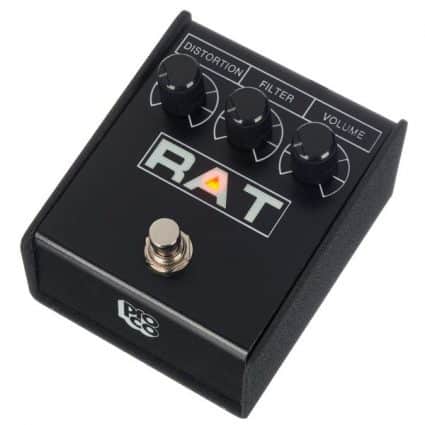
2. ProCo RAT 2
The “Sludge” Machine
The RAT is a legendary “hard-clipping” distortion. When you starve a RAT, the op-amp (the brain of the pedal) starts to collapse under the pressure.
-
The Sound: Instead of a sharp, biting distortion, it becomes a thick, saggy, “woolly” fuzz. It loses its high-end fizz and gains a massive, lo-fi low end that sounds like a vintage tube amp about to explode.
-
Starve Spot: Aim for 5V to 7V. It turns a standard rock distortion into a doom-metal sludge machine.
3. Ibanez TS9 Tube Screamer
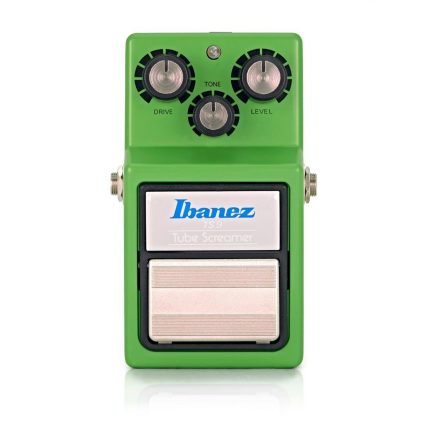
The “Brown Sound” Overdrive
Many professional session players actually prefer the sound of a Tube Screamer with a half-dead battery.
-
The Sound: The TS9 is known for its “mid-hump.” At lower voltages, that hump becomes smoother and the pedal feels more “squishy” under your fingers. It responds more like a natural tube amp’s power section sagging during a loud chord.
-
Starve Spot: 8V. Just a slight drop is enough to add a “chewy” feel to your leads without losing the note definition.
TS9 Tube Screamer at Andertons – £109.99
TS9 Tube Screamer at Sweetwater – $99.99
TS9 Tube Screamer at Thomann – €131
4. Electro-Harmonix Big Muff Pi
The “Gated” Wall of Sound
The Big Muff is famous for its infinite sustain. Starving it does the exact opposite: it introduces a “gate” that chops the sustain short.
-
The Sound: At low voltage, the Big Muff loses its smooth, violin-like sustain and starts to “spit.” It creates a gritty, industrial sound that is perfect for garage rock (think Jack White or early Black Keys).
-
Starve Spot: 4V to 5V. This is where the pedal starts to “struggle,” creating a unique, broken-speaker vibe.

Big Muff Pi at Andertons – £79.99
Big Muff Pi at Sweetwater – $101.60
5. Analog Delay (e.g., MXR Carbon Copy)
The “Lo-Fi” Echo
This is a “secret” secret. While mostly used for drives, analog delays use “Bucket Brigade” (BBD) chips that get very weird when they don’t have enough juice.
-
The Sound: As the voltage drops, the delay repeats become darker, grainier, and eventually start to pitch-shift and warp in unpredictable ways. It’s like a tape echo where the motor is slowly dying.
-
Starve Spot: 7V. Be careful here—if you go too low, the pedal will stop repeating entirely and just pass a clean (but thin) signal.

MXR Carbon Copy at Andertons – £159.99
MXR Carbon Copy at Sweetwater – $155.48
MXR Carbon Copy at Thomann – €172
Pro Tip: The “Voltage Sweet Spot” Chart
| Pedal Type | Ideal Voltage | Resulting Sound |
| Silicon Fuzz | 4.5V – 5.5V | Spitting, velcro, gated |
| Overdrive | 7V – 8V | Compressed, warm, “chewy” |
| Distortion | 6V – 7V | Saggy, thick, lo-fi |
| Analog Delay | 7.5V | Gritty, warped repeats |
Final Pro-Tips for the Experimentalist
-
Document Everything: When you find a “secret” sound, take a photo of the knob settings on your phone. These volatile sweet spots can be hard to find twice.
-
Safety First: Always double-check your power requirements before experimenting with voltage to ensure your gear stays as healthy as it sounds.
-
Context is King: A “broken” starved fuzz might sound harsh alone, but in a dense studio mix, it might be the only thing that cuts through.
Conclusion: Breaking the Rules to Find Your Voice
At the end of the day, your pedalboard isn’t just a utility—it’s an instrument in its own right. The “Super Secret Settings” we’ve explored here prove that the most interesting tones often exist in the margins of what is considered “proper” technique.
Whether you’re coaxing seagull cries out of a reversed Wah or starving a Fuzz Face until it sputters like a broken radio, you are participating in a long tradition of sonic rebellion that defined the sounds of Hendrix, Gilmour, and Shields.
The key to mastering these hacks is fearless experimentation. Don’t be afraid to put your pedals in the “wrong” order or twist a knob to a setting that seems nonsensical. Use the technical frameworks we’ve discussed—like understanding the threshold between analog “sag” and digital “crash”—as your safety net, then let your ears be the final judge.
The next iconic guitar sound isn’t hiding in a manual; it’s likely hiding in a combination of gear you already own, waiting for you to break the rules.
More Information
#Guitar Pedal Hacks #Stompbox
This article may contain affiliate links to Andertons, DeathCloud,Donner,Fender, Gear4Music, Positive Grid,Sweetwater, andThomann that help finance the running costs of GuitarBomb. We will receive a small commission if you buy something through these links. Don’t worry; you pay the same price, and it costs you no extra to use these affiliate links for your purchases.


