What Are Guitar Strings Made Of? The Ultimate Beginner Guide to String Materials & Tone
Learn what guitar strings are made of. Explore how materials like bronze, nickel, and steel affect your instrument's tone, feel, and lifespan.

When you pluck or strum a guitar, the sound you hear isn’t just a product of the tonewoods or the pickups—it begins at the very source of the vibration: the strings. Throughout history, guitar strings have evolved from primitive, organic materials to highly engineered metal alloys and synthetics.
Understanding what guitar strings are made of is essential for every guitarist. The metallurgical makeup and construction of your strings directly dictate your instrument's tone, volume, playability, and lifespan.
The Anatomy of a Guitar String: Cores, Wraps & Ball Ends
Before diving into specific materials, it is important to understand how a modern guitar string is constructed. Every string set is divided into two categories: plain strings (the thinner, high-pitched strings) and wound strings (the thicker, bass strings).
A wound guitar string consists of three core components:
- The Ball End: A small brass ferrule affixed to the end of the string that holds it securely against the bridge or tailpiece.
- The Core Wire: The structural backbone running through the center of the string.
- The Wrap Wire: The outer "skin" wrapped tightly around the core wire, which primarily dictates the string’s tonal character and tactile feel.

Hex Core vs. Round Core
The shape of the core wire plays a massive role in how the string performs.
- Hex Cores (Hexagonal): This is the modern industry standard. The six sharp edges of a hexagonal core "bite" into the outer wrap wire, locking it tightly in place. This prevents slippage, leading to brighter tone, better tuning stability, precise intonation, and a slightly stiffer tension.
- Round Cores: The traditional design. Round cores offer a more flexible, softer feel under the fingers. Tonally, they deliver a balanced, vintage-style warmth with a classic fundamental tone, though they require careful installation to prevent the wrap wire from unraveling.
Winding Styles: How Roundwound vs. Flatwound Affects Tone
How the wrap wire is shaped and applied alters both the texture and the sonic footprint of the string:
- Roundwound: The most common variety. A round wire is coiled continuously around the core, leaving a ridged texture. This texture produces a bright, articulate, and punchy tone, though it produces more "finger squeak" when moving across the fretboard.
- Flatwound: A flat, ribbon-like wire wraps the core, resulting in a completely smooth surface. Flatwounds yield a dark, mellow, "thumpy" vintage tone with virtually zero finger noise. They are highly favored by jazz guitarists and traditional bassists.
What Are Acoustic Guitar Strings Made Of?
Acoustic guitars rely entirely on the natural resonance of their wooden bodies to project sound. Because of this, acoustic strings require dense, highly resonant copper alloys capable of driving the guitar’s top plate. Plain acoustic strings are almost universally made from tin-plated high-carbon steel. The wound strings, however, generally fall into two major categories:
1. 80/20 Bronze (Copper & Zinc)
Pioneered in the 1930s by John D'Addario and John D'Angelico, 80/20 Bronze strings consist of 80% copper and 20% zinc.
- The Misnomer: Because it is made of copper and zinc, 80/20 bronze is technically brass, not bronze!
- Tone & Feel: They deliver an incredibly bright, crisp, and sparkling acoustic tone that cuts cleanly through a mix.
- Drawback: They tend to oxidize and lose their brilliance relatively fast, meaning you will need to change them more frequently.
2. Phosphor Bronze (Copper, Tin & Phosphorus)
Developed to address the short lifespan of 80/20 bronze, Phosphor Bronze strings are made of copper blended with 8–10% tin and a small percentage of phosphorus.
- Tone & Feel: They produce a distinctly warmer, richer, and more mellow tonal profile compared to 80/20 strings.
- Lifespan: The addition of phosphorus resists corrosion from finger oils, allowing the strings to retain their "new string" tone and elasticity for much longer.
What Are Electric Guitar Strings Made Of?
Electric guitars rely on magnetic pickups to translate string vibrations into an audio signal. Therefore, electric guitar strings must be made of ferrous (magnetic) materials containing iron or nickel.
1. Nickel-Plated Steel
By far the most popular choice for modern electric players. These strings feature a high-carbon steel core wrapped in a steel wire that has been electroplated with nickel.
- Tone & Feel: They provide the ultimate sonic middle ground—combining the bright, snappy attack of steel with the smooth, warm undertones of nickel.
- Versatility: Highly versatile and cost-effective, they are the default choice for everything from rock and pop to blues and metal.
2. Pure Nickel
Unlike nickel-plated strings, Pure Nickel strings feature a wrap wire made entirely of 100% nickel alloy.
- Tone & Feel: Because nickel is less magnetic than steel, these strings exert less pull on your pickups, resulting in lower output, reduced high-end harshness, and a warm, creamy, vintage-style voice. They are excellent for traditional blues, classic rock, and jazz.
3. Stainless Steel
The brightest and most aggressive option available.
- Tone & Feel: Stainless steel strings are highly magnetic, pushing your pickups harder for maximum volume, crunch, and sustain. They have a slightly rougher, grittier texture under the fingers.
- Durability: They are incredibly resistant to corrosion, making them perfect for touring musicians or players with high-acid sweat. However, because stainless steel is exceptionally hard, it can cause faster wear on traditional nickel-silver frets.

Classical Guitar Strings: Nylon vs. Traditional Gut
Classical and flamenco guitars require an entirely different engineering approach. Putting steel strings on a classical guitar will structurally destroy the instrument due to the high tension. Instead, classical guitars use low-tension synthetic materials.
- The History (Animal Gut): Historically, acoustic instrument strings were constructed from natural materials—specifically, animal intestines (often sheep or goat gut) and silk. While they produced a uniquely organic tone, they were highly sensitive to humidity and fragile.
- The Modern Standard (Nylon): During World War II, a shortage of silk forced string innovators like Albert Augustine to experiment with military-surplus nylon. Nylon strings proved cheaper, vastly more durable, and offered superb tuning stability while retaining a warm, classical tone.
- Construction: A standard classical set features three plain treble strings made of clear or refined nylon/fluorocarbon filament, and three bass strings made of a multi-filament nylon core wrapped in silver-plated copper wire.
Frequently Asked Questions (FAQ)
What are plain guitar strings made of?
On both acoustic and electric steel-string guitars, the plain (unwound) high strings are made from high-carbon steel, which is usually tin-plated to prevent rust and corrosion.
Can I put electric guitar strings on an acoustic guitar?
Technically, yes, they will fit. However, electric guitar strings lack the bronze or brass alloys required to properly resonate an acoustic guitar's wooden top. As a result, your acoustic will sound quiet, thin, and hollow.
Why do classical guitars use nylon strings instead of steel?
Classical guitars are built with lighter bracing and lack an internal truss rod. Steel strings exert more than double the tension of nylon strings, which can warp the neck, lift the bridge, and permanently damage a classical guitar.
What is the difference between coated and uncoated strings?
Coated strings feature an ultra-thin polymer or microscopic protective layer wrapped over the string. This barrier shields the metal from sweat, dirt, and skin oils, allowing coated strings to last up to 3 to 5 times longer than uncoated strings, though they come at a higher price point.
Which guitar strings are best for beginners?
For electric guitarists, Light Gauge (.009–.042) Nickel-Plated Steel strings are highly recommended because they are easy to press down and bend. For acoustic guitarists, Light Gauge (.011–.052) Phosphor Bronze strings strike the best balance between ease of playability and rich tone.

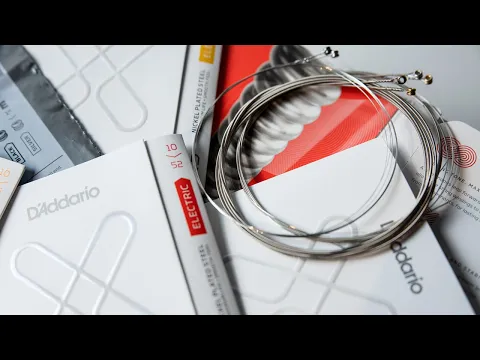
D'Addario: Why This Brand Dominates Guitar String Quality
When it comes to guitar strings, consistency is everything. A single bad batch can ruin a gig, tank an audio session, or leave your instrument feeling completely lifeless. If there is one brand that has built a global reputation entirely on precision engineering and ironclad consistency, it is D’Addario.

My Personal Recommendation for D'Addario Strings
I've used them for nearly 40 years and have found them to be one of the most consistent, high-quality guitar string brands that you can source easily worldwide. Their strings last a long time and sound consistently good. See my Old Guitar Strings article here for an extreme example. Of course, all guitarist have their own preference for strings; these just happen to be the ones I think are good quality and at a reasonable price point. Avoid the fake ones sold on eBay, Amazon, etc. They don't sponsor me, but if you use any of the authorized dealer links below, we get a small affiliate link percentage, yet you still pay the same low price for the strings. D’Addario at Andertons D’Addario at Guitar Center D’Addario at Sweetwater D’Addario at Thomann
#Old Guitar Strings #New Guitar Strings
Keep browsing

Get this stuff first.
Leaks, deals and reviews in your inbox, once a week. No spam, just gear.