

Hungry Robot Pedals has officially launched the rebooted Moby Dick, a flagship tape delay that leads the charge for the company’s completely revitalized product lineup. Announced last September as part of a brand-wide design overhaul, the new Moby Dick is available now for $272 USD.
While the original Moby Dick was a cult classic known for its “back-to-basics” charm, this 2026 iteration is a significant evolution. It transforms the pedal from a simple lo-fi echo into a comprehensive stereo sound design tool, blending the warmth of vintage tape with experimental textures that push the boundaries of traditional delay.
What’s New? The “Reboot” Explained
Hungry Robot describes the new Moby Dick as a “spiritual successor” to the original, but the spec sheet suggests a major leap in capability. The most headline-grabbing update is the move to Stereo Signal Processing, a feature long requested by fans of the brand’s ambient-leaning “Wash” and “Wardenclyffe” pedals.
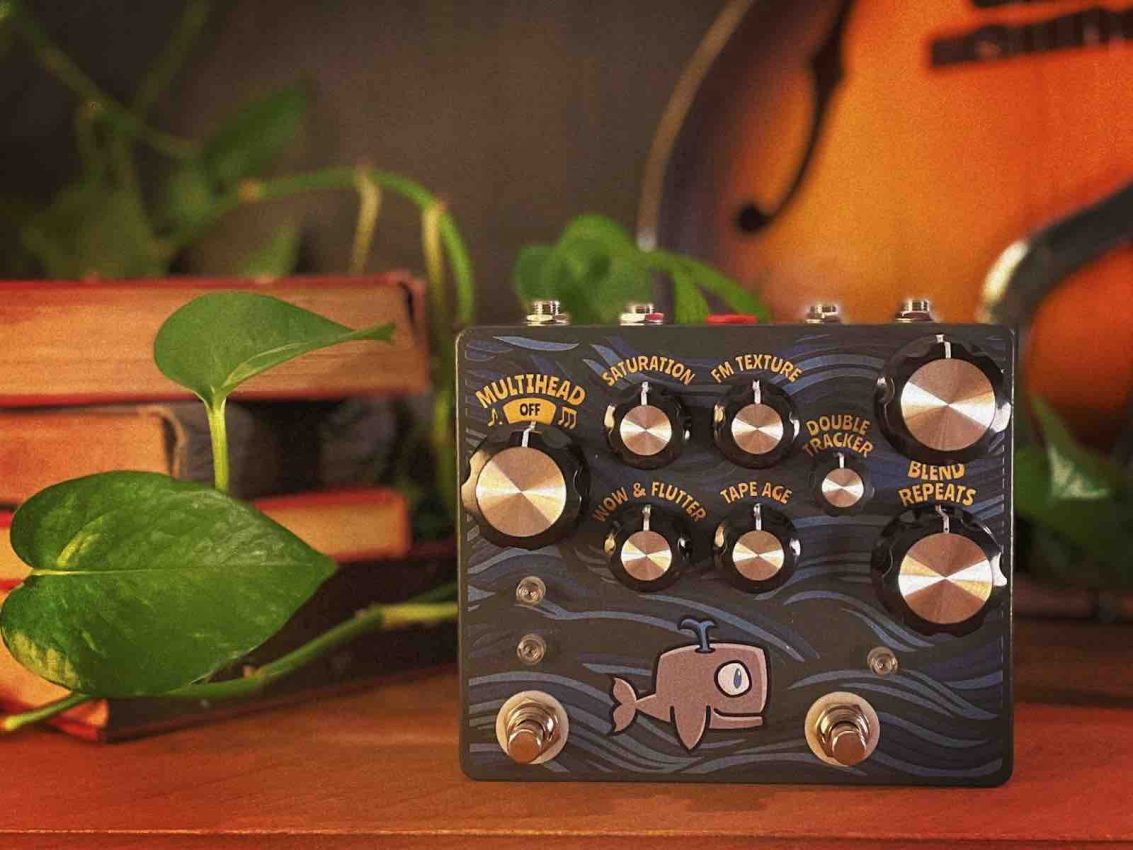
Beyond stereo operation, the rebooted Moby Dick introduces a suite of six specific sound-sculpting elements designed to encourage exploration:
-
Multihead: A dual-function control that unlocks rhythmic complexity and layered repeats, simulating the multi-head playback of classic space echoes.
-
Saturation: Traditional tape-style drive that adds harmonic richness and grit to the repeats.
-
FM Texture: An experimental distortion engine that uses white noise and frequency modulation to create unique, degrading lo-fi textures.
-
Wow & Flutter: A lush modulation section capturing the organic, mechanical pitch movement of a worn tape machine.
-
Tape Age: A specialized filter that darkens repeats, simulating the treble loss of old, worn-in magnetic tape.
-
Double Tracker: A doubling effect on the repeats that adds width, fullness, and a subtle chorus-like dimension.
The pedal also features modern quality-of-life upgrades, including Soft Touch Switching and a durable UV-Printed Enclosure featuring the brand’s refreshed aesthetic.

Comparison: Moby Dick Reboot (2026) vs. The Original (V1/V2)
If you are a long-time fan of Hungry Robot, you might be wondering how this new whale compares to the one already on your board. I myself own the V1 of this pedal, and things have moved on for 2026 with lots of great new features!
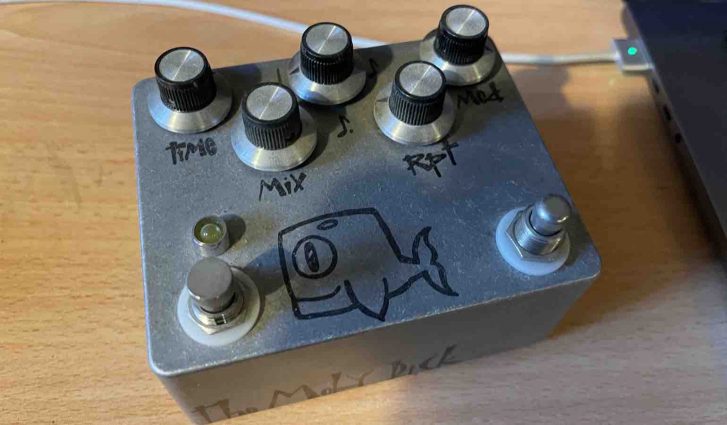
| Feature | Original Moby Dick (V1/V2) | New Rebooted Moby Dick (2026) |
| Signal Path | Mono | Stereo |
| Core Concept | “Back-to-basics” tape emulation | Experimental Tape Delay & Sound Design Tool |
| Modulation | Basic “Mod” knob (V1), Deeper Mod (V2) | Dedicated Wow & Flutter + FM Texture |
| Tone Shaping | “Lo-Fi” knob (V2 only) | Tape Age (Filter) + Saturation + Double Tracker |
| Rhythm | Tap Tempo with subdivisions | Multihead control for rhythmic layering |
| Enclosure | Large Cube (V1) / Standard (V2) Hand-painted/stamped | Standard Enclosure with UV Printing |
| Price | ~$190 – $220 (Historical) | $272 USD |
The Takeaway: The original was loved for its simplicity—a “set-and-forget” echo with a great core tone. The new reboot is a “player’s pedal,” offering deep control over the character of the tape degradation itself, from the mechanics (Wow & Flutter) to the medium (Tape Age, Saturation).
Our Verdict
The rebooted Moby Dick is a triumphant return for one of the indie pedal world’s favorite marine mammals. Hungry Robot has successfully walked the tightrope of preserving the “chimey” warmth that made the original famous while adding the modern features—specifically Stereo and Multihead functionality—that today’s ambient guitarists demand.
The addition of the FM Texture and Double Tracker elevates this from a standard “tape echo emulation” to a creative texture machine. It doesn’t just repeat what you play; it ages, warps, and widens it.
Score: 9/10
Ideally suited for: Ambient musicians, shoegaze players, and anyone who wants a delay pedal that feels like a vintage instrument in itself.

FAQ: The New Moby Dick
Q: Is the new Moby Dick analog or digital?
A: Like its predecessors, the new Moby Dick likely utilizes a digital architecture (PT2399 or DSP) to achieve its tape emulation. This “hybrid” approach allows for the extended delay times and complex modulation (Wow & Flutter) that true analog bucket-brigade chips struggle to produce, while still maintaining a warm, non-sterile tone.
Q: Does it have Tap Tempo?
A: The new unit features a Multihead control for rhythmic layering, which offers a different approach to rhythm than a standard tap tempo. It focuses on the interplay between virtual “tape heads” to create galloping and syncopated patterns.
Q: Can I use it in Mono?
A: Yes. While the Stereo Signal Processing is a major selling point for creating wide soundscapes, the pedal functions perfectly in a standard mono signal chain.
Q: What is the “FM Texture” control?
A: This is one of the pedal’s most unique experimental features. It introduces frequency modulation and white noise into the delay path, simulating the sound of extreme tape degradation, radio interference, or a “broken” machine. It’s perfect for lo-fi hip-hop or gritty ambient textures.
Q: When is it available?
A: The pedal is available now directly from Hungry Robot Pedals and select dealers. Future releases in the rebooted lineup are planned throughout 2026.
More Information
#Hungry Robot #Moby Dick
This article may contain affiliate links to Andertons, DeathCloud, Donner, Fender, Gear4Music, Positive Grid, Sweetwater, and Thomann that help finance the running costs of GuitarBomb. We will receive a small commission if you buy something through these links. Don’t worry; you pay the same price, and it costs you no extra to use these affiliate links for your purchases.


