Meris Launches Ottobit X: Modular Lo-Fi and Glitch Engine - Out Now!
Meris Ottobit X Review: Is this £619 modular bit-crusher and glitch engine the ultimate lo-fi tool? Read our definitive verdict and score.

Out Now! The new Meris Ottobit X is priced at £619/€699 and available now at selected dealers. Available at Andertons in Black or Pink. Available at Sweetwater in Black Available at Thomann in Black or Pink.
(June 3, 2026) Renowned boutique audio pioneer Meris has officially unveiled the Ottobit X, a massive, full-stereo modular degradation and texture engine designed to reshape the landscape of digital destruction. Priced at £619.00, this premium stompbox evolves the cult-classic lo-fi concepts of the original Ottobit Jr. into an expansive, studio-grade sound design playground for guitarists, synthesists, and electronic music producers.
Built around a high-performance ARM processor, premium Analog Devices JFET inputs, and 24-bit AD/DA conversion with 32-bit floating-point DSP, the Ottobit X delivers absolute sonic degradation without sacrificing analog warmth or dynamic feel.
From 32-Bit Clarity to 1-Bit Meltdown
Unlike standard bit-crusher pedals that offer a single, static effect, the Ottobit X features a deeply customizable modular architecture. Users can freely patch and route a comprehensive chain of bit crushing, sample rate reduction, pitch shifting, modulation, filtering, preamps, and cinematic ambience.

The front end of the pedal is driven by four selectable preamp emulations: Tube, Vinyl, Wavefold, or a clean Volume Pedal mode. From there, signals can be crushed from pristine 32-bit audio all the way down to a brutal, glitching 1-bit stream, then reshaped by three distinct filter types (including a classic Ladder filter and the tracking Otto Tron).

Real-Time Glitch Engines & Expressive Modulation
For live performers, the Ottobit X acts as an interactive instrument. A dedicated Glitch category introduces six real-time performance engines:
- Grain Freeze & Stutter: For modern, rhythmic chopping and stereo slicing.
- Push Loop & Wikki Wikki: One-button phrase samplers and turntable-style scratching simulation.
- Tape Stop & Stutter Step: Sequenced, time-bending pitch drops and rhythmic gate effects.
The melodic side of the pedal is powered by five distinct pitch modes—including Otto Tune pitch correction and polyphonic tracking—paired with five modulation options like frequency shifting, ring modulation, and the warbly Otto Vibe.
To wrap these digital textures in lush, nostalgic warmth, Meris has included dedicated VHS Delay and VHS Reverb algorithms, perfectly emulating the drifting, hazy tails of an 80s synth soundtrack.

Studio Connectivity and Deep Control
Designed to fit seamlessly onto modern pedalboards, desktop synth rigs, or studio consoles, the Ottobit X features full stereo inputs and outputs with switchable headroom levels for instrument or line/synthesizer signals.
It boasts 99 onboard preset locations spanning 33 banks, alongside a dedicated "Favourite" bank for instant access to three go-to sounds. With full MIDI CC control, preset selection, and clock synchronization via standard 5-pin DIN jacks, alongside an assignable expression pedal input, the Ottobit X is as deep as a modular synthesizer but self-contained in a rugged, California-built chassis.
Price & Availability
The new Meris Ottobit X is priced at £619/€699 and available now at selected dealers.
Available at Andertons in Black or Pink. Available at Sweetwater in Black Available at Thomann in Black or Pink.

Our Verdict on the Meris Ottobit X
The Meris Ottobit X is a triumph of modern audio engineering, effortlessly bridging the gap between hardware effects and high-end software sound design.
While its £619.00 price tag positions it firmly in the premium category, the sheer depth of its glitch engines, lush VHS-style reverbs, and modular routing matrix makes it worth every penny for serious electronic musicians, film composers, and guitar innovators. It turns digital destruction into a highly musical art form.
Final Score: 8.6 / 10
Pros: Mind-blowing modular flexibility; stunning VHS-style ambience algorithms; incredible real-time glitch/performance controls; robust MIDI and stereo integration.
Cons: Premium price point; deep architecture introduces a slight learning curve for beginners.
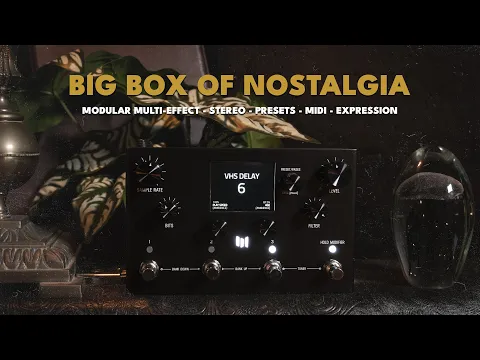
#Meris #Ottobit X
- +Exceptional modular flexibility and patch routing
- +Stunning VHS-style ambient algorithms
- +Six real-time glitch engines for live performance
- +Premium Analog Devices JFET inputs and 24-bit conversion
- +Full MIDI CC and clock sync control
- +Stereo processing with switchable headroom
- −Premium £619 price point
- −Steep learning curve for beginners given deep architecture
Can the Ottobit X handle line-level signals from synths and mixers?
Yes. The Ottobit X features switchable input and output headrooms, allowing you to instantly toggle between standard Instrument level (for guitars and basses) and Synthesizer/Line level for studio environments.
What makes the Ottobit X "modular"?
Instead of applying a single fixed effect, the Ottobit X lets you combine and route different blocks of processing—such as preamps, bit-crushers, pitch-shifters, filters, and VHS ambience—into custom configurations, behaving much like a compact modular synthesizer patch.
Does it feature a true analog bypass or dry through?
The pedal utilizes a premium analog signal path featuring a digitally controlled analog mix bus. This ensures your dry, unaffected signal stays entirely analog, punchy, and latency-free when blending in the wet effects.
Keep browsing

Get this stuff first.
Leaks, deals and reviews in your inbox, once a week. No spam, just gear.