

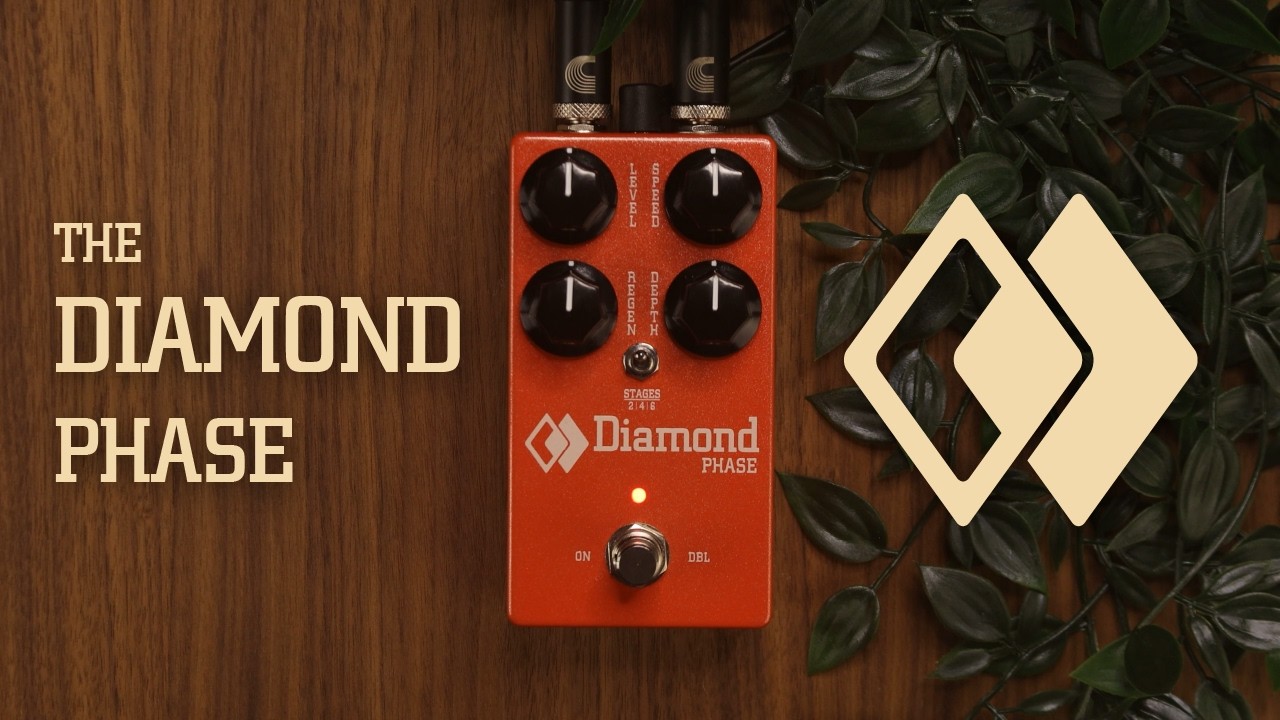
Boutique tone meets modern convenience as Diamond Pedals unveils the newly redesigned Diamond Phase—a compact, JFET-driven powerhouse that honors its 2008 predecessor.
For fans of rich, swirling modulation, the wait is over. Diamond Pedals has officially announced the return of the Diamond Phase, a faithful yet evolved revival of the original PSH-1 Phase first introduced in 2008. While the original was celebrated for its lush analog textures, its bulky footprint often made it a difficult fit for crowded boards. The new Diamond Phase solves this, offering more versatility in a housing half the size of the original.
Pure Analog Signal Path: The JFET Difference
At the heart of the Diamond Phase is a commitment to “old school” tonal integrity. Unlike digital emulations, this pedal features a fully analog signal path built around six carefully selected and matched JFET transistors.
By using JFETs as variable resistors, the Diamond Phase achieves a smooth, organic sweep that avoids the “choppy” or artificial transitions found in lesser circuits. The result is a musical phase shift that ranges from subtle harmonic enhancement to deep, psychedelic swirls.
Three Pedals in One: 2, 4, and 6-Stage Modes
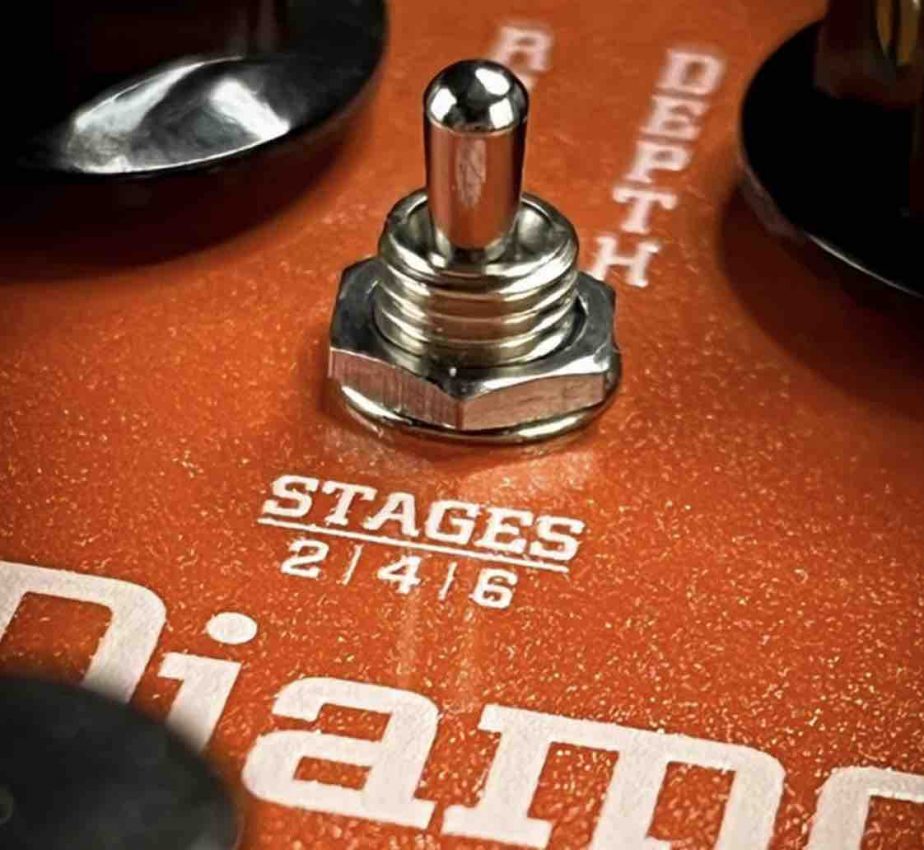
The standout feature of this redesign is the selectable architecture, allowing players to toggle between three distinct phaser voices:
-
2-Stage Mode: Ideal for “always-on” textures. It provides a light, airy modulation that adds movement without overpowering your core guitar tone.
-
4-Stage Mode: A landmark addition for Diamond. This mode delivers the classic, traditional phasing heard on 1970s rock records—a sound that was actually unavailable on the original PSH-1.
-
6-Stage Mode: For those seeking the “throaty,” colorful response of high-end vintage units. This mode offers deeper notches and increased harmonic complexity.
Re-Engineered for the Modern Player
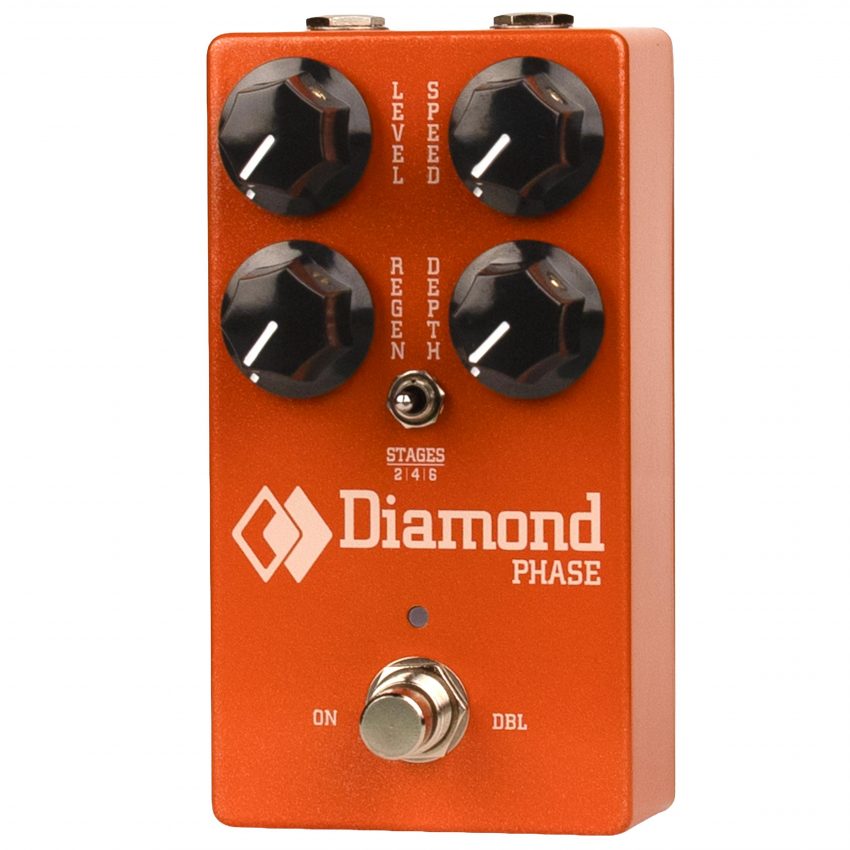
Diamond hasn’t just shrunk the box; they have modernized the entire user experience. The new Phase features top-mounted jacks, a must-have for modern “tight-fit” pedalboard layouts, and true bypass switching to ensure your dry signal remains pristine when the effect is off.
Powering the pedal is equally seamless. While the circuit thrives on high-headroom 15V operation, users don’t need a special power supply. The Diamond Phase accepts standard 9–15V DC and automatically boosts the signal to 15V with an internal voltage pump, ensuring maximum clarity and headroom regardless of your power brick.
Frequently Asked Questions (FAQ)
What is the main difference between the original PSH-1 and the new Diamond Phase?
The new Diamond Phase is approximately half the size, features top-mounted jacks, and adds a 4-stage mode that was not present in the original 2008 design.
Does the Diamond Phase require a special 15V power supply?
No. While it runs internally at 15V for maximum headroom, it uses an internal voltage pump. You can power it with a standard 9V or 12V pedal power supply.
Is the Diamond Phase digital or analog?
It is 100% analog. It uses a JFET-based topology to ensure the most musical and warm modulation possible.
What does “matched JFETs” mean for my tone?
Matching transistors ensures that the phase sweep is perfectly symmetrical and even. This prevents “lopsided” sounds and ensures the pedal remains musical even at extreme depth settings.
The Verdict
The Diamond Phase is a masterclass in reviving a classic. By shrinking the enclosure and adding the much-requested 4-stage mode, Diamond has turned a “cult classic” into an essential tool for the modern guitarist.
Perfect if you want the subtle shimmer of a 2-stage phaser or the deep, liquid throb of a 6-stage unit, this pedal delivers with a warmth that only true analog JFET technology can provide.
I’m a sucker for a good phaser pedal, and so this reissue/reimagining of a classic analog circuit appeals to me.
It is rare to see a “reissue” actually outperform the original in every functional category, but Diamond has achieved exactly that.
Final Score: 9.6 / 10
-
Tone: 10/10
-
Build Quality: 9.5/10
-
Versatility: 9.5/10
-
Value: 9/10
Pros:
-
Incredible analog warmth via matched JFETs.
-
Compact, pedalboard-friendly footprint.
-
New 4-stage mode adds massive versatility.
-
Internal 15V boost for high headroom.
Cons:
-
Purists might miss the “big box” aesthetics, but their pedalboards won’t.
Price & Where To Buy

#Diamond Pedals
This article may contain affiliate links to Andertons, DeathCloud, Donner, Fender, Gear4Music, Guitar Center, Positive Grid, Stew Mac, Sweetwater, and Thomann that help finance the running costs of GuitarBomb. We will receive a small commission if you buy something through these links. Don’t worry; you pay the same price, and it costs you no extra to use these affiliate links for your purchases.


