

The guitar community has been thrown into a state of intense speculation following news that Fender Musical Instruments Corporation (FMIC) has issued sweeping cease-and-desist letters to independent guitar builders in the United States. Initial reports suggested that the industry giant was demanding small builders halt production, recall active products, and destroy existing inventory of double-cutaway, “S-style” instruments.
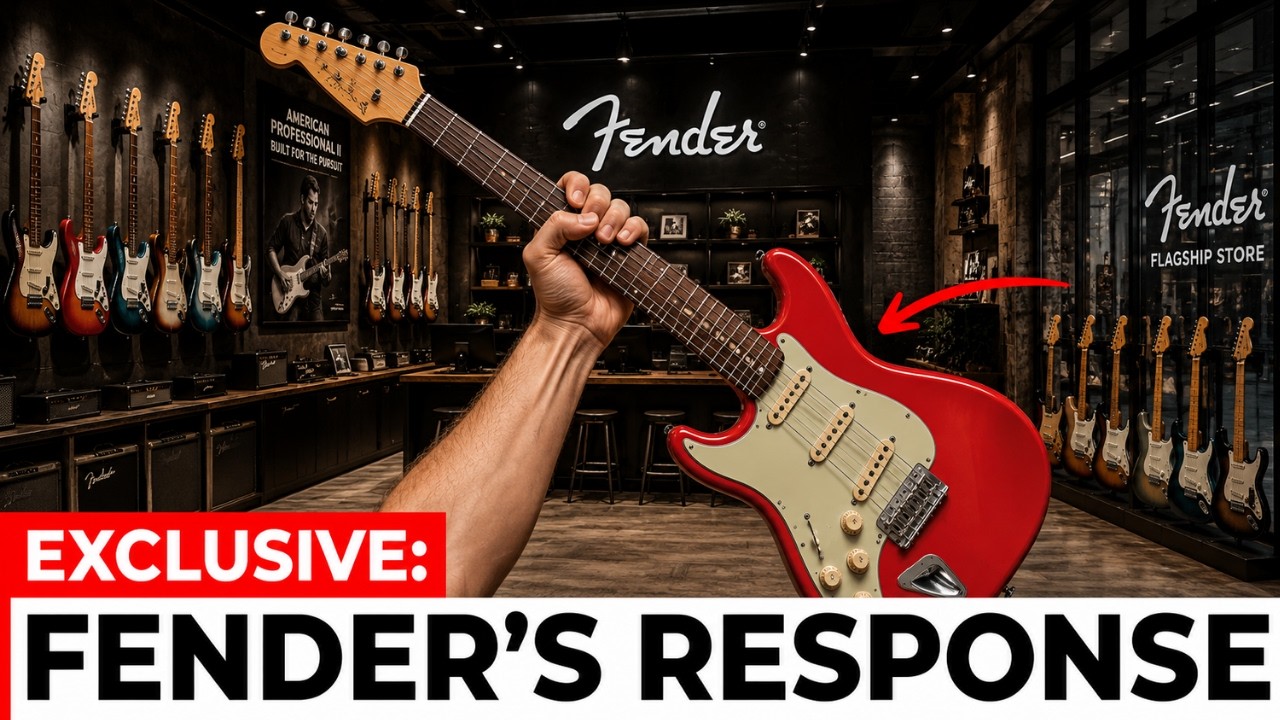
Facing immediate backlash online—and the news that targeted boutique brands like LsL Instruments were organizing legal defense funds—Fender broke its silence. Through statements from its legal representation, Bird & Bird, and newly appointed CEO Edward “Bud” Cole, the company has sought to clarify its strategy.
Fender maintains that it is not launching a wholesale war on two-horned guitars, but rather seeking to protect its intellectual property from exact replicas.
However, this sudden shift in enforcement leaves the industry asking a critical question: Why now, and what are the true commercial motivations driving this legal campaign?
The Legal Catalyst: The March 2026 Düsseldorf Ruling
To understand why Fender is taking action in 2026, one must look to Europe. In March 2026, international law firm Bird & Bird secured a landmark victory for Fender in the Regional Court of Düsseldorf, Germany.
The case was brought against Yiwu Philharmonic Musical Instruments Co. (also identified as Yiwu Aile), a China-based manufacturer selling direct Stratocaster clones into the European Union via the online retail platform AliExpress. Because the defendant failed to appear, the court issued a default judgment.
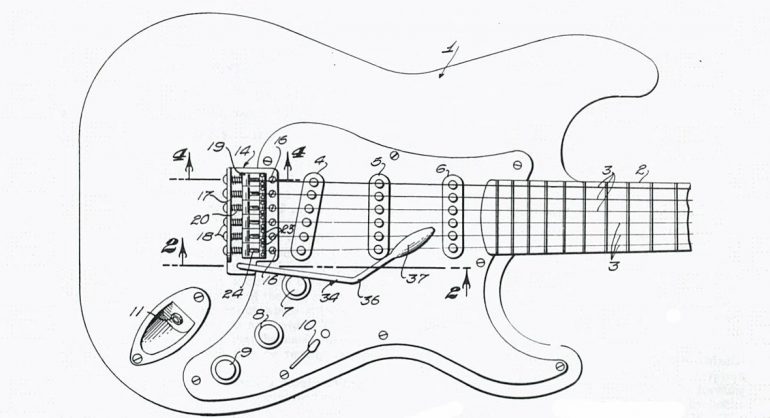
Crucially, the German court did not rely on traditional trademark law. Instead, it ruled that the 70-year-old Stratocaster body design qualifies as a copyrighted work of applied art under German and EU law.
Why the German Ruling Matters Globally
While a default ruling in a regional European court might seem isolated, its implications are global. Under EU law, offering an infringing product for sale into an EU member state establishes liability, regardless of where the manufacturer is located.
Because many US-based boutique builders ship internationally or sell via global platforms, Fender is leveraging this European precedent to pressure builders worldwide. Legal analysts suggest Fender may be using these letters to test the waters, effectively “fishing” for a case to see if a US builder will challenge the ruling, which could potentially reopen the debate over guitar body shapes in American courts.
Trademark History vs. Current Strategy
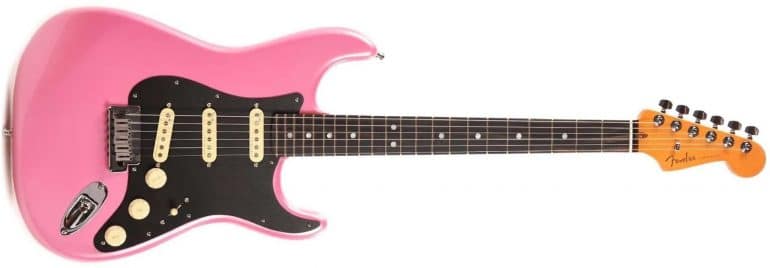
The current legal campaign stands in stark contrast to past US legal precedents. In a historic 2009 lawsuit, the US Trademark Trial and Appeal Board defeated Fender’s attempt to trademark the Stratocaster, Telecaster, and Precision Bass body shapes, ruling that the designs had become generic and belonged in the public domain. For decades, this ruling allowed the “S-style” guitar to flourish as an industry-standard framework.
Fender’s current statements indicate they are aware of the delicate balance between enforcing intellectual property and alienating the guitar community.
“Everybody is welcome and will be able to continue making and selling double cutaway and/or two horned electric guitars, as long as they are designed sufficiently different from the Fender Stratocaster,” stated Bird & Bird in a response letter.
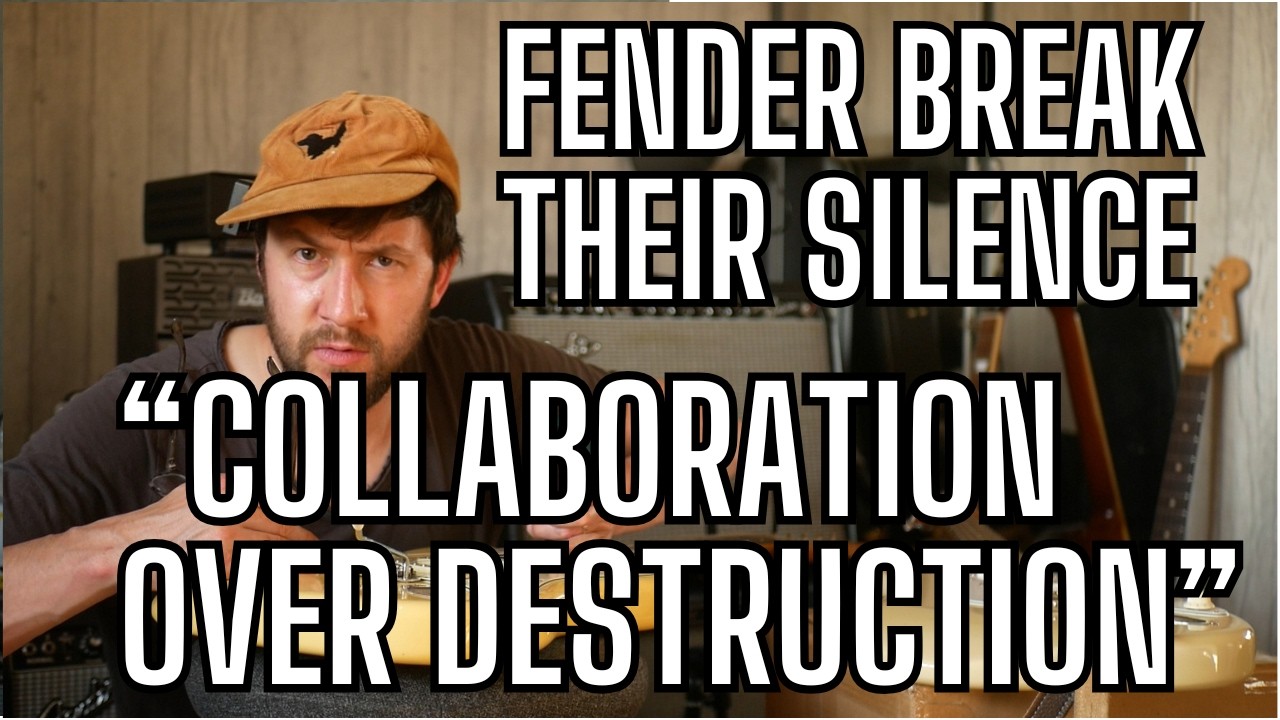
Fender emphasizes that its endgame involves “collaboration over destruction.” The company has clarified that it is not seeking the mass destruction of inventory, but rather encouraging minor design adjustments—such as altering pickguard shapes, control layouts, or body contours—and establishing reasonable transition periods for affected builders.
Following the Money: Corporate Ownership and Market Control
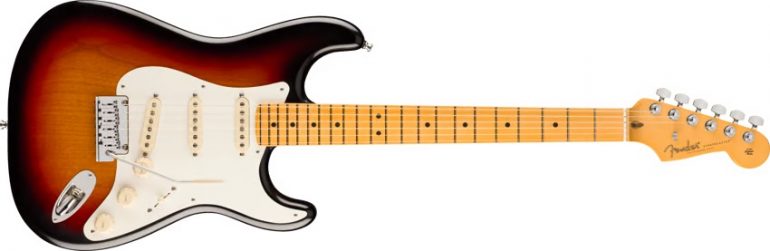
While Fender frames this campaign as an obligation to act as a “steward of the brand” and preserve the historical legacy of Leo Fender’s 1954 masterpiece, industry analysts point to deeper financial motivations.
In an investigative report titled “Fender – The Money Behind the Letters” published by Saul Hudson on YamahaMusicians.com, the curtain is pulled back on Fender’s corporate structure.
Luthiers are not making the ultimate decisions, but by Servco Pacific, a multi-billion-dollar commercial conglomerate that holds a majority stake in Fender.

The Turnaround Investment Reality
According to commercial filings, Servco classifies its majority ownership of Fender as a “turnaround investment.”
In the realm of private equity and corporate finance, a turnaround strategy focuses on maximizing operational efficiency, protecting market share, and aggressively scaling asset value to ensure a substantial return on investment for stakeholders. Protecting core proprietary designs from external erosion is a standard textbook maneuver to funnel consumers back toward authorized brand ecosystems.
A Potential Vertical Monopoly?
Hudson’s investigative piece highlights a secondary factor that complicates the market dynamics: Servco Pacific’s investment arm secured a significant stake in Reverb, the world’s premier digital marketplace for new, used, and vintage musical equipment.
This dual ownership raises valid questions regarding vertical integration in the music industry:
-
As the majority owner of Fender, Servco has an interest in curbing unauthorized, exact replicas of its flagship instruments.
-
As a major stakeholder in Reverb, Servco influences the primary e-commerce platform where independent builders and secondary-market alternative guitars are bought and sold.
By securing enforceable EU copyright protections and deploying targeted cease-and-desist notices, the corporate parent effectively gains the leverage to police the guitar market from manufacturing all the way through to digital distribution.
What Lies Ahead for the Guitar Industry?
Fender’s legal team has extended the deadline to June 8 for affected builders to issue their formal responses.
For boutique builders, the choice is complex. Launching a protracted legal defense against a corporate entity backed by a multi-billion-dollar conglomerate requires immense capital, as highlighted by the crowdfunding campaigns currently circulating in the guitar community. Conversely, agreeing to settlements means rewriting their manufacturing templates to ensure their designs are “sufficiently different” from the classic Stratocaster archetype.
Ultimately, Fender’s strategy may not be the draconian industry shutdown that the internet initially feared. However, it represents a highly sophisticated, commercially driven effort to redefine the boundaries of guitar design, protect corporate assets, and reassert control over a global marketplace that has treated the S-style layout as public domain for over half a century.
#Fender #Stratocaster
This article may contain affiliate links to Andertons, DeathCloud, Donner, Fender, Gear4Music, Positive Grid, Stew Mac, Sweetwater, and Thomann that help finance the running costs of GuitarBomb. We will receive a small commission if you buy something through these links. Don’t worry; you pay the same price, and it costs you no extra to use these affiliate links for your purchases.


