

The wait—and the hype—is finally over. After weeks of cryptic teasers and six years of development, Chase Bliss has officially pulled back the curtain on the Big Time. It is the latest entry into the prestigious, large-format Automatone series, and it’s every bit the monster we expected.
This isn’t just another delay pedal; it’s a high-fidelity, digital-to-analog tribute to the legendary rack effects of the 1980s. By teaming up with John Snyder of Electronic Audio Experiments (EAE), Chase Bliss has combined their “digital brain” with EAE’s expertise in gritty, characterful analog saturation.
The Soul of the 80s in a Box
The Big Time takes its DNA from studio icons like the Lexicon PCM 70 and Korg SDD-3000. These units were famous (or infamous) for their lower sample rates and imperfect converters, which inadvertently created a “digital vintage” warmth that modern, ultra-clean delays often miss.
To capture that magic, Chase Bliss and EAE focused on the entire signal path:
-
Stereo Analog Preamp: Designed by EAE to provide that signature “dirt that rips.”
-
Stereo Limiter: Located in the feedback path, offering three levels of overdrive to keep your echoes from getting too polite.
-
Variable Fidelity: You can drop the bit depth and sample rate to replicate the lo-fi “sparkle” of early digital units.

Faders, Buttons, and “Flying” Presets
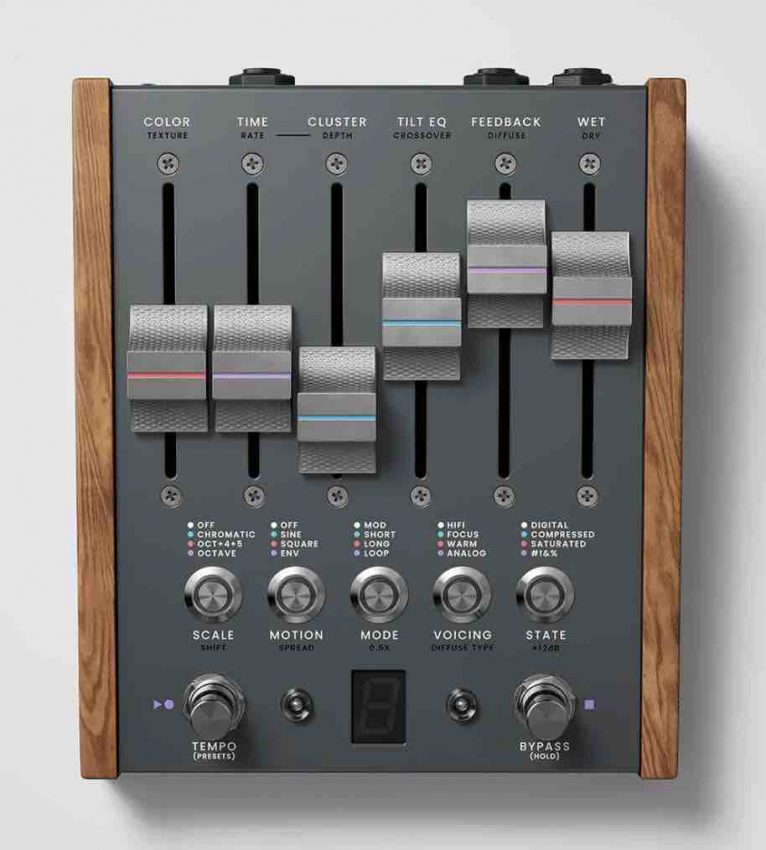
If you’ve seen the Preamp MKII or the CXM 1978, you know the drill: motorized faders. The Big Time features six sliders that move on their own when you switch presets:
-
Color: Controls preamp saturation.
-
Time: Adjusts delay length.
-
Cluster: Adds glitchy, rhythmic delay taps.
-
Tilt EQ: Balances the brightness and darkness of the repeats.
-
Feedback: Determines the echo duration (from slapback to infinite).
-
Wet: Sets the overall effect level.
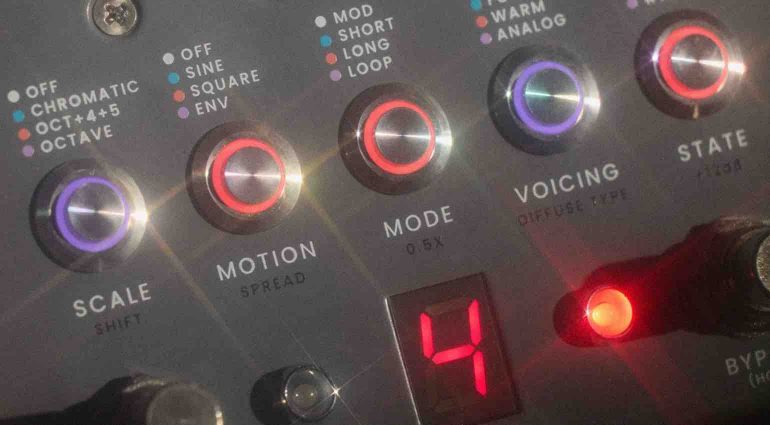
The bottom of the pedal features five character buttons, including a Scale button (reminiscent of the Thermae) for tonal tuning, and a SHIFT button that unlocks a secondary layer of controls for modulation speed, depth, and stereo spread.
Connectivity and Looping
True to its “Big Time” name, the pedal is a powerhouse for studio and synth setups. It offers:
-
Dual Stereo I/O: Supports both balanced and unbalanced signals.
-
3.2 Minutes of Looping: A dedicated Loop mode with massive memory.
-
Full MIDI Integration: 127 presets available via MIDI (10 directly on the face).
-
Power Requirements: This beast is hungry—it requires a 9V DC supply with at least 1A (1000mA) of current.

The Price Tag: A “Big Time” Investment
Now for the part where you might need to sit down. The Automatone series has always been high-end, but the Big Time sets a new record. Priced at €1,099, it is the most expensive Chase Bliss pedal to date. While that may cause some serious “wallet-ache,” it reflects the complexity of the motorized hardware and the extensive R&D involved.
Availability: Orders are live now exclusively on the Chase Bliss website, with the first units scheduled to ship in June 2026.
FAQ: Everything You Need to Know
Is the Big Time analog or digital?
It’s a hybrid. It uses a “digital brain” for the delay processing (to achieve those long times and complex modes) but features a 100% analog preamp and limiter stage designed by EAE.
What are the four main modes?
-
Mod: 3–46 ms for chorus and resonators.
-
Short: 46–736 ms for classic echoes and slapback.
-
Long: Extended delay times for ambient washes.
-
Loop: Up to 3.2 minutes of stereo looping memory.
Can I use it with my synths?
Absolutely. The balanced/unbalanced stereo inputs and outputs make it perfect for line-level signals and studio outboard use.
The Verdict
The Good: Unrivaled “rack-in-a-box” sound quality; stunning motorized fader workflow; deep MIDI integration; lush EAE-designed saturation.
The Bad: The price is undeniably steep; requires a very high-current power supply (1A).
Score: 9.2/10
The Big Time is a masterclass in pedal engineering. If you can stomach the price, it is likely the only delay pedal you will ever need—or want—on your board.
#Chase Bliss #Big Time
This article may contain affiliate links to Andertons, DeathCloud, Donner, Fender, Gear4Music, Guitar Center, Positive Grid, Stew Mac, Sweetwater, and Thomann that help finance the running costs of GuitarBomb. We will receive a small commission if you buy something through these links. Don’t worry; you pay the same price, and it costs you no extra to use these affiliate links for your purchases.


