

For more than half a century, Electro-Harmonix (EHX) has been an undisputed titan in the world of music production. From the fuzz that defined classic rock riffs to the lush delays and modulations used by modern ambient architects, EHX effects have shaped the sonic landscape of generations.
While many contemporary gear companies have shifted their production entirely overseas to cut costs, Electro-Harmonix takes a fiercely traditional yet innovative approach: their legendary pedals are built, tested, and shipped right out of a bustling factory in Long Island City, New York.
Take a behind-the-scenes look at the exact step-by-step process of how Electro-Harmonix pedals are made, the cutting-edge engineering driving their designs, and the fascinating history behind their resurrection.

The 5 Stages of Electro-Harmonix Pedal Production
The EHX factory functions like a finely tuned machine, combining industrial assembly with artisan-level quality control. Walk through the production floor to see how a raw circuit board transforms into a gig-ready stompbox.
1. PCB Population and Visual Inspection
The journey begins at the first stage of the production line. Here, raw Printed Circuit Boards (PCBs) are populated with their foundational electronic components. Technicians carefully position capacitors, resistors, and transistors onto the boards.
Once populated, the boards undergo immediate visual testing and analysis using oscilloscopes. Technicians inspect the soldering and trace lines to ensure every pathway is electronically sound before the unit advances to the next phase.
2. Electronic Quality Control (QC) and Programming
Next, the populated boards move into a specialized QC environment. For advanced digital pedals like the POG 3 or the Oceans’s Abyss, this stage involves complex micro-programming and digital sequencing.
The goal here is perfection. Technicians perform comprehensive electronic diagnostics to ensure every circuit operates precisely to spec. A core philosophy of the factory is to simulate field abuse. By stressing the electronics under rigorous factory testing conditions, any potential component failures happen in the warehouse rather than on stage during a musician’s gig.
3. Mechanical Assembly and Aesthetic Detailing
Once the internal electronics pass inspection, the pedal undergoes mechanical assembly. The boards are mounted into the rugged, signature EHX metal enclosures.
During this step, assembly workers attach the backplates, solder the input and output jacks, wire the switches, and mount the control potentiometers. Every detail is meticulously checked, down to the exact alignment of the control knobs and the placement of the rubber feet. Enclosures are also aggressively audited for any physical blemishes, scratches, or printing errors.
4. The Guitarist Audio Test
No Electro-Harmonix pedal leaves the building without being played by an actual musician. In a dedicated pedal testing room, guitarists spend their days plugging every single manufactured unit into live test loops.
These testers evaluate the core parameters of the pedal:
-
Sustain: Ensuring the notes decay naturally and cleanly.
-
Volume: Verifying that the output controls operate smoothly without clipping or dropping out.
-
Bypass Switching: Testing the foot switch to guarantee clean, pop-free engagement and a transparent bypass tone.
5. Cleanup, Boxing, and Global Shipping
After passing the auditory evaluation, the pedals receive a final physical cleanup. Technicians wipe away any finger smudges or dust accumulation to ensure a pristine unboxing experience for the customer.
The pedals are packed into their iconic illustrated boxes, complete with power supplies and manuals, and moved directly into the massive shipping department, where they are dispatched to musicians and retailers worldwide.

The Secret Sauce: Custom Vacuum Tube Matching
Beyond guitar pedals, Electro-Harmonix is one of the world’s primary suppliers of audiophile-grade vacuum tubes, powering everything from guitar amplifiers to high-fidelity stereo systems.
Inside the factory, a dedicated tube-matching department processes brands like Sovtek, Tung-Sol, and Electro-Harmonix. To achieve pristine audio matching, EHX utilizes a custom-built computer system developed in the 1990s that runs on Visual Basic 6. This proprietary machine tests batches of 40 vacuum tubes at a time, sequentially checking the pins under various voltages via a digital multimeter.
The computer executes complex algorithms to instantly print out data stickers detailing the plate current and transconductance of each tube. Skilled specialists then sort these tubes into perfectly balanced pairs, quads, or octets.

Navigating Geopolitical Challenges
EHX actually owns its vacuum tube manufacturing plant in Russia. Due to recent geopolitical conflicts and the Russia-Ukraine war, Western nations implemented steep 35% tariffs on these imports.
Rather than shutting down production—which would trigger massive factory overhead costs and drive consumer prices sky-high—founder Mike Matthews pivoted. EHX lowered its wholesale prices to absorb the tariff costs, intentionally breaking even or taking minor losses to keep the factory running smoothly until international trade stabilizes.
Turning Mike Matthews’ Vision into Reality
The creative spark behind every EHX pedal stems from founder Mike Matthews, but translating that raw imagination into working gear falls on the engineering department, led by Chief Technical Engineer John.
The design process at EHX relies on a collaborative, iterative workflow:
-
The Roadmap: Product concepts usually originate from Mike Matthews’ distinct sonic visions. The engineering team creates structural mockups, sketches layouts, and outlines exact functional descriptions for every knob and toggle.
-
Accidental Discovery: The team also embraces serendipity. While prototyping new concepts, unexpected circuit interactions often create completely unique, beautiful sounds. If a happy accident catches Mike’s ear, it can alter the design roadmap and evolve into an entirely new product.
-
No Bad Pedals: EHX famously maintains a massive, diverse catalog of effects. The company rarely discontinues its designs because, as the team notes, they don’t release products that suck—so there is never a reason to stop making them.
A Tribute to Engineering Legends
The lineage of EHX effects is tied to some of the greatest minds in electrical engineering history:
-
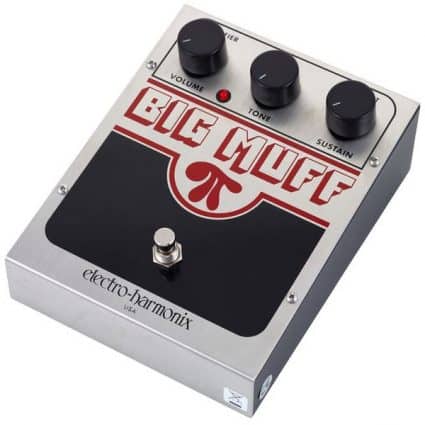
Bob Mayer: A prolific Bell Labs designer with dozens of pioneer patents in cellular and military tech, Mayer was hired by Matthews in the late 1960s. He designed the legendary Linear Power Booster (LPB-1)—the single-transistor device that launched the company in 1968—and went on to help birth the iconic Big Muff Pi circuit.
-
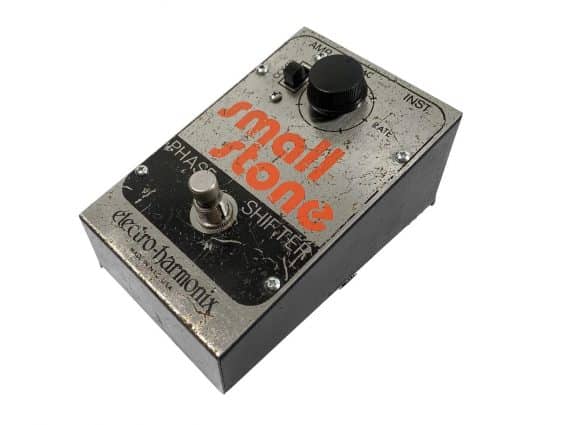
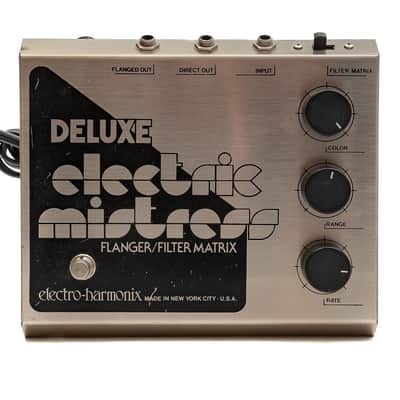
David Cockrell: The brilliant English engineer behind EMS (the legendary synthesizer company utilized by Pink Floyd and The Who) walked through the doors of EHX in the mid-1970s. Cockrell revolutionized the brand by designing the Small Stone phaser, and heavily utilized bucket-brigade analog chips to create the Memory Man and Electric Mistress. He later developed advanced digital sampling technology for the EHX 16-Second Delay, a tech that subsequently heavily influenced Akai’s famous line of hardware samplers before Cockrell returned to EHX to invent the Polyphonic Octave Generator (POG).
Rock ‘n’ Roll Folklore: Hendrix, U2, and the Great Tube Labyrinth
The history of Electro-Harmonix reads like a textbook of rock music milestone moments. The video uncovers incredible historical accounts from Mike Matthews, his son Owen, and long-time sales director Ralph.
The Jimi Hendrix Big Muff Connection
Before EHX took off, Mike Matthews was a concert promoter who crossed paths with Jimi Hendrix while putting together a Chuck Berry show. The two became fast friends, talking shop in a Times Square flea hotel. Years later, when the first batch of Big Muffs was delivered to Manny’s Music in New York, Hendrix purchased one within days. Matthews remembers visiting Hendrix at a recording session shortly after and seeing the Big Muff sitting right on the studio floor.
Outfitting The Edge
In the late 1970s, two relatively unknown musicians from Ireland walked into the EHX sales office just hours before a local soundcheck.
Sales manager Ralph took them into a demo room and showed them how to set up an EHX Deluxe Memory Man delay pedal to bounce seamlessly between two separate amplifier cabinets.
A year later, Ralph went to see a rising band called U2 play at the Ritz, only to discover that the guitarist—The Edge—had taken that exact dual-amp delay setup and turned it into one of the most recognizable signature sounds in alternative rock history.

Survival and the “Tube Labyrinth”
The company’s path wasn’t always smooth; EHX filed for bankruptcy in 1982 and officially closed its doors in 1984. To survive, Matthews began aggressively hustling vacuum tubes and capacitors directly out of his family’s New York apartment.
Mike’s son, Owen Matthews, recalls growing up in what felt like a chaotic electronic warehouse. Cardboard boxes of tubes and components were stacked to the ceiling, cluttering the family balcony and forming an absolute labyrinth that family members had to physically navigate just to reach the bathroom.
This grassroots hustle generated the vital revenue needed to slowly secure new office space, birth the second wave of the company, and eventually resurrect Electro-Harmonix into the global powerhouse it is today.
Made on Earth for Rising Stars
From its humble origins to its current status as a New York manufacturing institution, Electro-Harmonix continues to push boundaries under the eternal banner: “Made on Earth for Rising Stars.”
This legendary slogan—originally coined by 1970s EHX writer Charles Greyel—serves as the title inspiration for an upcoming comprehensive history book authored by Josh Scott of JHS Pedals and graphic artist Daniel Danger, published via Jack White’s publishing house.
If you are building your own effects from DIY kits or dreaming of an engineering degree to design the next generation of stompboxes, the legacy of Electro-Harmonix proves that passion, resilience, and a commitment to pure tone will always stand the test of time.
They are one of my all-time favorite pedal companies, and I love their products, use them all the time and still collect them whenever I see a new one I like the look of.
If you enjoyed this factory tour with Electro-Harmonix, then check out our other EHX-related articles.
The Legendary Roar: A History of the Electro-Harmonix Big Muff Pi
Top 5 Big Muff Clones/Alternatives: Big Muff Circuits With a Twist
The History of the Phaser Pedal: A Guide to Iconic Modulation
Electro-Harmonix Dealers

#Electro-Harmonix #EHX #Mike Matthews
This article may contain affiliate links to Andertons, DeathCloud, Donner, Fender, Gear4Music, Guitar Center, Positive Grid, Stew Mac, Sweetwater, and Thomann that help finance the running costs of GuitarBomb. We will receive a small commission if you buy something through these links. Don’t worry; you pay the same price, and it costs you no extra to use these affiliate links for your purchases.


