

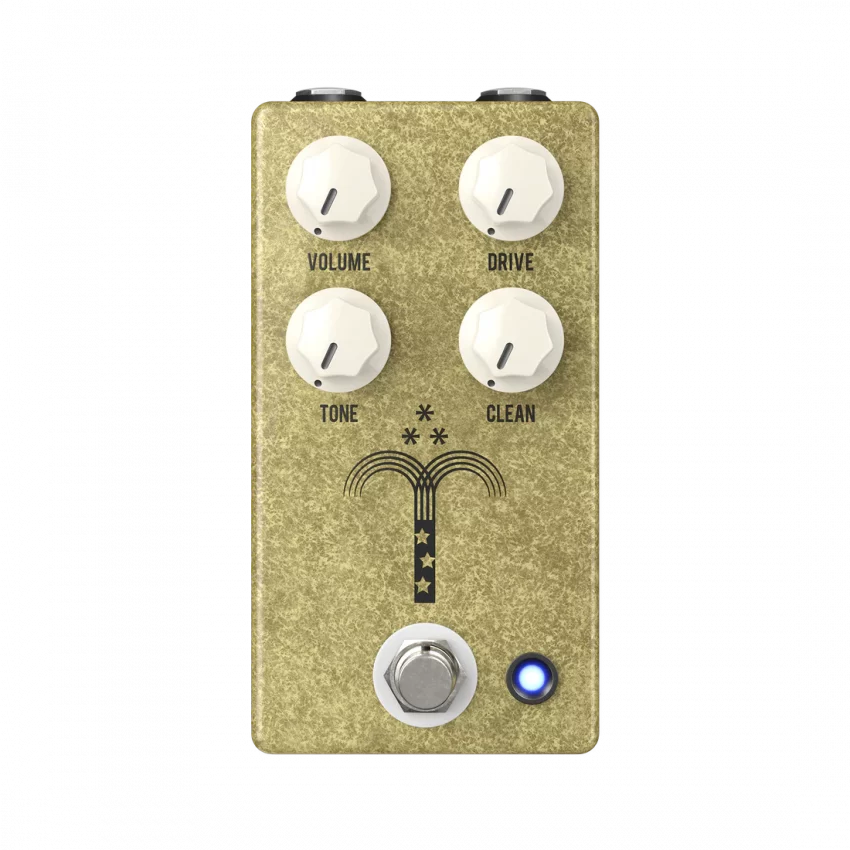
JHS Pedals has officially announced the release of the Morning Glory Clean, a ground-up redesign of their most legendary overdrive circuit. Priced at $179/£179.99, this new iteration introduces a studio-grade parallel clean blend, aimed at guitarists and bassists seeking the ultimate “always-on” first-stage gain pedal without sacrificing the natural dynamics of their instrument.
Redefining Transparency: The Julian Lage Connection
The inspiration for the Morning Glory Clean didn’t come from a lab, but from a soundcheck. After watching jazz virtuoso Julian Lage meticulously dial in his vintage Fender amp and Collings guitar, JHS founder Josh Scott began questioning the limitations of traditional overdrive.
“When you add overdrive—any type of clipping—you lose nuance,” Scott explained. “Pick attack gets compressed and dynamics narrow. We wanted to see if we could make the Morning Glory even better by keeping that magic chime while reintroducing the natural low end and ‘stiffness’ of a high-wattage amp.”

Technical Innovation: Not Just a Simple Mix Knob
Unlike many boutique pedals that “slap” a blend knob onto an existing circuit, the Morning Glory Clean features a sophisticated re-engineering of the classic Bluesbreaker topology.
-
Dual-Gang Potentiometer: The Clean control uses a dual-gang system, ensuring that clean gain scales proportionally with the drive signal. This eliminates volume jumps and phase issues.
-
±9V Dual Power Supply: Utilizing the high-headroom engineering of the Morning Glory V4, this pedal offers massive dynamic range, behaving more like a tube amp than a standard clipping stompbox.
-
Independent Tone Path: The Tone control affects only the overdrive path, leaving your parallel clean signal untouched and pristine.
Performance Across the Board
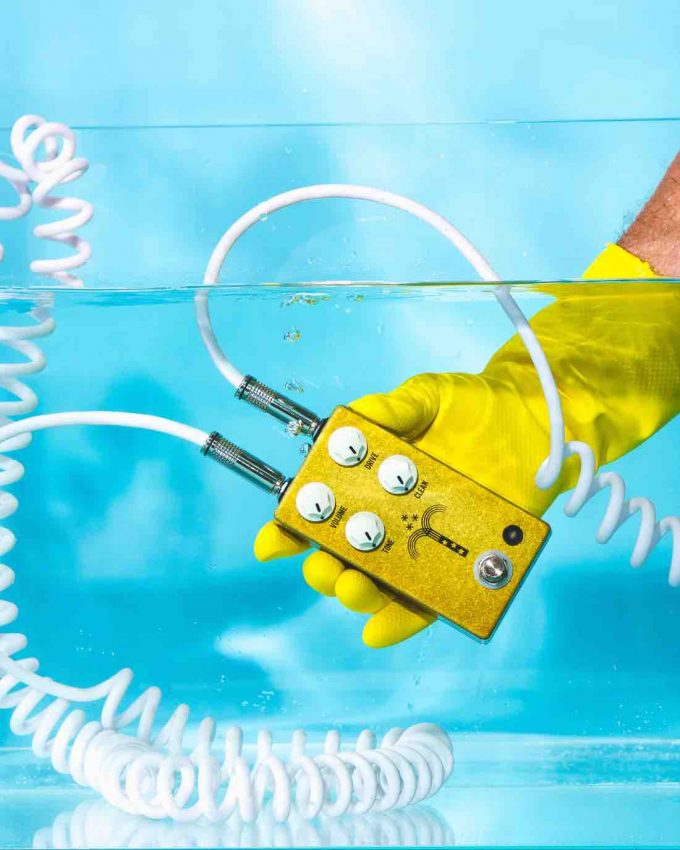
While primarily designed for guitarists, JHS notes that this may be their best bass overdrive to date.
The ability to blend back the original low-frequency content—which is often rolled off in traditional drive circuits—makes it a powerhouse for bassists and users of digital modelers like the Kemper, Quad Cortex, and Helix.
FAQ: Everything You Need to Know
How does the Clean control work?
At full counter-clockwise, you have the original Morning Glory circuit. At full clockwise, you have a pure, clean signal. The pedal is designed to let you crank the Drive, then dial the Clean knob back to find the perfect balance of grit and punch.
Can I use this as a dedicated Clean Boost?
Yes. By setting the Clean knob to 100% (fully clockwise) and increasing the Drive, the pedal functions as a high-headroom clean boost without any clipping.
How does it handle stacking with other pedals?
The Morning Glory Clean is an ideal first-stage overdrive. When placed before distortion, it helps sustain stay “open” rather than compressed. When placed after delays, it creates unique series/parallel textures.
What are the power requirements?
It requires a standard 9V DC Center Negative power supply. Internally, it converts this to a ±9V dual supply for enhanced headroom.
Conclusion: The “Always-On” Essential
The JHS Morning Glory Clean isn’t for players looking for wild, synth-like experimentation. Instead, it is a tool for the tone purist—the player who wants the “dopamine hit” of a perfect base tone that breathes.
By combining the jangly, mid-forward character of the original V1 voicing with modern V4 engineering and a parallel blend, JHS has created a pedal that simply makes your rig sound like a “better” version of itself.
Choosing between the JHS Morning Glory Clean and the standard Morning Glory V4 depends on whether you want “more gain” or “more clarity.” While they share the same DNA, they are designed for different roles on a pedalboard.
Price & Availability
Available at Andertons – £179.99
Available at Sweetwater – $179
Comparison Table: Clean vs. V4
| Feature | Morning Glory Clean | Morning Glory V4 |
| Primary Goal | Ultra-transparent “always-on” tone & parallel blending. | Classic transparent overdrive with dual-stage gain. |
| New Control | Clean Blend (Parallel clean signal). | Gain Toggle (Standard vs. Boost modes). |
| Internal Power | ±9V Dual Supply (Max Headroom). | ±9V Dual Supply (High Headroom). |
| Remote Capability | None. | Red Remote (Switch gain modes via footswitch). |
| Tone Control | Affects Drive path only (Clean stays pure). | Affects the entire signal path. |
| High Cut | None (Low end is managed via Clean blend). | Side-mounted switch (Tames high-end sizzle). |
| Best For | Bassists, digital modelers, and tone purists. | Rock players needing two switchable gain levels. |
Morning Glory Overdrive v4 at Andertons – £179.99
Morning Glory Overdrive v4 at Sweetwater – $199
Morning Glory Overdrive V4 at Thomann – €229
Key Technical Differences
-
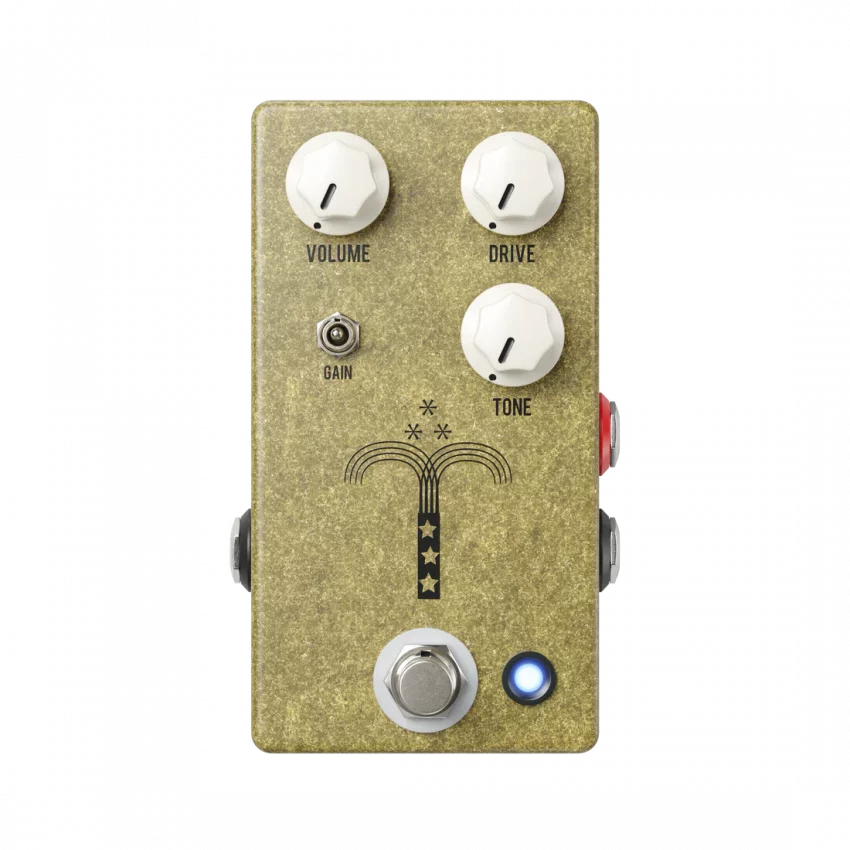
The Blend vs. The Boost: The V4 is effectively two pedals in one, thanks to the Gain toggle (Blue/Red modes). It can go from a light grit to a medium-high gain crunch. The Morning Glory Clean removes the extra gain stage and replaces it with a studio-grade parallel blend. This lets you keep the “stiffness” and low-end punch of your clean amp while layering Morning Glory’s famous shimmer on top.
-
The Tone Stack: In V4, the Tone knob adjusts the pedal’s overall brightness. In the Clean version, the Tone knob only filters the overdriven signal. This means your dry, clean signal remains untouched and full-bandwidth, preventing the “muddiness” that sometimes occurs when blending drive and clean signals.
-
Headroom: While both use high-voltage internal rails, the Clean model is engineered specifically to avoid the compression that naturally happens in the V4 when you crank the drive. It’s designed to feel more like a high-wattage amplifier (think Hiwatt or Twin Reverb) than a traditional drive pedal.

Which one should you choose?
-
Choose the Morning Glory V4 if: You want a versatile overdrive that can handle lead boosts, rock rhythms, and can be switched mid-song via the Red Remote.
-
Choose the Morning Glory Clean if: You play bass, use digital amp modelers (like a Kemper or Helix), or if you find that every other overdrive “thins out” your sound too much.

More Information
#JHS Pedals #Morning Glory Clean #Transparent Overdrive
This article may contain affiliate links to Andertons, DeathCloud, Donner, Fender, Gear4Music, Positive Grid, Sweetwater, and Thomann that help finance the running costs of GuitarBomb. We will receive a small commission if you buy something through these links. Don’t worry; you pay the same price, and it costs you no extra to use these affiliate links for your purchases.


