

The hive is humming once again. Fresh off the release of their analog Bee Bee Dee, Beetronics FX has officially unveiled its first fully digital creation: the Pollinator Hazee Modulated Delay.
While Beetronics is legendary for its boutique analog dirt circuits, the Hazee marks a bold step into the digital realm. Priced at $249, this 8-mode powerhouse isn’t interested in being a precision metronome; it’s a sound-design tool built for “ambeeance,” texture, and experimental grit.
Now Available To Order
The new Pollinator Hazee Modulated Delay from Beetronics is available to order from the following authorized dealers worldwide.
Available at Sweetwater – $249
A Different Kind of Drone: The Hazee Formula
Most modulated delays achieve their “wobble” by varying the delay time, which causes the pitch to drift. The Hazee flips the script. This all-new digital delay has a very different voice compared to their recent analog Bee Bee Dee delay.
By modulating the signal with a filter or tremolo first and then sending it into the delay line, the repeats become evolving copies of a moving sound. The result? A delay that feels more like a living, breathing landscape than a simple echo.
Simple Layout, Complex Textures
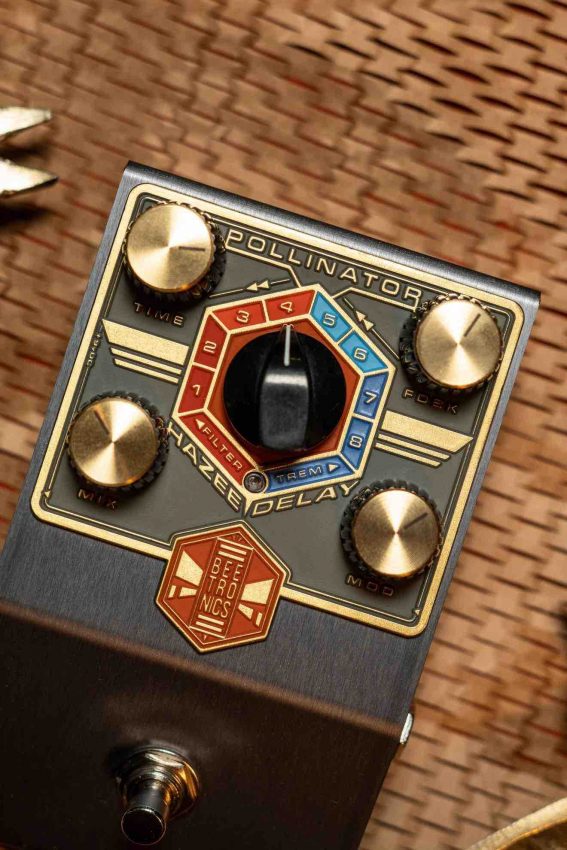
Despite its deep capabilities, the control topology is refreshingly tactile. You won’t find any hidden menus here—just pure, hands-on manipulation:
-
Time: Adjusts the delay length (from tight slaps to sprawling washes).
-
Feedback: Controls the number of repeats.
-
Mix: From 100% dry to fully “Hazee” wet.
-
Modulation: Governs the depth of the filter or tremolo.
-
8-Way Mode Selector: The heart of the hive.

Exploring the 8 Modes of Pollination
The Hazee offers a curated selection of forward, reverse, and octave-up behaviors, categorized by their modulation type:
| Mode | Modulation Type | Direction | Pitch Shift |
| 1 | Filter | Forward | Standard |
| 2 | Filter | Forward | Octave Up |
| 3 | Filter | Reverse | Standard |
| 4 | Filter | Reverse | Octave Up |
| 5 | Tremolo | Reverse | Octave Up |
| 6 | Tremolo | Reverse | Standard |
| 7 | Tremolo | Forward | Octave Up |
| 8 | Tremolo | Forward | Standard |
The Queen Bee (Octave Up) modes are particularly experimental. By reading the delay buffer at twice the speed, the pedal creates rhythmic, shimmering textures that blend seamlessly with your original signal as you sweep the Time knob.
FAQ: Everything You Need to Know
Is the Hazee Delay analog or digital?
This is Beetronics’ first fully digital pedal. While they often use digital control for analog circuits, the signal processing here is digital to allow for complex reverse and octave behaviors.
What is the delay time range?
Beetronics intentionally omits a specific millisecond range. The Hazee is designed as a textural, ambient tool rather than a rhythmic “tap-tempo” style delay.
Is it Mono or Stereo?
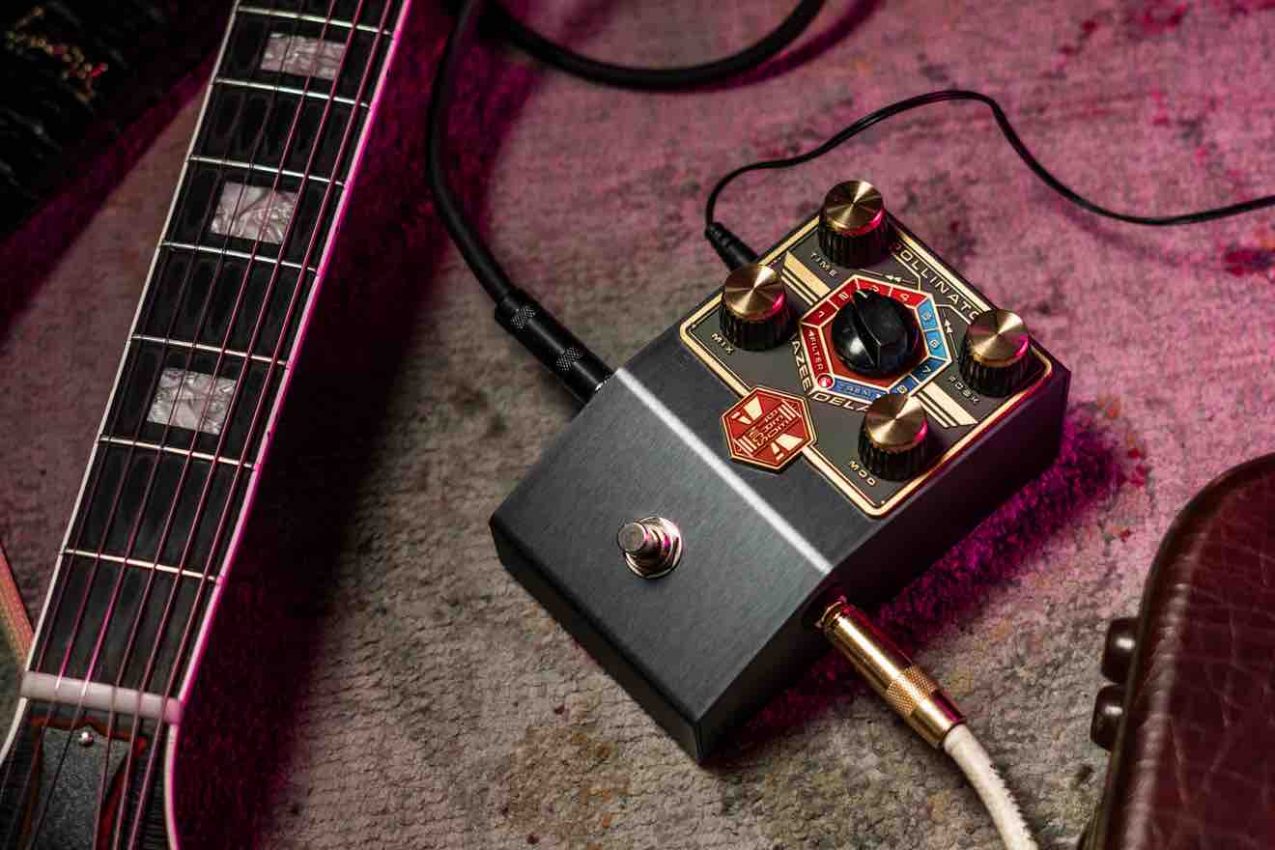
The Hazee is a Mono pedal, keeping it compact and compatible with standard pedalboard setups.
How does it differ from the Bee Bee Dee?
The Bee Bee Dee is a $299 analog Bucket Brigade (BBD) delay with a warmer, darker character. The Hazee ($249) offers digital clarity, reverse modes, and pitch-shifting capabilities not possible in the analog domain.
Final Verdict: Is it Worth the Sting?
If you are a “set-it-and-forget-it” player looking for a basic digital delay, the Hazee might be overkill. However, for shoegaze enthusiasts, ambient explorers, and players who view their pedalboard as an instrument in its own right, the Hazee is a masterclass in character.
It trades clinical precision for “vibe,” offering a unique modulation architecture that makes every repeat feel like a new discovery. The Pollinator Series is off to a flying start—and according to the folks at the hive, more “bees” are already on the way.
More Information
#Beetronics #Pollinator Hazee
This article may contain affiliate links to Andertons, DeathCloud,Donner,Fender, Gear4Music, Positive Grid,Sweetwater, andThomann that help finance the running costs of GuitarBomb. We will receive a small commission if you buy something through these links. Don’t worry; you pay the same price, and it costs you no extra to use these affiliate links for your purchases.


