Decoding the Mastodon: Brent Hinds' Legendary Gear Guide
Explore Brent Hinds' legendary guitar rig, from his Gibson Flying V and boutique Banker builds to his Orange Terror signature amp and unorthodox style

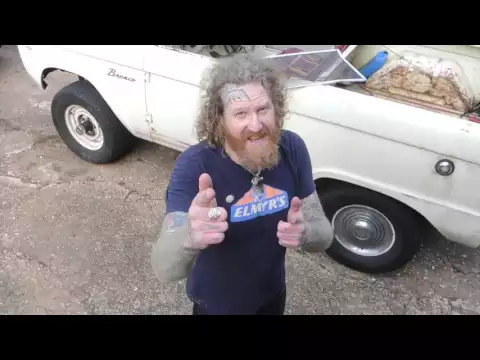
The heavy music world was forever altered when we lost the legendary guitarist following a tragic motorcycle crash in 2025. As Mastodon’s co-vocalist and fearless lead guitar slinger for a quarter-century, Brent Hinds pushed progressive metal into uncharted territory. His self-proclaimed “I'm not a metal guitarist” ethos stemmed from his Alabama country music upbringing, bringing an instinctive, highly melodic hybrid-picking style to drop-tuned chaos.
Tone of the Beast
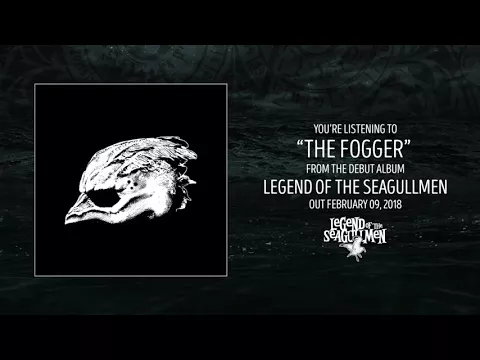
He played guitar in bands beyond Mastodon, including Fiend Without A Face, West End Motel, Giraffe Tongue Orchestra, and Legend of the Seagullmen. I would highly recommend checking out these projects if you want to hear Brent channeling his playing and sound further.
Today, we're diving into Brent Hinds' guitar style and the legendary rig that shaped his monumental tone.
Unorthodox
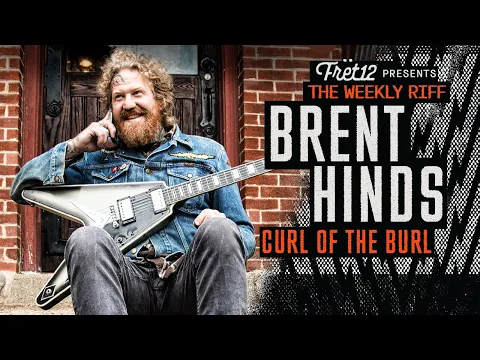
Brent Hinds’ guitar style is one of the most distinctive in modern metal, built on a highly unorthodox foundation: taking the mechanics of traditional bluegrass and country fingerpicking and forcing them through high-gain sludge and progressive metal structures.
As the lead counterpart to Bill Kelliher’s tight, down-picked rhythm foundation in Mastodon, Hinds brings a swirling, chaotic, and heavily textured approach to the band.

Brent Hinds' Individual Style
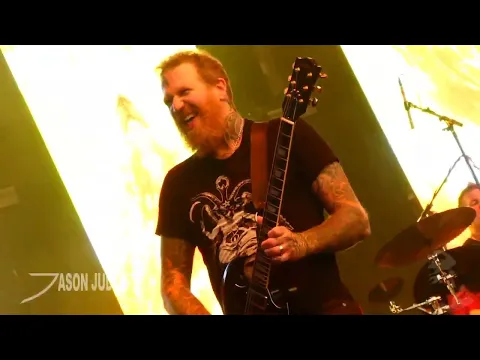
You have to listen to Brent's unique individual style, as no words can really describe his creativity. I've seen him do all manner of oddball guitar techniques over the years, and his playing was just sublime from the heart and hs is truly one of my favorites of any guitar player.
We lost someone who truly pushed genres and melded styles without hesitation, an absolutely fantastic musician. He wasn't afraid of dissonance, and I've seen him push the low strings off the fretboard to get some nasty effects to his riffs. A truly unique guitarist and one who has inspired many musicians with his creativity.
The Bluegrass and Country DNA
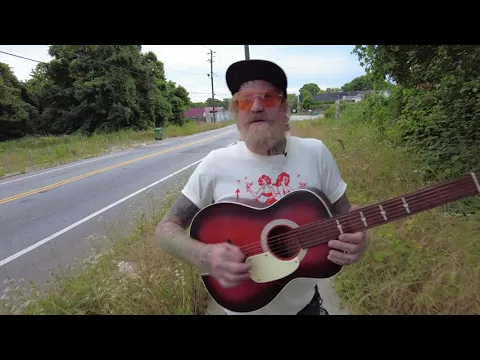
Hinds originally learned to play acoustic guitar (some sources say banjo, but we cannot confirm).
However, we found an interview with his parents on a local TV station in which his father says he bought Brent a guitar on the condition that he take music lessons.

The techniques Brent used in his playing included two main influences: bluegrass and country, with elements of both helping him create his unique style.
- Banjo Rolls in Heavy Metal: His signature riffs (like the intro to "Divinations") rely heavily on banjo rolls—rapid, repeating arpeggio patterns played across adjacent strings.
- Hybrid Picking (Chicken Pickin'): Instead of strictly using a pick for fast string-skipping riffs, he relies heavily on hybrid picking. He uses his pick on the lower strings while simultaneously plucking the higher strings with his middle and ring fingers. This allows him to play wide, intervallic jumps at extreme tempos with a percussive snap that standard alternate picking cannot replicate.
Riff Construction and Tuning
Mastodon’s harmonic landscape is heavy but rarely relies on standard power chords, largely due to how Hinds voices his riffs.
- Drone Strings and Pedal Tones: Hinds frequently utilizes open strings (especially in D Standard, Drop C, and their signature Drop A tuning: AGCFAD) as ringing pedal tones. He plays moving, fretted melodies on the middle strings while letting the low or high open strings ring out continuously, creating massive, dissonant, and chorused textures.
- Wide-Voiced Chords: Because of his fingerpicking background, he naturally favors chord voicings that skip strings. This opens up the midrange, ensuring his guitar cuts through the dense mix of fuzz and heavy bass.
Lead Phrasing and Legato
Hinds’ solos rarely sound like traditional metal shred. There are almost no neoclassical sweep-picking arpeggios.
- Furious Legato: He prefers rapid-fire hammer-ons and pull-offs to articulate his runs.
- Pentatonic Chaos: His phrasing is heavily rooted in blues and pentatonic scales, but he plays them at hyper-speed, injecting chromatic passing tones and erratic bends that give his solos a wild, teetering-on-the-edge-of-collapse feel.
Brent Hinds' Tone and Gain Staging
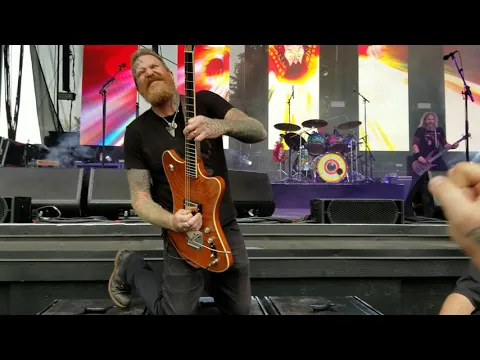
To make complex fingerpicking legible in a metal context, Hinds requires a very specific approach to gain. Too much saturation would turn his open-string dissonance into mud. He historically favors a blend of vintage-voiced, midrange-heavy amps—often running a Marshall JMP or JCM800 alongside an Orange or Diezel for low-end heft.
Pedal-wise, he often relies on the Monster Effects Mastortion to hit the front of the amp, paired with subtle slapback or stereo delays to give his leads a slightly unhinged, classic rock depth rather than a hyper-modern, sterile metal sound.
The Guitars: From Silverbursts to Boutique Builds
At the heart of Brent Hinds guitar rig was his undisputed primary axe: a 2005 Gibson Custom Shop Silverburst Flying V. Commissioned specifically for his demanding touring schedule, this iconic instrument became his visual and sonic signature.
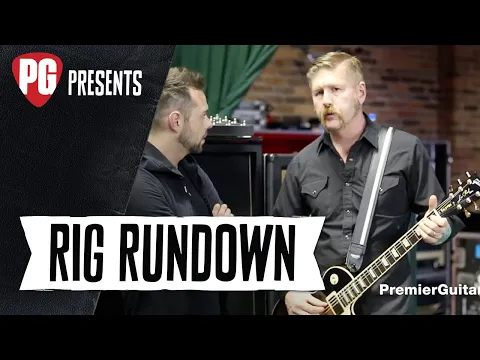
As Premier Guitar’s comprehensive Rig Rundown notes, this V was armed with Gibson Classic '57 humbuckers, providing the dynamic warmth and midrange clarity needed to keep complex chords legible under heavy distortion. I've added the two Rig Rundown videos below this article, and they are well worth a watch, as you can see Brent and Mastodon talking about their setups during those time periods.
Although Brent was often associated with his iconic Silverburst Gibson Flying Vs, he frequently championed the Gibson SG as his favorite instrument. Hinds famously declared a 1983 Gibson SG, which he bought from The Guess Who's keyboard player at a Pittsburgh bar, his "overall favorite guitar for sound, feel, and looks."
Beyond its aggressive tone, which perfectly accommodated his unorthodox hybrid chicken-picking and progressive metal riffing, he appreciated the SG's practical ergonomics. Hinds humorously noted that the guitar's contoured body was exceptionally comfortable to play with a "beer belly," as it sat naturally against his frame compared to a Flying V, which forced him to "suck in [his] gut".
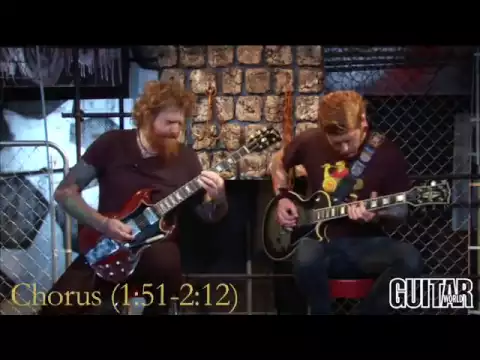
Throughout his 25-year tenure with Mastodon, he wielded several variations of the model, including a vintage white SG Custom with three pickups and a Maestro vibrato, an SG '61 Reissue, and a custom Banker Guitars Ironman SG copy that he used to record some of his final solos before his tragic death in August 2025.
However, his love for V-style and SG guitars extended far beyond Gibson. In his later years, he partnered with guitar manufacturers and premium boutique builders to forge entirely new weapons of doom.
Woodrite Guitars "Dirty B" Signature Vagabond
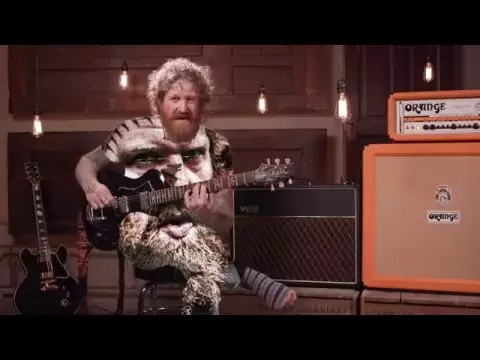
In an extremely limited production run, Hinds collaborated with the doom-metal specialists at Woodrite Guitars to release the "Dirty B" Signature Vagabond. This aggressive machine features a mahogany body draped in a classic Silverburst gloss polyurethane finish, paired with a glued-in mahogany neck (Medium "C" profile) and an ebony fingerboard sporting jumbo stainless steel frets.

Built to handle low tunings right out of the case, it shipped in D-Standard (11-52 strings). Tonally, it is powered by Woodrite Barbarian humbuckers—a 7.8k A5 in the neck and a scorching 13.0k A5 in the bridge—delivering the heavy, sludge-ready aggression that defined Mastodon's most punishing tracks.
Banker Custom "Hammer Axe"
Hinds also wielded the incredible Banker Custom "Hammer Axe" (a heavily modified Redtail model).

Redtail Brent Hinds "Hammer Axe" Edition
This premium boutique build boasted a double-cutaway Honduran Mahogany body capped with a Curly Redwood top, fully bound in 3-ply B/W/B. The quartersawn mahogany neck featured a '59 "D" shape and an ebony fretboard with a 12-inch radius.
What truly set the Hammer Axe apart was its hardware configuration: a Mastery M1 bridge and MV vibrato system, a single bridge humbucker, and a custom arcade-style momentary kill switch, allowing Hinds to introduce stuttering, chaotic rhythmic effects on the fly.
Brent was often seen playing Banker models, and they built him some absolutely beautiful instruments. The relationship between artist and luthier went well beyond just providing guitars.
Banker is the guitar company I associate most with Brent in recent years, and he made their instruments sing. Banker and Hinds had something special that I hoped would have carried on much longer, but sadly it wasn't to be.

Other notable guitars in his legendary arsenal included:
- Epiphone Brent Hinds Flying V Custom: His accessible production signature model featuring a mahogany body, a 1958 rounded neck profile, and a bright ebony fingerboard that adds a snappy attack to complex, lightning-fast riffs.
- Electrical Guitar Company Custom Lucite V: An acrylic-bodied masterpiece featuring an EGC humbucker and a Lace Brent Hinds Hammer Claw bridge pickup. The dense acrylic body provided a wholly unique resonant character and ringing harmonic sustain.
- B.B. King Lucille ES-355: Proving his utter disdain for genre rules, Hinds famously wrangled filthy, feedback-drenched metal tones out of this classic semi-hollow body on stages around the world.

Amplification: Vintage Muscle and Signature Terror
To achieve his crushing, stadium-filling sound, Brent Hinds historically relied on massive amplifier arrays—including vintage 1970s Marshall JMP MkII Lead Series heads stacked with the modern, surgical precision of a 1998 Diezel VH4. But for his signature standalone tone, he turned to Orange Amplification.
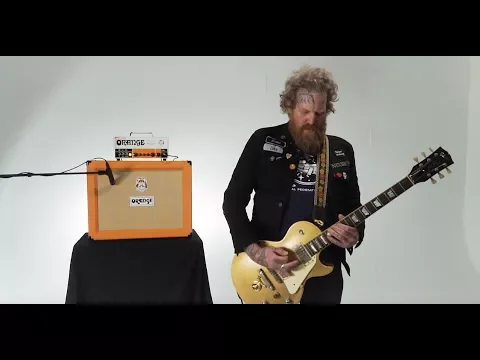
The Orange Brent Hinds Terror Signature Amp
Designed in direct collaboration with the Mastodon frontman, the Orange Brent Hinds Terror is a 15-watt, all-tube lunchbox beast with a split personality. Based loosely on the Rocker 15 Terror but fundamentally re-voiced, it features a dual-channel design driven by three 12AX7s and one 12AT7 in the preamp, pushing a pair of EL84s in the power section.
You could describe these amps as Marshall-meets-Orange.
- The Natural Channel: Featuring only a single volume knob, this channel was specifically redesigned to deliver more bottom end than standard Orange Terror models. It serves as a pristine, warm canvas that takes drive pedals exceptionally well without coloring the signal.
- The Dirty Channel: Here, a completely unique three-stage gain structure comes alive. The Dirty Channel is distinctly brighter at lower gain settings but fattens up aggressively as you crank the gain. Thanks to a custom taper, the heavy saturation kicks in much quicker on the dial.
Crucially for both stage and studio use, the amp features built-in power scaling. A front-panel switch, combined with a rear "Headroom/Bedroom" toggle, lets the amp drop from 15 watts to 7, 1, or even 0.5 watts. This lets players achieve warm EL84 power-amp compression at neighbor-friendly volumes. Visually, it is unmistakably his, featuring his facial tribal-tattoo imagery on the white chassis and matching runic symbols for the setting markers.

Live & Studio Amps
His core live and studio rig featured:
- Marshall JMP MkII Lead Series Heads: Hinds favored two vintage Marshall JMPs (specifically from 1976 and 1977). These legendary heads from the handwired era delivered the harmonically rich, warm tube saturation that formed the structural foundation of his tone.
- 1998 Diezel VH4: To add a devastating layer of modern, articulate high-gain, Hinds stacked his Marshalls with a Diezel VH4. This four-channel beast is revered in metal circles for its tight, surgical precision and thunderous low-end.
- Orange PPC412 Cabinets: He ran these heads into custom-painted Orange 4x12 cabs, moving an extraordinary amount of air and giving his riffs immense physical weight.
Pedals & Effects: Crafting the Chaos
While Mastodon's heaviest riffs were largely amp-driven, Hinds utilized a very specific pedalboard to color his sprawling leads and psychedelic clean passages. Data logged by Equipboard and various touring rundowns reveals a signal chain designed for flexibility.
- Gain Stacking: Hinds controlled his dynamics with an Ernie Ball VP Jr. flowing into an Ibanez Tube Screamer and an MXR GT-OD. He also used the Monster Effects Mastortion to violently push his tube amps over the edge during chaotic solos.
- Modulation and Delay: An MXR Phase 90 added that classic 70s psychedelic swirl to his leads. For time-based effects, he utilized Boss DD-6 and DD-7 Digital Delays. Pushing these units through a sprawling stereo delay configuration provides exactly the kind of massive, panoramic ambiance that became a hallmark of Mastodon’s atmospheric interludes.
- The Secret Weapon: Rather than utilizing a standard guitar wah, Hinds opted for a Dunlop 105Q Cry Baby Bass Wah. The bass wah provides a much wider, more dramatic envelope sweep without needing a toe-click to engage, allowing for instantaneous, aggressive filter effects without losing low-end punch.
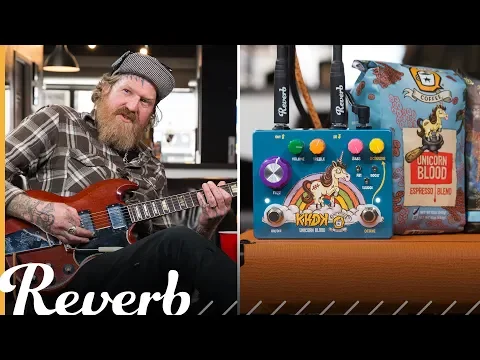
Of course, he also worked on his own pedal line, with many limited-run models released over the years.
The Legacy of a Fearless Player
There is so much more to Brent Hinds guitar playing and sound, but as a fan, I just wanted to share some of these core gear choices.
Brent Hinds was a true original. By seamlessly blending chicken-picking country techniques with apocalyptic, low-tuned doom riffs, he carved out a legacy that will echo for generations.
He wasn't just playing heavy metal; he was playing exactly what he heard in his head, unbothered by the rules, and backed by a rig as massive as his musical imagination.
The world has lost a truly amazing creative individual. RIP Dirty B.
For more coverage of his enduring impact and catalog, explore the archives here: Brent Hinds on Guitar Bomb.
What guitars did Brent Hinds primarily play?
Hinds' main axes included a 2005 Gibson Custom Shop Silverburst Flying V with Classic '57 humbuckers, a 1983 Gibson SG he called his all-time favorite, the Woodrite "Dirty B" Vagabond with Barbarian humbuckers, and custom Banker "Hammer Axe" builds featuring Mastery hardware and arcade kill switches.
What amplifiers made up Brent Hinds' tone?
His core rig stacked vintage 1976–77 Marshall JMP MkII Lead Series heads with a 1998 Diezel VH4 for articulate high-gain, running into custom-painted Orange PPC412 cabinets. His signature amp was the Orange Brent Hinds Terror: a 15-watt dual-channel EL84 head with power scaling and re-voiced bottom end.
How did Brent Hinds' banjo background influence his guitar playing?
Hinds learned banjo first, which shaped his right-hand technique on electric guitar. He applied banjo rolls—rapid arpeggio patterns across adjacent strings—to heavy riffs and relied heavily on hybrid picking, using his pick on lower strings while fingerpicking higher strings simultaneously for percussive, wide intervallic jumps at extreme tempos.
What pedals were essential to Brent Hinds' sound?
Key pedals included an Ernie Ball VP Jr., Ibanez Tube Screamer, MXR GT-OD, Monster Effects Mastortion, MXR Phase 90, Boss DD-6 and DD-7 delays, and notably a Dunlop 105Q Cry Baby Bass Wah—chosen for its wider envelope sweep and low-end retention over standard guitar wahs.
Keep browsing

Get this stuff first.
Leaks, deals and reviews in your inbox, once a week. No spam, just gear.