The Fender Backlash: Is the Guitar Giant’s PR Crisis Getting Expensive?
Fender's PR crisis escalates as retail discounts spike and competitors gain ground. Is anger turning into lost sales?

Fender has upset a significant portion of the guitar community this year. Normally, this kind of internet drama is just noise—people post angry comments, make reaction videos, and eventually move on. But recent market shifts suggest that Fender’s latest string of controversies might be crossing the line from standard online outrage into something much more damaging: an actual loss of sales.
With retailers slashing prices and independent stores reporting sluggish movement, the question is no longer just whether guitarists are angry, but whether that anger is starting to look expensive.
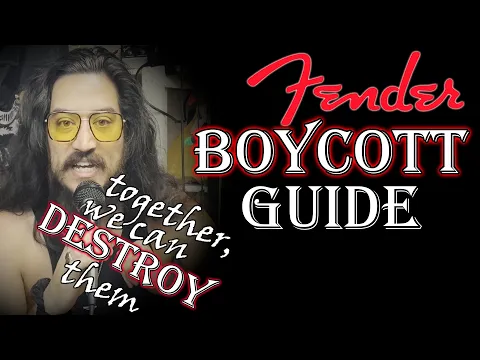
These topics have been discussed online, and the recent video by
Jordan Allen Clark, over on his YouTube channel, covers many of the reasons why guitarists are unhappy with Fender's latest moves.
The Two Prongs of the Backlash
Many of these topics we have discussed previously, and now Jordan has broken them down into distinct points, which we will look at here. Many of these are being talked about on forums and across YouTube.
Channels by John Cordy, Phil McKnight, BigJake Music, and more are talking about this. The recent Andertons video also talks about alternative S-Style guitars, as potential Fender Stratocaster customers look elsewhere for alternatives so they don't have to give Fender any of their money.
The current frustration toward Fender didn't materialize out of thin air. It largely stems from two major public relations missteps that alienated the brand's core demographic:
1. The S-Style Legal Crackdown
Fender recently adopted a much more aggressive legal stance regarding the iconic Stratocaster body shape, sending cease-and-desist letters to smaller builders making "S-style" guitars. While Fender has every right to protect its intellectual property, the design has been around since 1954.
Over the decades, the "S-style" has evolved from a specific Fender product into an entire category of guitar, much like the single-cut or the T-style. By aggressively punching down at smaller builders after decades of establishing this shape as an industry standard, Fender alienated builders, retailers, and players alike.
2. The "Analog AI" Comments
In the midst of the legal controversy, comments resurfaced from Fender's CEO comparing cover musicians and the act of learning someone else's music to a form of "analog AI".
This deeply offended the very people Fender relies on. The entire guitar world is built on imitation; working cover musicians, tribute bands, and beginners sitting in their bedrooms learning Hendrix or Mayer are the lifeblood of the industry. Failing to "read the room" essentially handed the internet another reason to turn against the brand.

When Internet Noise Becomes Real-World Fender Losses
It's easy to dismiss online boycotts. People complain on Facebook, but six months later, they are back in the store buying the product. However, there are compelling signs that buyer behavior is actually shifting:
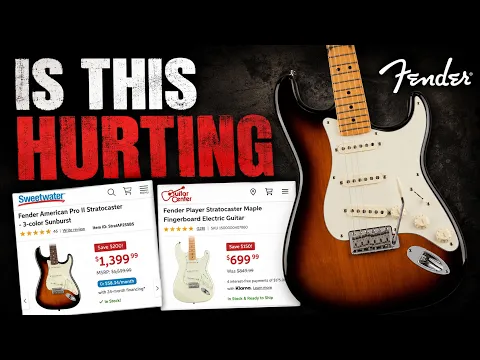
- Widespread Retail Discounts: Major retailers like Sweetwater and Guitar Center are currently running significant promotions across all Fender Musical Instruments Corporation (FMIC) brands, including Squier, EVH, Charvel, and PreSonus. While seasonal sales are normal, heavy discounting across the board during a period of major backlash raises eyebrows.
- Dealers Report Softer Sales: Anecdotal conversations with independent music store owners reveal that Fender sales are dramatically softer than usual.
- Retailers Are Pivoting: Major UK retailer Andertons recently uploaded a video specifically highlighting "alternatives" to the Fender Stratocaster. While Andertons maintains a strong relationship with Fender, retailers make content based on customer demand. The fact that customers are actively asking what they can buy instead of a Stratocaster is a huge red flag for the brand.
- Legal Pushback from Giants: Thomann, one of the world's largest music retailers, is mounting a legal challenge. Because Thomann owns Harley Benton (a brand that makes S-style guitars), Fender's legal strategy directly threatens their business.

The Unintended Consequence: A Boom for Competitors
The incredible irony of Fender’s attempt to fiercely protect the Stratocaster is that it has accidentally launched one of the most effective marketing campaigns for non-Fender guitars in history.
Fender no longer operates in the market of 30 years ago. Today's competition is fierce, with brands like PRS, Yamaha, Ibanez, Sire, and Suhr offering spectacular build quality, modern neck joints, roasted maple necks, and stainless steel frets at highly competitive prices.
By reminding the world that they invented the Stratocaster, Fender inadvertently reminded consumers how many incredible, feature-packed alternatives exist today that don't have "Fender" on the headstock.

The PreSonus Branding Misstep
The push for brand dominance has also spilled over into FMIC's acquisitions. After purchasing PreSonus, Fender began tying its name more closely to the brand's professional recording software, essentially rebranding Studio One as "Fender Studio Pro".

While creating an integrated, Apple-like ecosystem makes sense on a corporate whiteboard, it strips PreSonus of its identity as a professional audio platform. For many users, slapping a guitar company's logo onto professional recording software makes the product feel cheap and overly commercialized—risking the reputation of a previously respected brand.
A Future Textbook Case in PR Mismanagement
In the coming years, Fender’s recent stumbles may well find their way into university public relations and business strategy syllabi as a textbook case study in brand mismanagement.
The situation perfectly illustrates a corporate variation of the "Streisand Effect": by aggressively attempting to suppress S-style competitors, Fender inadvertently directed massive consumer attention straight toward those exact alternatives.
Furthermore, it highlights a crucial lesson for legacy brands—possessing the legal right to enforce intellectual property does not automatically make it a sound business decision, especially when that enforcement angers a deeply entrenched community. Future marketing students will likely study this as a cautionary tale of how tone-deaf executive communication and heavy-handed legal tactics can rapidly erode decades of hard-won brand loyalty.
The Threat of the "Quiet Boycott"
Fender’s biggest threat from this controversy isn't an organized protest with signs and hashtags. Consumer backlash is often incredibly quiet and boring.
The real danger is a customer walking into a music store with $2,000 to spend. They pick up a Fender, remember the cease-and-desist notices, recall the out-of-touch comments about cover musicians, and decide they don't want to be associated with the brand right now. Instead, they try a PRS Silver Sky or a Suhr, and walk out of the store with that.
One lost sale doesn't kill a legacy company. But when you multiply that silent decision across thousands of customers globally, the internet backlash suddenly becomes incredibly expensive.
Fender helped create the modern electric guitar, and no one can take that history away from them. But having a legendary past doesn't guarantee a future—they still have to earn the next sale.
Let us know if your next guitar will be a Fender.
Is Fender's backlash actually hurting sales?
Yes. Beyond social media complaints, retailers report softer Fender sales, widespread discounting across FMIC brands (Squier, EVH, Charvel), and customers actively seeking alternatives. Independent music store owners confirm dramatically reduced demand.
Why did Fender's cease-and-desist letters backfire?
Fender sent aggressive C&Ds to builders making S-style guitars, a design that's been industry standard since 1954. Targeting smaller makers over a decades-old shape alienated retailers, luthiers, and players who see it as an essential guitar category, not exclusive IP.
What did Fender's CEO say about cover musicians?
Comments resurfaced comparing cover musicians and learners to 'analog AI.' This offended guitarists worldwide, since the industry thrives on imitation—beginners learning Hendrix, tribute bands, and working covers are foundational to guitar culture.
Who benefits from Fender's controversy?
Competitors like PRS, Yamaha, Ibanez, Sire, and Suhr are gaining traction. These brands offer modern features (roasted maple necks, stainless steel frets) at competitive prices, making the switch easier for buyers frustrated with Fender.
Keep browsing

Get this stuff first.
Leaks, deals and reviews in your inbox, once a week. No spam, just gear.