JAM Pedals x King Gizzard: Meet the Tiny Amp Destroyer
JAM Pedals x Stu Mackenzie's Tiny Amp Destroyer captures small-amp saturation with dual drive stages, MAGIC voicing, and treble boost. Out now.

Guitarists and King Gizzard & the Lizard Wizard fans can now capture the raw, explosive small-amp saturation heard on recent KGLW records with the all-new JAM Pedals x Stu Mackenzie Tiny Amp Destroyer (TAD) distortion pedal.
The Story Behind the Sound: Pushing Pawn-Shop Amps Beyond the Limit
On recent King Gizzard & the Lizard Wizard records, frontman Stu Mackenzie created a distinct, unhinged sonic character by chaining two Boosters together into a budget Cash Converters pawnshop amplifier. Pushed far beyond its intended limits, the tiny amp generated a unique, boxy breakup and unruly dynamic response that large amplifiers simply cannot replicate.
Another fan of small amps is Josh Homme of Queens of the Stone Age, who sometimes uses an old Peavey Decade amp when recording, so small amps have their place in creating unique and interesting guitar tones. Peavey recreated that amp as a pedal (along with a few more in their back catalog), so this isn't a completely new idea.
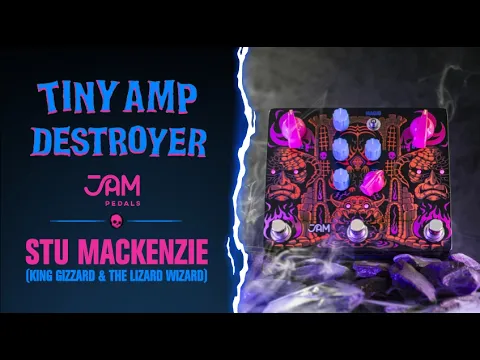
Rather than creating a simple "amp-in-a-box" emulator or cloning the setup outright, the tone wizards at JAM Pedals analyzed where the small amp began to fall apart. Taking those unstable, blown-out characteristics as a foundation, they collaborated directly with Stu Mackenzie to craft a completely fresh, highly controllable circuit: The Tiny Amp Destroyer (TAD).

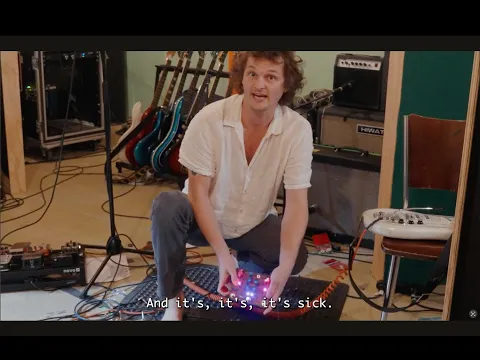
During King Gizzard's tour residency in Athens, JAM Pedals brought a prototype to Stu for real-world testing. After plugging in for just a minute, Stu declared, "You nailed it." The pedal stayed on his board for the rest of the tour, refining its final design through live performance.
Tiny Amp Destroyer Key Features & Control Architecture
The JAM Pedals Tiny Amp Destroyer is a versatile three-footswitch gain machine combining two independent drive stages, active tone shaping, unique character controls, and an independent treble booster.
1. Two Stackable Drive Stages (G1 & G2)
- G2 (Restrained): Handles low-gain breakup, edge-of-breakup edge, and articulate driven tones.
- G1 (Hotter): Delivers aggressive overdrive and thick, heavy distortion.
- Stacking Capability: Run either stage independently or stack G1 and G2 together for maximum saturation and blown-out, fuzz-like drive.
2. Active Tone Shaping & Character Controls
- Active Bass & Treble: Shared active controls featuring boost and cut functionality to tighten low end, add weight, or cut through a dense mix.
- MAGIC Voicing Toggle: Engaging MAGIC shifts the circuit's response to mimic the compressed, boxy, and unstable feel of a tiny practice amp pushed to its absolute limit.
- Notch Control: Progressively cuts a critical frequency band to transform a full, forward tone into a scooped, hollow, and unconventional texture.
Pro Tip for Small-Amp Realism: Keep the gain stages lower, engage the MAGIC toggle, and use the Notch control to dial in the exact amount of small-box character.
3. Independent Treble Booster (Rooster Circuit)
- The third footswitch activates an independent treble booster based on the renowned JAM Pedals Rooster.
- Positioned first in the signal path (
Input → Treble Booster → G1 → G2 → Output), it sharpens pick attack, tightens low end, and alters how both drive stages respond. - Two Internal Voicings (DIP Switch): Choose between Standard (traditional, focused treble boost) or Full (broader frequency response with increased low end). The pedal ships in Full mode.
4. G1 Global Bypass Mode
Designed for live performance flexibility, holding down the G1 footswitch while connected to power engages G1 Global Bypass. In this mode, pressing G1 toggles the entire pedal on or off at once—bringing in stacked drive stages and the treble booster with a single tap.

Original Artwork by Jason Galea
Completing the collaboration, the pedal features original artwork by Jason Galea, King Gizzard’s longtime visual artist responsible for the band’s iconic album covers, concert posters, and stage imagery. The artwork visually captures the spirit of the pedal: a sound barely contained, forcing its way out.

Tiny Amp Destroyer Release Date & Availability
- First Drop / Festival Exclusive: The first 30 Tiny Amp Destroyer pedals were sold exclusively at King Gizzard & the Lizard Wizard's Field of Vision festival on 14 August.
- Worldwide Official Launch: Available globally starting 18 August 2026.
- Limited Signed Edition: The first 50 pedals ordered directly through jampedals.com will be hand-signed by both Stu Mackenzie and Jason Galea.
Technical Specifications
| Feature | Specification |
| Pedal Type | Distortion / Overdrive / Treble Booster |
| Footswitches | 3 (G1 Drive, G2 Drive, Treble Boost) |
| Signal Flow | Input → Treble Booster → G1 → G2 → Output |
| Tone Controls | Active Bass, Active Treble, Notch, Level |
| Special Controls | MAGIC Toggle, Internal DIP Switch (Full / Standard Treble Boost) |
| Bypass Modes | Normal Operation / G1 Global Master Bypass |
| Official Product Page | JAM Pedals Tiny Amp Destroyer |
- +Two stackable drive stages for flexible gain shaping
- +MAGIC toggle captures authentic small-amp blown-out character
- +Independent treble booster affects tone response upstream
- +Active tone controls with boost and cut functionality
- +G1 Global Bypass mode for single-tap on/off live control
- +Original artwork by Jason Galea
- +First 50 units hand-signed by Stu Mackenzie and Jason Galea
What inspired the Tiny Amp Destroyer pedal?
Stu Mackenzie of King Gizzard created a signature sound by chaining two boosters into a budget pawnshop amp, pushing it beyond limits to generate boxy, unruly breakup. JAM Pedals analyzed that unstable character and built a new, controllable circuit with Stu to capture it in pedal form.
Can I use the two drive stages independently or together?
Yes. G2 handles low-gain breakup and articulate tones, while G1 delivers aggressive overdrive and heavy distortion. You can run either stage alone or stack both together for maximum blown-out, fuzz-like saturation.
What does the MAGIC toggle do?
Engaging MAGIC shifts the circuit's response to mimic the compressed, boxy, and unstable feel of a tiny practice amp pushed to its absolute limit—key to capturing the original small-amp character Stu Mackenzie pioneered.
How does the treble booster factor into the signal chain?
The independent treble booster (based on JAM Pedals' Rooster) is positioned first in the signal path before both drive stages. It sharpens pick attack, tightens low end, and alters how the drive stages respond. An internal DIP switch selects between Standard and Full voicing.
Keep browsing

Get this stuff first.
Leaks, deals and reviews in your inbox, once a week. No spam, just gear.