Resonator Guitars 101: Cones, Bodies & Tone
Learn how resonator guitar cones, bodies, and materials shape tone. Expert guide to biscuit, spider & tricone designs, slide techniques, and open tunings.

When the resonator guitar was invented in the 1920s, it was designed to solve a very specific problem: volume. Before the era of electric guitars and amplification, guitarists in big bands needed a way to cut through the mix against loud brass and reed instruments. The solution was to replace the traditional wooden soundboard with spun metal cones—essentially turning the acoustic instrument into a mechanical speaker.
The Resonator Tone Guide
While the volume problem was eventually solved by the amplifier, the side effect of that 1920s invention was a uniquely metallic, complex, and biting tone that became a cornerstone of blues, bluegrass, and folk music.

Anatomy of the Tone: The Cones
The heart of any resonator is its cone system. The bridge sits on top of these thin metal cones, and when you pluck a string, the bridge vibrates them to produce sound. Dig in hard, and the guitar will even start to compress and break up, producing a natural acoustic overdrive.
There are three primary cone designs, each with a distinct tonal footprint:
1. The Biscuit (Single Cone)
The quintessential blues machine. A single, large cone points inward, down into the body of the guitar. A wooden disc (the "biscuit") sits at the apex of the cone, and the bridge saddle rests directly on it.
- Tone: Loud, punchy, and highly assertive with a sharp attack. It offers slightly less sustain than other designs, giving it a characteristic "plucky" or "barking" quality.
- Best For: Delta blues, aggressive slide playing, and cutting through a mix.
- Maintenance: Simple, reliable, and generally the most affordable design.
2. The Spider (Single Cone)
Unlike the biscuit, the spider cone is shaped like a "W" and points outward, projecting sound away from the guitar body. It relies on a cast spider-web bracing system to distribute the string vibration across the cone.
- Tone: Projects forward with a bright, slightly nasal, yet mellow attack.
- Best For: Bluegrass and folk. This design is synonymous with the traditional Dobro sound.
3. The Tricone
Known as the "mother of all resonators," the tricone utilizes three smaller cones connected by an aluminum T-shaped bridge.
- Tone: Because the vibration takes longer to develop across three separate cones, you get a softer attack (less "banjo-y"), increased sustain, and a highly complex, smooth, vocal-like tone.
- Best For: Smooth slide lines, jazz, and intricate fingerpicking.
- Maintenance: The complex design means there are more moving parts, making it slightly more prone to rattles and requiring careful setup.
Wood vs. Metal Bodies
The material that houses the cones plays a massive role in shaping the instrument’s final EQ and presence.
| Body Material | Tonal Characteristics |
| Metal (Brass, Steel, Aluminum) | Highly reverberant, aggressive bite, and maximum volume. Brass, in particular, offers a fantastic balance of strong, mellow sustain while retaining all the metallic attitude. |
| Wood | Warmer, more organic, and less aggressive. Wood naturally softens the attack and rolls off some of the harsh upper-presence. |
Pro Tip: There is a special magic that happens when you pair a Spider Cone with a Wooden Body. The wood tempers the bright, projective punch of the spider cone, creating the warm, resonant signature sound beloved by bluegrass players.
Soundhole Designs: F-Holes vs. Lattice
Because a biscuit-style cone projects sound inward toward the back of the instrument, that acoustic energy needs an efficient way to escape the body. The design of the upper-bout soundholes dictates how that air disperses.
While many resonators utilize traditional violin-style F-holes for a focused, classic projection, others feature a lattice-style soundhole (often nicknamed the "colander" or "sieve" design). The lattice style offers a wider surface area for the air to escape, contributing to a broader, slightly more open acoustic dispersion. Beyond tonal nuances, the choice between F-holes and lattice cutouts is a massive defining factor for the instrument's vintage aesthetic.
The Nuances of Metal Bodies: Brass, Steel, and Aluminum
If you decide to go with a metal-bodied resonator rather than a wooden one, the specific alloy you choose will dramatically affect both the physical weight and the frequency spectrum of your signal. The three most common materials are steel, aluminum, and brass.
While steel offers an incredibly sharp, piercing bite and aluminum provides a much lighter chassis, brass often sits right in the tonal sweet spot.
- The Brass Advantage: A nickel-plated brass body provides a near-perfect equilibrium. It is stronger and structurally more resilient than aluminum, yet it delivers a more mellow, rounded sustain than the aggressive ping of steel. It retains all the classic metallic reverberation and attitude you want from a metal resonator, while naturally softening the harshest transient spikes. Plus, as the plating ages, brass simply looks incredible.
Buying Advice: Maintenance and Reliability
When adding a resonator to your collection or studio rack, it is crucial to consider the long-term mechanical reliability of the cone system. These instruments share more in common with snare drums and mechanical speakers than traditional acoustic guitars.
- The Biscuit (Low Maintenance): The biscuit single-cone is the ultimate workhorse. Because it is a simple, straightforward design with minimal moving parts, there is very little that can mechanically fail. It is largely maintenance-free, making it an affordable and highly reliable choice for gigging and regular tracking.
- The Tricone (High Maintenance): The tricone’s legendary smooth, vocal-like tone comes at a mechanical cost. Because you have three independent cones physically linked by a metal T-shaped bridge, you have three times the hardware and three times the potential for sympathetic vibrations. If a tricone takes a knock or the string tension becomes unbalanced, it is noticeably more prone to developing mysterious rattles and buzzes. They require a more careful ear and a willingness to perform occasional setup tweaks to keep the cones seated perfectly.
Round Neck vs. Square Neck
Before making a purchase, you must verify the neck profile. If you buy a square neck expecting to play standard chords, you are in for a surprise.
- Round Neck: Shaped like a standard acoustic guitar neck. You can fret chords normally, play fingerstyle, or use a slide.
- Square Neck: Designed exclusively for lap-steel style playing. The neck is a thick, square block of wood, and the action sits a massive 1/4" to 1/2" off the fretboard. You cannot fret these instruments, and the tuners face upward so you can tune while the guitar rests flat on your lap. The high action allows for incredibly aggressive slide playing without "fretting out."
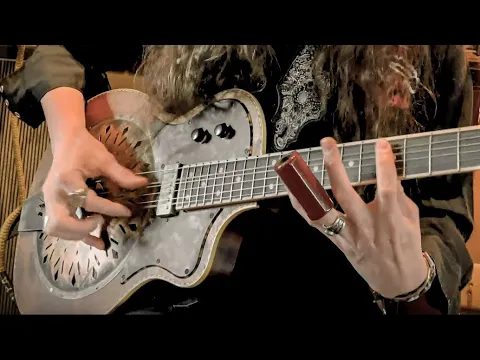
Setting Up for Maximum Tone
To get the absolute most out of a resonator—especially a punchy, quick-decaying single cone—many professional players rely on a hybrid acoustic-electric signal path:
- Use Heavy Electric Strings: Stringing a resonator with heavy-gauge electric guitar strings helps it interact perfectly with magnetic pickups.
- Add a Magnetic Humbucker: Installing a low-profile magnetic pickup (like a mini-humbucker) at the end of the fretboard captures a fat, bass-heavy signal with near-endless sustain.
- Blend the Signals: By blending the acoustic mic'd tone (which captures the metallic bite and air of the cone) with the magnetic pickup signal (which provides the underlying warmth and sustain), you get a massive, three-dimensional tone that covers the entire frequency spectrum.
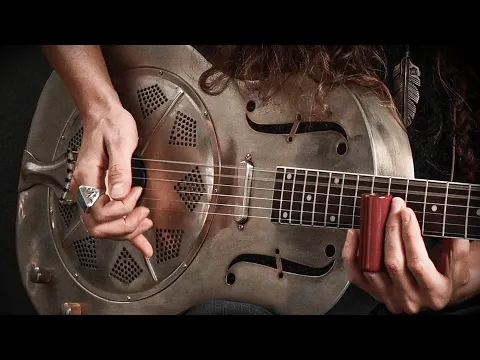
Slide Materials: Glass, Steel, Brass, and Ceramic
The resonator guitar itself is only half the equation when it comes to tone. If you are playing slide, the material you put on your finger acts as the physical frets of the instrument. The density and surface friction of the slide material drastically alter your volume, sustain, and EQ.
Here is how the four most common slide materials interact with the heavy strings of a resonator:
1. Glass (and Pyrex)
Originally popularized by players breaking off the necks of wine bottles or using glass Coricidin medicine bottles, glass offers the smoothest surface of any slide material.
- Tone: Warm, thick, and relatively mellow. It shaves off the harshest treble frequencies.
- Feel: Glides effortlessly over the strings with very little mechanical drag or friction noise.
- Trade-off: Glass is much lighter than metal, which translates to less overall volume and a faster decay in sustain. It requires a lighter touch to avoid "clacking" against the frets if your action isn't perfectly high.
2. Steel
The classic, aggressive blues choice. A heavy stainless steel slide is practically indestructible and built for sheer output.
- Tone: Incredibly bright, biting, and highly projective. It emphasizes the metallic upper-midrange of the resonator cones.
- Feel: Steel grabs the strings slightly more than glass. You will hear more of the abrasive "scrape" and string drag as you move up and down the neck—a gritty, highly desirable artifact in Delta blues.
- Trade-off: The tone can occasionally become too harsh or piercing if not controlled with proper right-hand muting techniques.
3. Brass
Brass and Ceramic Slides: Tone and Feel
Brass is extremely dense and heavy, offering what many players consider the ultimate "best of both worlds" for acoustic resonators.
- Tone: Darker and warmer than steel, but much louder and thicker than glass.
- Feel: The sheer mass of a thick-walled brass slide physically drives the strings harder into the bridge, resulting in massive, near-endless sustain.
- Trade-off: Brass is softer than steel and will tarnish and develop grooves over time, requiring occasional polishing to keep the surface gliding smoothly.
4. Ceramic
Ceramic slides sit in a unique tonal middle-ground and have gained a massive cult following among slide players looking for a boutique, customized feel. They are individually molded or hand-thrown from clay and fired with a glass-like glaze on the outside.
- Tone: Ceramic bridges the gap perfectly between glass and brass. It delivers a thicker, darker tone than glass, with noticeably more sustain, but without the harsh metallic clank of steel. It produces a very rich, fundamental-heavy sound.
- Feel: This is where ceramic truly shines. The outer glazed surface glides across the strings almost as smoothly as Pyrex. However, the inside of the slide is typically left unglazed and porous. This interior texture absorbs finger sweat and provides incredible grip, preventing the slide from slipping or rotating on your finger during fast, aggressive playing.
- Trade-off: Like glass, they are inherently fragile—if you drop a ceramic slide on a hard stage floor, it will shatter. They also tend to have thicker walls than metal slides, which adds welcome mass for tone but requires adjusting your string spacing or muting technique if you have smaller hands.

Essential Open Tunings for Resonator: Open G and Open D
Playing slide guitar in standard tuning is inherently difficult because a straight piece of glass or metal cannot fret complex chord shapes. The secret to the legendary resonator sound is retuning the instrument so that strumming all six strings open produces a perfect major chord. This allows you to play full chords simply by barring the slide straight across a single fret.
While there are dozens of variations, the vast majority of acoustic slide blues, rock, and folk revolves around two foundational tunings: Open G and Open D.
Open G: The "Spanish" Tuning
Strings (Low to High): D – G – D – G – B – D
To get into Open G from standard tuning, you drop your 6th, 5th, and 1st strings down a whole step.
- The Vibe: This is the quintessential Delta blues tuning, favored by legends like Robert Johnson and Muddy Waters. Because the root note (G) is on the 5th string, the 6th string (D) acts as a low, droning 5th interval. This gives Open G a slightly brighter, "jangly" quality with a strong midrange presence.
- The Feel: The relaxed tension on the outer strings makes fingerpicking and string bending incredibly slinky and expressive. It is the perfect tuning for bouncy, rhythmic acoustic blues.
Open D: The "Vestapol" Tuning
Strings (Low to High): D – A – D – F# – A – D
To get into Open D, you drop your 6th, 3rd, 2nd, and 1st strings.
- The Vibe: Darker, heavier, and more thunderous than Open G. Because the root note (D) is firmly planted on the low 6th string, you get a massive, rumbling bass response. When you dig into a metal-bodied resonator in Open D with a heavy slide, it creates the fire-breathing, thick overtones that became the signature sound of Texas firebrands like Johnny Winter and Duane Allman.
- The Feel: The heavy bottom end provides an incredibly solid foundation for aggressive rhythmic playing. It feels massive and resonant, making it ideal for soaring, melodic slide solos where you need the bass notes to hold the groove beneath you.

Warning: Watch Your Cone Tension!
You may hear players talk about "Open A" or "Open E." These are intervalically identical to Open G and Open D, respectively, but they require tuning the strings up. Tuning a heavy-gauge set of strings up to Open E puts immense downward pressure on the bridge. On a resonator, this extreme tension can easily crush the delicate spun-metal cones. Unless you are using a specifically gauged set of ultra-light strings, always tune down to G and D to protect your hardware.

The Resonator as a Modern Tool
Ultimately, a resonator is an acoustic machine. It was born out of a purely mechanical need for volume, but it survived for a century because of its unmistakable attitude. The sympathetic vibrations, the slight metallic ringing, and the aggressive break-up when you pick near the bridge aren't flaws—they are the exact characteristics that give the instrument its soul.
Because they occupy a unique sonic space, they need not be limited to vintage blues or traditional bluegrass. Once you add a magnetic pickup into the equation, the resonator becomes a brilliant canvas for modern experimentation.
Try splitting your signal: capture the raw acoustic bite with a microphone, but route the magnetic humbucker through a transparent overdrive or a wide stereo delay. That blend of biting, mechanical acoustic attack layered over thick, sweeping electric sustain creates a massive, three-dimensional texture that fits effortlessly into heavier alternative and progressive tracks.
Whether you opt for the aggressive bark of a steel biscuit-cone or the singing, vocal-like sustain of a brass tricone, the secret to mastering the resonator is simply to dig in. Drop your strings into Open G, grab a heavy slide, and let the metal do the heavy lifting. The resonator was never designed to be polite—it was built to be heard.

What's the difference between biscuit, spider, and tricone resonator cones?
Biscuit cones are single, loud, and punchy with a sharp attack—ideal for blues. Spider cones point outward for a bright, nasal Dobro tone perfect for bluegrass. Tricones use three smaller cones for a softer attack, increased sustain, and smooth, vocal-like tone with more complex overtones.
Should I choose a wooden or metal-bodied resonator?
Metal bodies (brass, steel, aluminum) are highly reverberant and aggressive with maximum volume. Wooden bodies are warmer and more organic. Brass bodies offer an ideal balance: stronger than aluminum, more mellow than steel, with excellent sustain and vintage aesthetics.
What slide material is best for resonator guitar?
Steel is bright and aggressive for blues. Glass is smooth and warm but quieter. Brass delivers the loudest, thickest tone with endless sustain. Ceramic bridges glass and brass: rich tone, smooth glide, excellent grip, but fragile. Choice depends on desired tone and playing style.
What tunings should I use for resonator slide guitar?
Open G (D-G-D-G-B-D) is the quintessential Delta blues tuning with a bright, jangly midrange. Open D (D-A-D-F#-A-D) is darker and heavier with massive bass response, ideal for aggressive rhythm. Always tune down to G or D—tuning up risks crushing the metal cones.
Keep browsing

Get this stuff first.
Leaks, deals and reviews in your inbox, once a week. No spam, just gear.