

What sounds “fat” and impressive when you’re practicing alone in your bedroom often turns into a muddy, indistinct mess the moment a drummer and bassist join in. This is the “Bedroom Tone Trap”: high gain creates compression that kills your dynamics and helps you disappear into the mix.
Gain Stacking
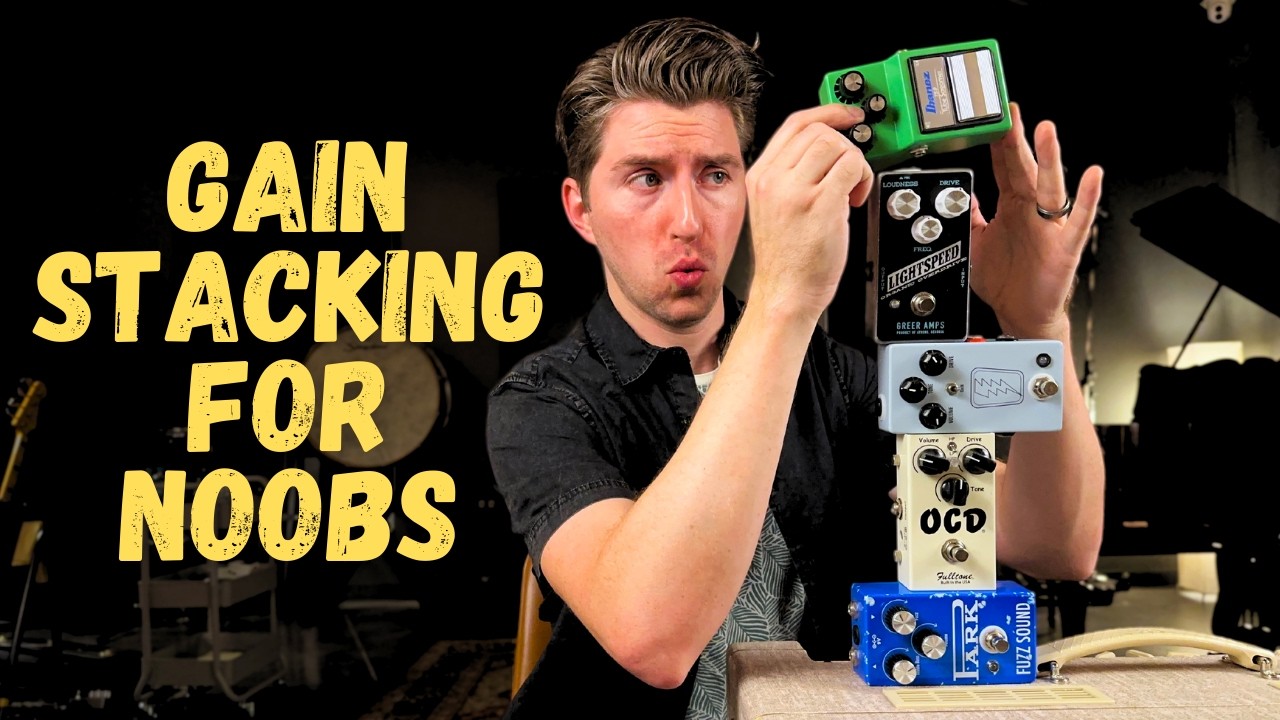
Gain stacking is the solution. Instead of pushing one pedal to its limit, you layer multiple pedals at lower settings. This approach treats distortion as a process rather than a final state, giving you surgical control over your harmonics, sustain, and—most importantly—your ability to cut through a band.
The Physics of the Stack: Order Matters
Before picking pedals, you must understand the “Golden Rule” of placement:
- Gain Before: Increases saturation and compression. It makes the sound “hairier” and easier to play.
- Gain After: Increases overall volume and EQ shaping. It acts like a megaphone for whatever comes before it.

1. Booster & Overdrive: The “Always-On” Foundation
This is the most transparent way to add “more” to your sound without changing your core tone.
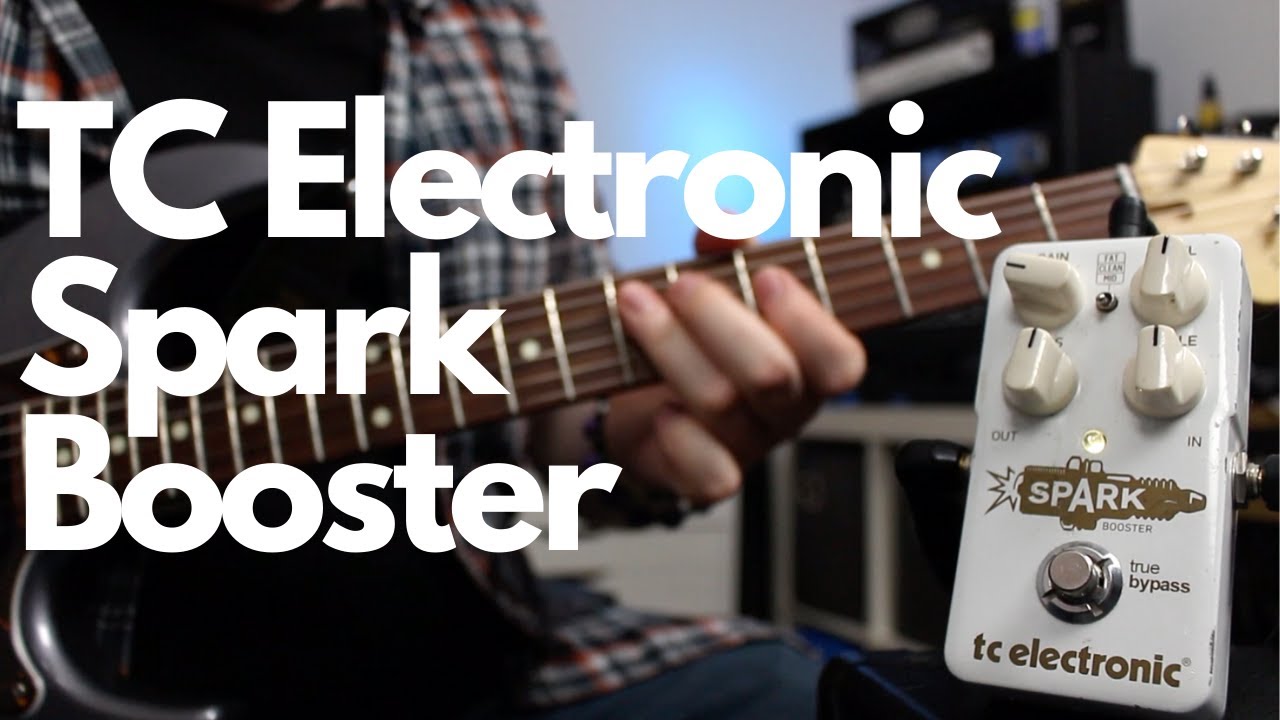
- The Setup: Place a clean boost (like a TC Electronic Spark or MXR Micro Amp) before a light overdrive (like a Boss BD-2 Blues Driver).
- The Result: Pushing the boost makes the Overdrive work harder, turning a light “breakup” into a singing lead tone.
- Example: For a classic SRV-style blues tone, set your Overdrive so it’s clean when you pick lightly and crunchy when you dig in. Kick the booster on for your solo to add sustain without losing the “woodiness” of your guitar.
TC Electronic Spark at Andertons, MXR Micro Amp at Andertons, Boss BD-2 Blues Driver at Andertons.
TC Electronic Spark at Sweetwater, MXR Micro Amp at Sweetwater, Boss BD-2 Blues Driver at Sweetwater.
TC Electronic Spark at Thomann, MXR Micro Amp at Thomann, Boss BD-2 Blues Driver at Thomann.
2. Overdrive & Overdrive: The Four-Channel Rig
Stacking two low-gain overdrives is more organic than one high-gain pedal because it emulates how a tube amp’s preamp and power amp interact.
- The Setup: Pedal A (Low Gain) into Pedal B (Mid Gain).
- The Result: The “Ladder” of Gain
- Both Off: Clean tone.
- Pedal A On: “Edge of breakup” rhythm.
- Pedal B On: Thick classic rock crunch.
- Both On: Saturated lead tone with complex harmonics.
- Example: Use a Klon-style (transparent) pedal to push a Tube Screamer. The Klon adds the “body,” while the Tube Screamer adds the mid-range “honk” that ensures your solos are heard over the cymbals.
Warm Audio Centavo Overdrive at Andertons, Ibanez TS9 Tube Screamer at Andertons.
Warm Audio Centavo Overdrive at Sweetwater, Ibanez TS9 Tube Screamer at Sweetwater.
Warm Audio Centavo Overdrive at Thomann, Ibanez TS9 Tube Screamer at Thomann.

3. Booster & Distortion: Focus and Authority
High-gain distortion pedals often suffer from “flubby” low end. A booster can act as a surgical tool to tighten the response.
- The Setup: A Treble Booster or Mid-Boost before a heavy Distortion (like a ProCo Rat 2).
- The Result: By cutting the bass before it hits the distortion, the distortion remains tight and percussive rather than mushy.
- Example: In Alternative Rock or Metal, use a boost to “chisel” the distortion. It makes fast palm-muted runs sound precise rather than like a wall of static.

4. Overdrive & Fuzz: Taming the Beast
Fuzz is notorious for being uncontrollable. An overdrive can act as a “filter” to make the fuzz more musical.
- The Setup: Fuzz (like a Big Muff) into a low-gain Overdrive.
- The Result: The Overdrive acts like a slightly overdriven amp, smoothing out the harsh “fizzy” top end of the fuzz and adding a mid-range bump that fuzz pedals usually lack.
- Example: Think David Gilmour or Jimi Hendrix. A Fuzz Face into a slightly dirty amp (or an “amp-in-a-box” pedal) creates a violin-like sustain that feels massive but remains melodic.

Be sure to check out our The Legendary Roar: A History of the Electro-Harmonix Big Muff Pi and Top 5 Big Muff Clones/Alternatives: Big Muff Circuits With a Twist articles.

Common Pitfalls to Avoid
- The Gain Multiplication Error: Gain is exponential, not additive. If you have two pedals at 50% gain, the result isn’t 100%—it’s often a feedback-howling mess. Keep your “stacking” pedals at 30% gain or lower.
- Noise Floor Issues: Every gain stage adds “hiss.” If you stack three pedals, you will likely need a Noise Gate at the end of the chain to keep your signal silent when you aren’t playing.
- The Bass Trap: Distortion naturally compresses low frequencies. If you have too much bass on your pedals, your sound will “woof” and lose all definition. Turn the Bass down as you add more pedals.
Summary: Think in Layers
Gain stacking isn’t about more noise; it’s about granularity. By using smaller gain increments, you preserve the character of your guitar and the nuances of your playing.
To make gain stacking concrete, here are four “legendary” combinations. These pairings are found on thousands of professional pedalboards because of how their specific circuit designs complement one another.
1. The “Mid-Push” Lead Stack
The Duo: Ibanez Tube Screamer (TS9/TS808) \ Fulltone OCD V2 or Boss BD-2 Blues Driver
- The Science: The Tube Screamer is famous for its “mid-hump”—it cuts bass and treble while boosting the middle frequencies.1
- How to Set It: Set the Tube Screamer with Gain low (9 o’clock) and Level high (2 o’clock). Set the OCD or Blues Driver to your favorite crunchy rhythm sound.
- The Result: When you kick on the Tube Screamer for a solo, it doesn’t just add distortion; it “tightens” the flubby low end of the second pedal and pushes your guitar into the frequency range where the human ear is most sensitive. It makes your lead lines “jump” out of the mix.

2. The “Modern Boutique” Transparent Stack
The Duo: Klon Centaur (or EHX Soul Food) \Analogman King of Tone (or JHS Morning Glory)
- The Science: Both of these are “transparent” overdrives, meaning they don’t change your guitar’s core EQ drastically. Stacking them creates a very touch-sensitive, amp-like saturation.
- How to Set It: Use the Morning Glory as your “always-on” base tone (edge of breakup). Use the Klon-style pedal as a “clean boost” (Gain at 0, Volume high).
- The Result: This is the “John Mayer” or “Nashville” sound. It sounds like a world-class tube amp pushed to its breaking point. It’s perfect for players who want to maintain the “sparkle” of their Stratocaster or Telecaster while adding grit.
EHX Soul Food at Andertons, JHS Morning Glory V4 at Andertons.
EHX Soul Food at Sweetwater, JHS Morning Glory V4 at Sweetwater.
EHX Soul Food at Thomann, JHS Morning Glory V4 at Thomann.

3. The “Heavy Rock” Tightener
The Duo: Ibanez Tube Screamer \ ProCo RAT 2
- The Science: The RAT is a high-gain “hard-clipping” distortion that can get fuzzy and “loose” at high settings.
- How to Set It: Set the RAT to a medium distortion. Place the Tube Screamer before it with the Tone knob turned up and the Gain nearly at zero.
- The Result: This is a secret weapon for punk, metal, and hard rock. The Tube Screamer acts as a pre-filter, removing the “mud” before the RAT distorts the signal. This results in a high-gain sound that is incredibly fast and articulate—perfect for complex riffs and palm-muting.

4. The “Wall of Sound” Fuzz Tamer
The Duo: Boss BD-2 Blues Driver \Electro-Harmonix Big Muff
- The Science: A Big Muff fuzz often feels “hollow” because it has a scooped mid-range. Stacking an overdrive can fill those holes.
- How to Set It: Set the Big Muff for its classic “singing” sustain. Place the Blues Driver after the Muff with very low gain.
- The Result: The Blues Driver acts as a “pseudo-amplifier.” It takes the wild, buzzy frequencies of the Fuzz and rounds them off, adding back the mid-range “body” that a Big Muff often lacks. This makes the fuzz sound massive and professional rather than thin and fizzy.
Pro-Tip: The “Golden Order” Experiment
If you have two pedals and you aren’t sure which should go first, try this test:
- A into B: Engage both. Listen to the texture.
- B into A: Swap them.
- The Rule: The last pedal in the chain usually provides the “color” and EQ, while the first pedal provides the “push” and extra sustain.
This article may contain affiliate links to Andertons, DeathCloud, Donner, Fender, Gear4Music, Positive Grid, Sweetwater, and Thomann that help finance the running costs of GuitarBomb. We will receive a small commission if you buy something through these links. Don’t worry; you pay the same price, and it costs you no extra to use these affiliate links for your purchases.


