

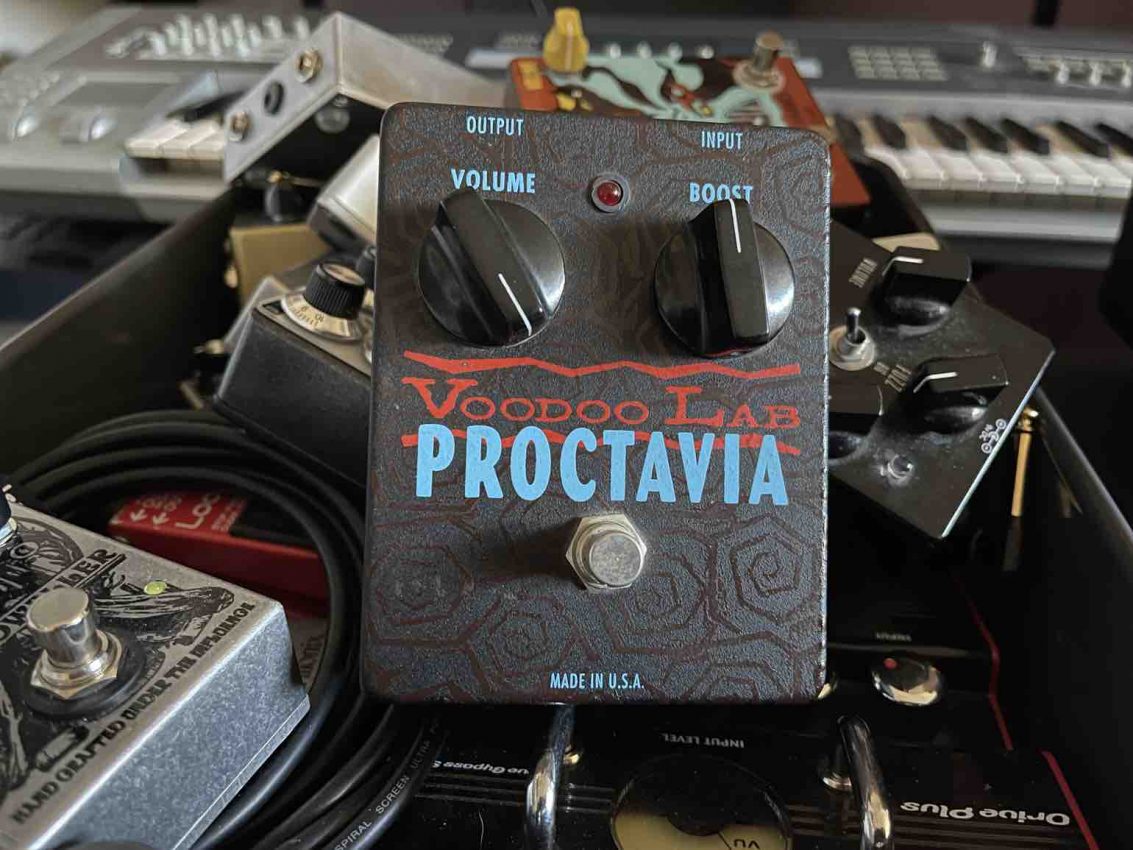
Welcome back to Pedal of the Week! Today, we are diving deep into a fuzz/octave legend that pumps out some serious, high-quality classic tone: the Voodoo Lab Proctavia.
If you have been chasing that aggressive, stringy sting of vintage octave-fuzz, but don’t want to spend thousands on the vintage pedal market, this stompbox is about to become your new best friend. Let’s break down why this pedal is a modern classic.
The History of the Octavia Fuzz
To understand the Voodoo Lab Proctavia, you have to look back at the pedal that inspired it. The octave-doubling fuzz effect (which creates a note an octave above the original fundamental) was originally made famous by guitar gods like Jimi Hendrix on “Are You Experienced” and Jeff Beck on “Wired.” Later, the Tycobrahe Sound Company released its famed “Octavia” pedal, which became Stevie Ray Vaughan’s secret weapon. Today, the original Tycobrahe Octavia is considered one of the rarest and most desirable fuzz units by vintage stompbox collectors everywhere.
Recognizing the magic of that specific circuit, Voodoo Lab set out to create an exact replica. Rather than just making a pedal that sounded “close enough,” Voodoo Lab went the extra mile by sourcing the exact same types of components—including the original transistors, germanium diodes, and a transformer-coupled output stage.
Why It’s An Experience (Features & Tone)
Octavia-style effects aren’t everyone’s cup of tea. Out of the box, they can sound harsh and unintuitive to players unfamiliar with how to tame an octave fuzz. But once you get over that initial hurdle, a whole lot of sonic fun awaits.
The Proctavia delivers outrageous distortion and that piercing high-octave sound heard on countless classic recordings by artists like John Mayer and Michael Landau.
Key Features:
-
Faithful Analog Replica: An exact circuit clone of the legendary Tycobrahe Octavia.
-
Vintage Components: Utilizes the same transistors, germanium diodes, and transformer-coupled output stage as the original.
-
True Bypass Switching: Features a high-reliability gold-contact relay to keep your clean tone pristine.
-
Unique Controls: Simple but highly interactive Resonance and Tone controls.
-
Premium Build: Hand-built in the U.S.A.
Pro-Tips for Playing the Proctavia:
-
Play it in a mix: By itself, an octave fuzz can sound abrasive. In a full band mix, however, that upper octave becomes your best friend, slicing right through the rhythm section without deafening the crowd.
-
Location matters: To make the octave effect really come alive, switch to your neck pickup, roll the tone knob down slightly, and play above the 7th fret on the highest two strings.

Frequently Asked Questions (FAQ)
What is the Voodoo Lab Proctavia based on?
The Voodoo Lab Proctavia is a faithful, exact analog replica of the highly sought-after Tycobrahe Sound Company Octavia pedal, famously used by Stevie Ray Vaughan.
How do you get the best octave sound out of the Proctavia?
Octave fuzzes are notoriously finicky. To get the most pronounced upper octave, play above the 10th or 12th fret, generally on the high E and B strings, using your guitar’s neck pickup.
Is the Voodoo Lab Proctavia true bypass?
Yes! The Proctavia features true bypass switching using a high-reliability gold-contact relay, ensuring that your core tone remains uncolored when the pedal is disengaged.
Where is the Voodoo Lab Proctavia made?
Like all Voodoo Lab products, the Proctavia is hand-built in the U.S.A. using premium, vintage-correct components.

Dialing In The Magic: Classic Proctavia Settings
To get the most out of the Voodoo Lab Proctavia, you have to treat it like a vintage instrument. It responds heavily to your guitar’s controls and your picking technique. Try these two iconic setups to get started:
1. The “Vintage Octavia” Clarity
Focus: Maximum octave definition and that classic “stringy” sting.
-
Boost: Minimum (All the way down)
-
Volume: 12 o’clock (Halfway)
-
Guitar Setup: Select your bridge pickup and roll your guitar’s volume knob back slightly (to about 7 or 8).
-
Technique: Play single notes starting at the 12th fret or higher.
-
Pro Tip: Use fresh strings for the best harmonic content, and strike the strings with the edge of your pick to really make those upper harmonics “chirp.”
2. The “Wall of Sound” Sustain
Focus: Thick, aggressive fuzz with endless singing sustain for lead breaks.
-
Boost: Maximum (All the way up)
-
Volume: To taste (Match your bypassed signal or boost for a solo)
-
Guitar Setup: Crank your guitar volume to 10 to push the pedal’s transformer-coupled stage into saturation.
-
Technique: Perfect for searing blues-rock solos and long, sustained notes that bloom into feedback.
The Verdict
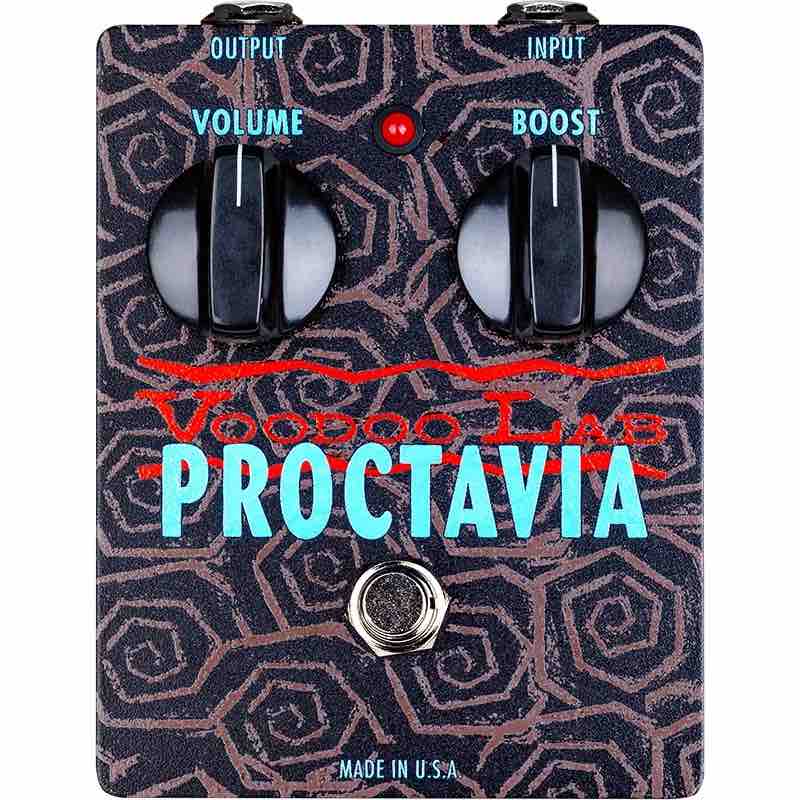
The Voodoo Lab Proctavia is not a pedal for the faint of heart, but for those willing to master its quirks, it is a brilliantly engineered piece of gear. What makes this pedal truly special is Voodoo Lab’s dedication to authenticity; by utilizing the exact same components as the original Tycobrahe circuit, they have captured lightning in a bottle.
I’ve owned my Proctavia for many years, and it is still the ‘top dog’ for great-sounding classic octave fuzz effects in my arsenal of fuzz pedals.
If you want to conjure the spirits of Hendrix, Beck, and SRV without taking out a second mortgage for a vintage unit, the Proctavia is an absolute must-have for your pedalboard.
Score 5/5 for Octave Fuzz fans seeking vintage fuzz tones
More Information
#Voodoo Lab #Proctavia
This article may contain affiliate links to Andertons, DeathCloud, Donner, Fender, Gear4Music, Positive Grid, Sweetwater, and Thomann that help finance the running costs of GuitarBomb. We will receive a small commission if you buy something through these links. Don’t worry; you pay the same price, and it costs you no extra to use these affiliate links for your purchases.


