

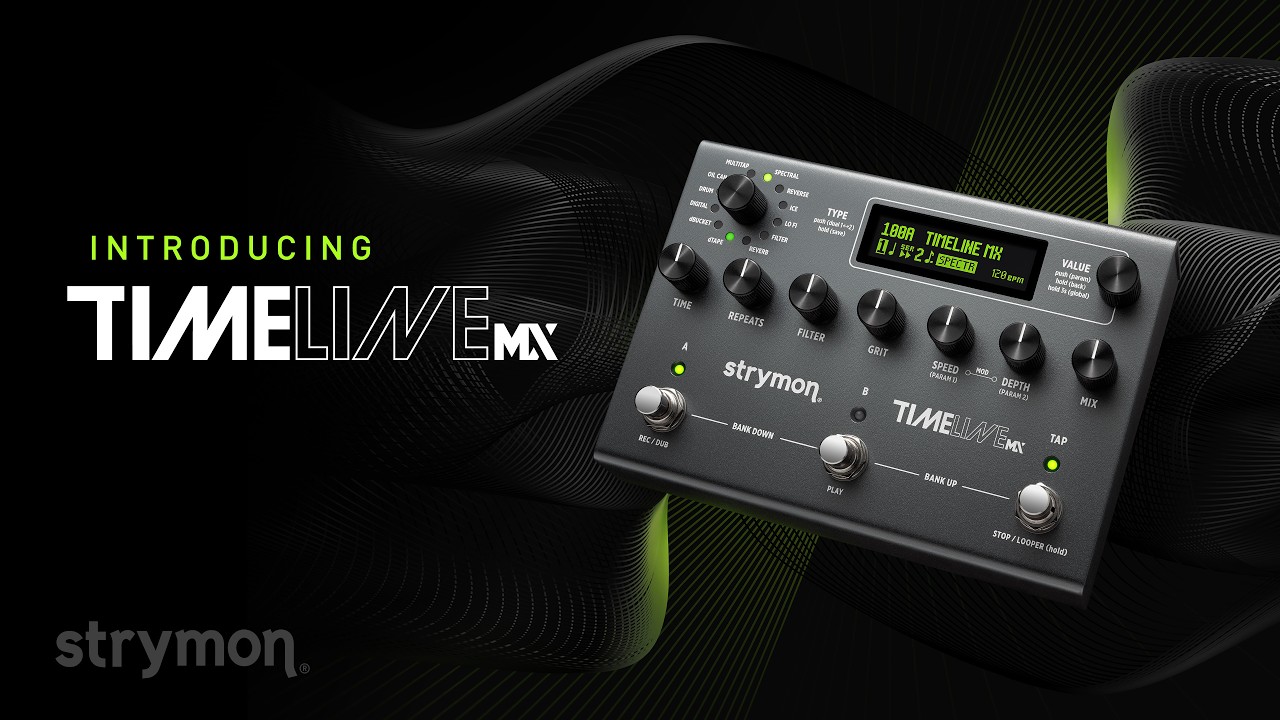
Strymon has officially dropped its most anticipated release yet: the TimeLine MX. Building on the legendary legacy of the original TimeLine, this completely redesigned workstation is less of a standard upgrade and more of a total sonic overhaul. Packed with an insanely powerful tri-core processor, dual-engine routing, and an array of brand-new effects, the TimeLine MX is aiming straight for the crown of the definitive delay pedal.
It follows the 2024 release of the Strymon BigSky MX reverb pedal in the same updated format.
Whether you are a studio purist looking for immaculate, rack-grade fidelity or an ambient guitarist mapping out interstellar soundscapes, this pedal promises to deliver. Let’s dive into the details of this powerhouse machine.
Under the Hood: Raw Tri-Core Processing Power
The real magic of the TimeLine MX starts with its brain. Strymon has outfitted the pedal with a high-performance 800 MHz tri-core ARM processor.
This massive leap in computational power allows the pedal to flawlessly recreate the complex, electro-mechanical quirks of vintage gear, from tape crinkle to analog bucket-brigade degradation, without breaking a sweat.
At $679.00/£699.00, it is a big investment, but probably worth it if you love delay effects.
Advanced Dual-Engine Audio Routing
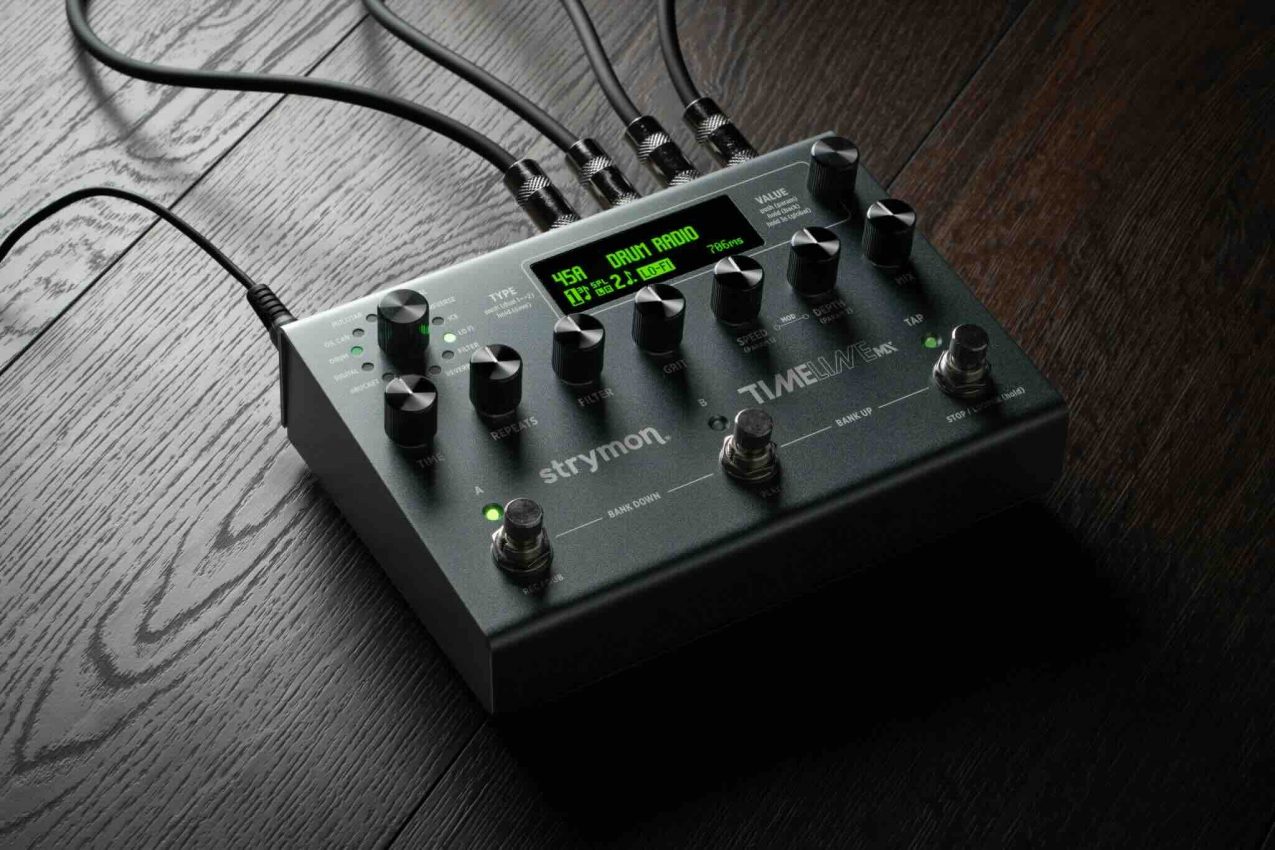
Unlike its predecessor, you are no longer limited to just one delay machine at a time. The TimeLine MX allows you to run two effects simultaneously. You can route these dual delays in:
-
Series: Run one engine directly into the other for dense, evolving textures.
-
Parallel: Keep the paths independent for intricate, cascading polyrhythms.
-
Split: Separate the engines entirely for advanced stereo configurations.
Pro Tip: Thanks to individual output panning per engine, you can push one delay hard left and the other hard right, creating an incredibly wide and immersive stereo field that leaves plenty of room in the center of your mix.
The 12 Delay Engines: From Vintage Vibes to Glitch Panoramas
The TimeLine MX features 12 world-class delay and reverb engines, combining heavily upgraded classics with brand-new algorithmic innovations.
The New Additions
-
Spectral Delay: A uniquely musical granular delay. It slices your signal into tiny fragments, letting you apply pitch-shifting, reverse, time-stretching, or filtering for glorious, glitchy montages.
-
Multitap Delay: An intuitive eight-tap delay that gives you per-tap control over pan, level, feedback, and filter cutoff. Perfect for hypnotic, complex rhythms.
-
Oil Can & Drum Delays: Meticulous recreations of vintage mechanical echo units, complete with dark, murky, syrupy modulations and soft-clip textures.
-
All-New Reverb: Inspired by the Strymon Flint, this luxurious engine handles everything from tight rooms to massive, ambient washes. It even includes a “Grit” control for saturated pre/post-tank overdrive, and optional tremolo on the wet signal.

The Upgraded Classics
-
dTAPE & dBUCKET: Classic tape and analog bucket-brigade modes now feature an all-new “MX voice” alongside the “Classic TimeLine” voice, letting you drive the virtual circuits harder for extra warmth and grit.
-
DIGITAL: Offers four distinct eras of rack delay, including a pristine modern 24/94 mode, snappy 1980s Adaptive Delta Modulation (ADM), and a darker 12-bit conversion character.
-
Reverse, Ice, Lo-Fi, and Filter: Fan favorites return with enhanced tracking, expanded parameters (like the exclusive dVINYL vinyl-crackle algorithm), and tighter performance sync.
Stage-Ready Hardware & Deep Integration
Strymon didn’t just upgrade the internal software; the physical chassis is meticulously engineered for modern rigs. The face of the pedal features a crisp, bright OLED screen that makes navigating deep menus or checking your routing state effortless on dark stages.

USB-C, MIDI & More
The I/O is incredibly flexible. All jacks utilize TRS stereo connections, allowing for mono, stereo, wet/dry, or full wet/dry/wet rig configurations. It also boasts a true hardware effects loop, full MIDI control via USB-C, TRS, or traditional DIN jacks, and a premium analog dry path for zero-latency, unconverted dry signal.

Technical Specifications
| Feature | Specification |
| Processor | 800 MHz Tri-Core ARM Processor |
| Audio Quality | 24-bit, 96 kHz A/D & D/A; 32-bit floating point |
| Signal-to-Noise Ratio | 116 dB typical |
| Input Impedance | 1 Meg Ohm (Discrete JFET Preamp) |
| Output Impedance | 100 Ohm |
| Looper | 5-Minute Stereo Looper (with half-speed/reverse via MIDI) |
| Bypass | True Bypass (Electromechanical Relay) or Buffered |
| Power Requirements | 9VDC, Center-Negative, 500mA minimum |
| Chassis | Anodized Aluminum (5″ x 7″ x 1.87″) |

Frequently Asked Questions (FAQ)
Can I use the looper and delays at the same time?
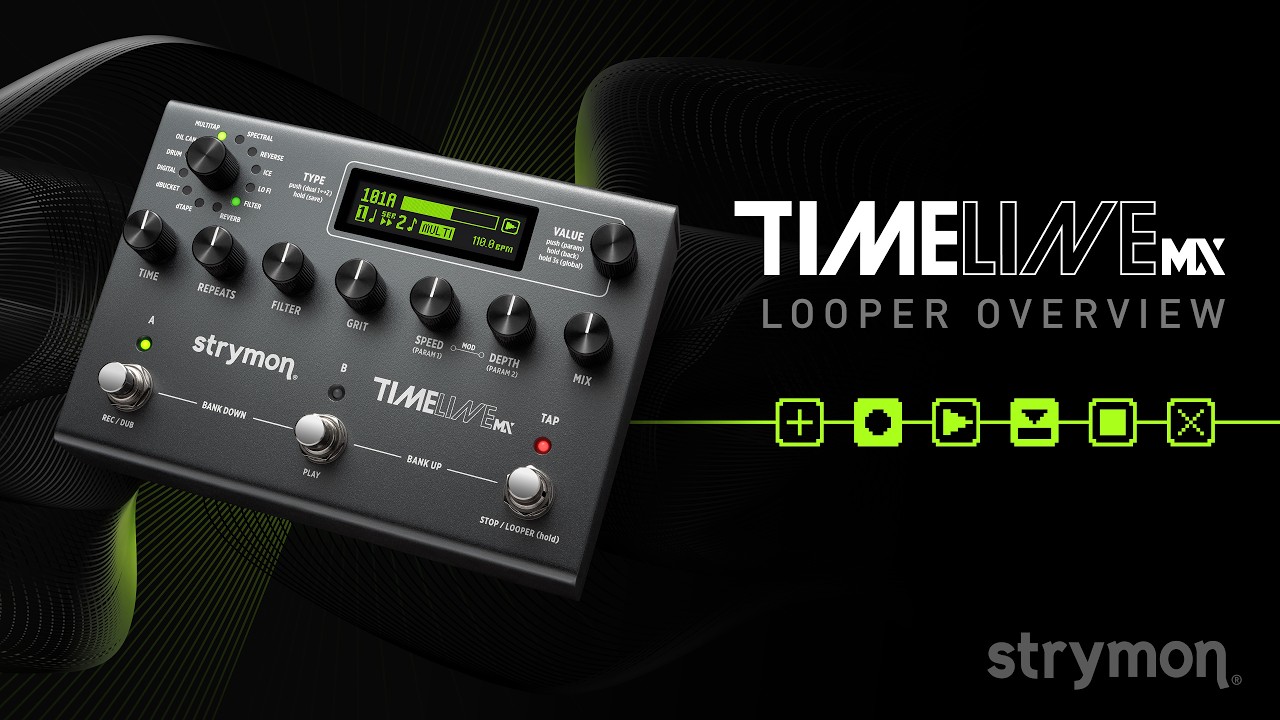
Yes! The integrated 5-minute stereo looper can be placed either before or after your delay effects. In its 1-button mode, you can even record and overdub on the fly without having to manually switch the pedal into a dedicated looper mode.
What is the purpose of the Nixie 2 software?
Nixie 2 is Strymon’s companion desktop software interface. Connected via USB-C, it allows you to edit presets in real time, back up your favorite patches, and manage multiple connected Strymon pedals from one clean dashboard.
Does the TimeLine MX affect my dry guitar tone?
Not at all. The pedal features an Analog Dry Path. Your clean guitar signal passes through a premium discrete JFET preamp and remains entirely in the analog domain from input to output, ensuring zero latency and zero digital conversion on your dry tone.
Can I assign “Swell” and “Duck” to any delay type?
Yes. On the original TimeLine, Swell and Duck were restricted to their own standalone machines. On the TimeLine MX, Swell (smooth fade-in attacks) and Duck (quieter repeats while you play, swelling up when you stop) can be enabled on all 12 engines.

The Verdict
The Strymon TimeLine MX is an absolute masterclass in effects engineering. By addressing the few limitations of the original pedal—namely adding dual-engine routing, a dedicated pristine reverb, and massive processing headroom—Strymon has created a tool that feels virtually future-proof.
It is incredibly intuitive on stage thanks to the clear OLED screen and dedicated Tap tempo, yet infinitely deep for studio sound designers who want to modulate every single parameter via MIDI or an expression pedal.
While it demands a hefty chunk of power (500mA) and premium pedalboard real estate, the sheer amount of sonic capability packed into this anodized aluminum box makes it worth every penny. If you want the ultimate, all-in-one delay and ambient workstation, this is it.
Our Score: 9.8 / 10
Where To Buy
Available now from Strymon authorized dealers worldwide.

#Strymon #TimeLine MX
This article may contain affiliate links to Andertons, DeathCloud, Donner, Fender, Guitar Center, Positive Grid, Reverb, Sweetwater, and Thomann that help finance the running costs of GuitarBomb. We will receive a small commission if you buy something through these links. Don’t worry; you pay the same price, and it costs you no extra to use these affiliate links for your purchases.


