

If you are chasing the holy grail of vintage rock and blues guitar tone, you will inevitably cross paths with the Fuzz Face. Few effects are as instantly recognizable and deeply revered as the Fuzz Face guitar sound and effect. Since its grand arrival in the buzzing British music scene of the 1960s, this deceptively simple pedal has been stamped onto the pedalboards of legends like Jimi Hendrix, David Gilmour, and Eric Johnson.
Renowned for its raw, woolly distortion and incredibly expressive dynamic control, the Fuzz Face is much more than a stompbox—it is an instrument in its own right. Unlike modern high-gain distortion pedals that deliver a static blanket of saturation, the Fuzz Face interacts intimately with your playing style, picking intensity, and your guitar’s volume knob.
Ready to dive into the smiling face of rock history? In this comprehensive guide, we will explore the fascinating history of the Fuzz Face, break down the great Silicon vs. Germanium debate, teach you how to dial in the perfect tone, and answer your most burning FAQs.
Key Takeaways
-
The Fuzz Face is a legendary effect pedal that helped shape psychedelic rock and blues guitar tones.
-
Two main versions exist: Silicon (aggressive, high gain, stable) and Germanium (warmer, more dynamic response, but temperature-sensitive).
-
It interacts with your gear: The pedal responds differently depending on whether your amp is clean or naturally breaking up.
-
Your guitar’s volume knob is key: Rolling back the volume and tone knobs on your guitar drastically changes the fuzz response, cleaning it up into a sparkling overdrive.
-
Placement matters: To get the best sound, place the Fuzz Face first in your effects chain.
A Detailed History of the Fuzz Face: A Sound That Defined Generations
The Birth of the “Smile” (1966)
The Fuzz Face was born in the autumn of 1966, courtesy of Ivor Arbiter of Arbiter Electronics Ltd in London. Arbiter, an amateur drummer who famously sold Ringo Starr his Ludwig kit and hand-drew the iconic “dropped-T” Beatles logo, wanted to create the ultimate controlled fuzz effect.
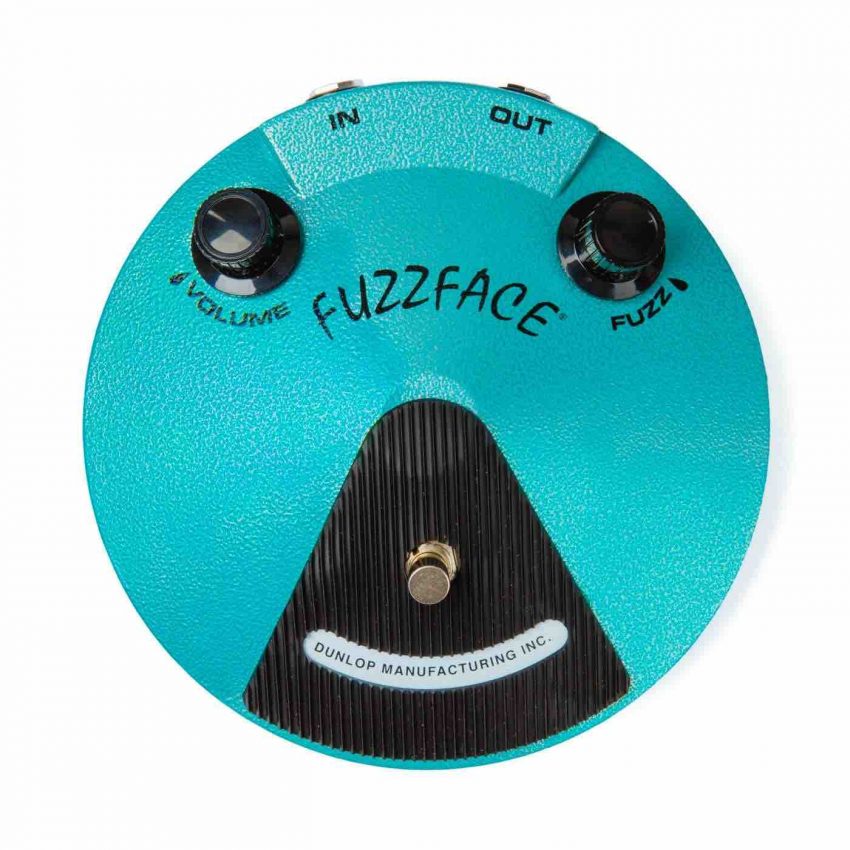
Priced at just £6, the pedal was visually radical. In a market dominated by plain, rectangular boxes, the Fuzz Face had personality. Arbiter cleverly used the heavy cast-iron base of a microphone stand to house the circuit board, giving the pedal its famous round shape. With the placement of the two knobs (Volume and Fuzz), the footswitch, and the semi-circular “Arbiter England” logo, the pedal looked like a smiling face.
The Hendrix Connection and Early Struggles
The Fuzz Face’s circuit was stunningly simple—consisting of just two transistors, three capacitors, and four resistors. However, this simplicity brought chaos. Early spec Fuzz Faces, heavily influenced by the 1965 Sola Sound Tone Bender Mk 1.5, were wildly inconsistent. Denis Cornell, the engineer who tested the early units, recalled the process as a “nightmare” because no two pedals sounded alike due to wide component tolerances.
Jimi Hendrix popularized the pedal in late 1966, utilizing its extreme sensitivity to the guitar’s volume knob to create varied, expressive tones. But finding the right pedal was tough. Hendrix’s legendary tech, Roger Mayer, noted that Jimi would have to buy up to 20 pedals just to find one “magic” unit that sounded good. Even then, the early Germanium components (AC128 and NKT275 transistors) were incredibly sensitive to ambient temperature. A pedal that sounded god-like in a cool club might sound muddy and weak on a hot outdoor festival stage.
Changes, Silicon, and Reissues (1968–Present)
Around 1968, Arbiter-Western merged with Dallas Musical Ltd., creating the Dallas Arbiter Fuzz Face. By this time (and heading into 1969), the company shifted from Germanium to Silicon transistors (BC108C, BC183L, BC209C) to solve the temperature instability issues. Cosmetically, the pedal shifted from its early grey and red hammered paint to bright and dark blues.
Production of the original Fuzz Face ceased in the mid-1970s. However, the 1980s saw a resurgence in demand. Crest Audio (spearheaded by Dave Fox) introduced a successful reissue in 1987. Eventually, in 1993, Dunlop Manufacturing Inc. acquired the Dallas Arbiter and Fuzz Face brands, continuing to produce the legendary pedal—including highly accurate vintage reissues and modern “mini” versions—to this day.

The Science of Fuzz: Silicon vs. Germanium Comparison
If you’ve ever wondered why some Fuzz Faces sound remarkably smooth while others are biting and edgy, the transistor type is the main culprit. Many players own both types to match different musical moods.
Germanium Transistors (1966–1968)
-
Tone: Slightly softer, darker, warmer, and more bass-heavy.
-
Dynamics: Unmatched clean-up. Rolling your guitar’s volume back yields a pristine, glassy overdrive.
-
Drawbacks: Highly unstable. They are incredibly sensitive to temperature changes—a hot stage can completely ruin the pedal’s bias, leading to a sputtering, weak sound.
-
Best For: Vintage blues, classic rock, and the early Hendrix Are You Experienced? tone.
Silicon Transistors (1969–Onwards)
-
Tone: Brighter, sharper, more aggressive, and features noticeably higher gain and sustain.
-
Dynamics: Still cleans up well, but retains more high-end bite when the guitar volume is rolled back compared to Germanium.
-
Drawbacks: Because Silicon transistors have a much higher frequency response, early Silicon Fuzz Faces accidentally acted as radio receivers. If not shielded properly, your guitar cable could pick up local radio broadcasts through the amp!
-
Best For: Harder rock, cutting through a dense live mix, and the aggressive Band of Gypsys Hendrix sound.
Dialing in the Perfect Fuzz Sound
With only two knobs—Volume and Fuzz—this pedal might seem foolproof, but finding the sweet spot takes experimentation.
-
Volume: This controls the output level. If you’re using a pristine clean amp, be careful not to make the volume jump too harsh. On an amp that is already slightly overdriven (the ideal Fuzz Face scenario), cranking the volume helps push the tubes, blending the fuzz seamlessly with the amp’s natural breakup.
-
Fuzz: This is a gain control, not just a distortion level. Set it low for a spitty, broken-speaker effect, or max it out for classic, thick sustain. Pro Tip: Start with the fuzz slightly backed off from the absolute maximum to retain some note definition.
Your Guitar’s Volume Knob: The Secret Weapon
The most defining feature of the Fuzz Face is how it responds to your guitar. Unlike modern distortions that sound thin when you roll back the volume, the Fuzz Face relies on your guitar’s potentiometers.
-
Set your Fuzz Face to full gain.
-
Play with your guitar’s volume knob around 6 or 7. Notice how the fuzz beautifully morphs into a rich, sparkling overdrive.
-
Roll the volume back up to 10 for full-on, soaring saturation when it’s time to solo.
Common Mistakes to Avoid
-
Using a mid-scooped clean amp: Fuzz pedals can get lost in the mix on ultra-clean, mid-scooped amps. Try a warm, midrange-heavy amp setting (like a cranked Marshall) instead.
-
Placing it wrong in the chain: The Fuzz Face is notoriously picky about impedance. It must go first in your signal chain. Placing it after a buffered pedal (like a modern Boss tuner) or a wah pedal will ruin its interaction with your guitar’s pickups and make it sound harsh and screechy.
-
Expecting modern clarity: Fuzz is meant to be messy, unpredictable, and woolly. If you need tight, modern metal definition, this isn’t the pedal for you.
Frequently Asked Questions (FAQ)
Q: Why does my Fuzz Face pick up radio stations?
A: If you have a Silicon-based Fuzz Face, the transistors operate at very high frequencies. Because the original Arbiter designs lacked radio frequency (RF) shielding, your guitar cable acts as an antenna. Modern reissues often feature improved shielding to prevent this!
Q: Should I run my Fuzz Face into a clean or dirty amp?
A: While it is entirely subjective, a Fuzz Face traditionally sounds best running into an amplifier that is just on the “edge of breakup” (slightly dirty). The amp’s natural overdrive smooths out the harsh, fizzy top-end of the fuzz pedal.
Q: Why does my Fuzz Face sound different depending on where I play?
A: If you are using a Germanium Fuzz Face, you are experiencing temperature sensitivity. Germanium transistors change their electrical bias based on ambient heat, meaning the pedal will sound different in a cold basement compared to a hot, sunny outdoor gig.
Q: Can I put a Wah pedal before my Fuzz Face?
A: Usually, no. A standard Wah pedal changes the impedance the Fuzz Face sees, which often results in an ugly, high-pitched squeal. Always put the Fuzz Face before the Wah, or ensure your Wah pedal has a specialized output buffer designed to play nicely with vintage fuzzes.
Conclusion: Unlocking the Fuzz Face Potential
Mastering the Fuzz Face guitar sound and effect is a rite of passage for any serious tone-chaser. Whether you opt for the warm, organic clean-up of a vintage Germanium circuit or the aggressive, soaring sustain of a Silicon model, the Fuzz Face is an effect that demands your participation.
Start by learning to ride your guitar’s volume knob, place the pedal at the very front of your signal chain, and don’t be afraid to let things get a little woolly and unpredictable. Replicating the tones of “Purple Haze” or “Time” takes patience, but once you understand how this historic, smiling piece of metal interacts with your playing, it will permanently change the way you approach the electric guitar.
Where To Buy
(For an even deeper dive into the pedal’s specific circuitry, transition eras, and Roger Mayer’s studio tricks, visit Fuzzfaced.net’s Dallas Fuzz Face History.)
More Information
#Fuzz Face
This article may contain affiliate links to Andertons, DeathCloud, Donner, Fender, Gear4Music, Positive Grid, Sweetwater, and Thomann that help finance the running costs of GuitarBomb. We will receive a small commission if you buy something through these links. Don’t worry; you pay the same price, and it costs you no extra to use these affiliate links for your purchases.


2 thoughts on “The Ultimate Guide to Mastering the Fuzz Face Guitar Sound and Effect”
I have recently learned how to build the Fuzz face Circuit I use tag board it is Beautiful.
🔥🔥🔥🔥❤️
Nice, they are great circuits to build!