

Ever since the original Klon Centaur ceased production, it has become the most mythologized piece of gear in the guitar world. Known for its “transparent” overdrive and legendary mid-hump, original units now command four-figure prices. Fortunately, modern pedal builders have cracked the code, offering everything from part-for-part recreations to modern evolutions.
Whether you want a tiny boost or a massive vintage-style enclosure, here is the ultimate guide to every top-tier Klon clone (or “Klone”) available today.
What is the Klon Centaur? The Story Behind the World’s Most Mythical Overdrive
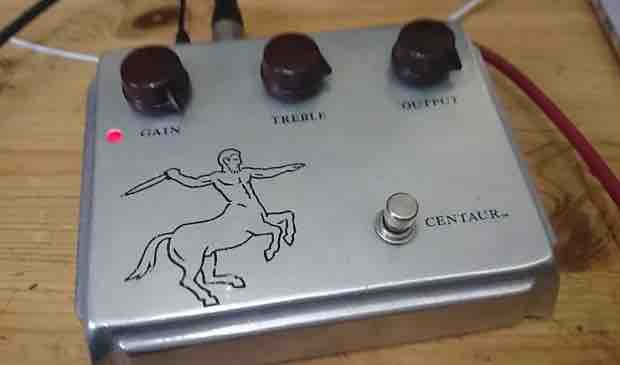
The Klon Centaur is a legendary overdrive pedal created by Bill Finnegan in the early 1990s. Designed to deliver the unmistakably rich and dynamic sound of a cranked tube amp at lower volumes, it quickly earned a cult following. As an owner of two original units, I can tell you the hype regarding their tone, clarity, and responsiveness is well-deserved.
However, in 2026, there are now many options that are indistinguishable from the original circuits and at a range of affordable price points. Before I break down my recommendations for ones you should try and where to find them, let us look at what the famous Klon pedal’s transparent overdrive is all about and some of the pedal’s design history.

Transparent Overdrive
Unlike typical overdrive pedals that heavily color your signal, the Klon is the definitive “transparent overdrive.” It works by blending your clean signal with the overdriven one, preserving your guitar’s natural voice while adding smooth, harmonically rich gain. With its signature germanium clipping diodes, 18V internal headroom, and carefully voiced EQ, it has become the gold standard for pros and tone purists alike.
The Birth of a Legend: History of the Klon Centaur
This isn’t a history of Greek mythology, but for guitar aficionados, the “Centaur” made by Klon Siberia is just as legendary.
In the late ‘80s, Bill Finnegan was gigging the bars of Boston with a Telecaster through a Fender Tweed Twin. He found his “sweet spot” at a volume of 6 or 7, but sound engineers at smaller venues constantly forced him to turn down to 3 or 4. At those lower volumes, his tone lost its harmonic richness.
To fix this, he tried a vintage TS9 Tube Screamer, but he wasn’t satisfied. He felt the TS9 compressed the signal too much, had an unpleasant midrange character, and cut out too much bass.
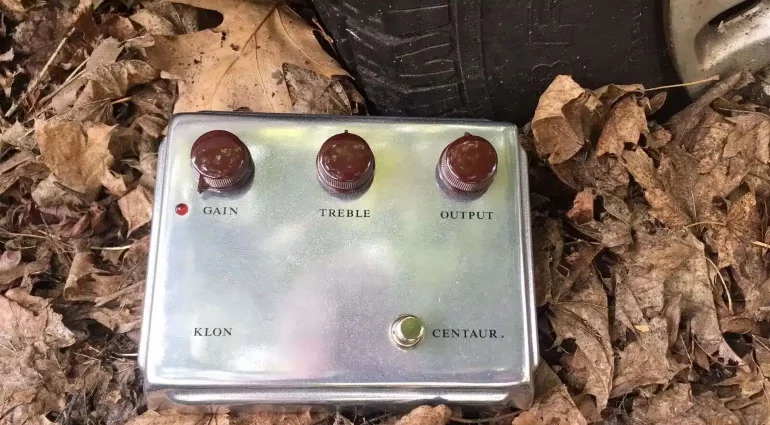
Finnegan teamed up with MIT graduate Fred Fenning to invent a completely new type of overdrive. After years of development, the Klon Centaur Professional Overdrive was released in 1994. Every unit was hand-built by Finnegan, who famously covered the circuit boards in black epoxy (goop) to keep the design a secret. It remained uncopied for over a decade until the “secrets” of the gooped boards were finally revealed in 2008.

What Makes the Klon Centaur So Special?
When the schematics finally leaked online, they confirmed that the Klon was a truly original design. Here is why the “K-Style” circuit is superior to standard overdrives:
-
The Dual-Gang Gain Pot: This is the “magic” of the Klon. The gain control is actually a blend feature. At low settings, it acts as a clean boost; as you turn it up, it seamlessly blends in the overdriven signal. This prevents the heavy compression found in other pedals.
-
Touch Sensitivity: Because of the clean blend, the pedal retains the full dynamic range of your guitar. It responds to your playing—pick lightly for a clean chime, or dig in for a gritty growl, just like a valve amp on the edge of breakup.
-
Voltage Doubling (18V Headroom): The pedal converts a standard 9V power supply to 18 volts internally. This increases “headroom,” allowing the signal to stay clear and punchy at higher volumes before it begins to compress.
-
Germanium Clipping Diodes: While many pedals use cheap silicon diodes, the Centaur uses germanium. These offer a smoother, more “musical” distortion that mimics the natural clipping of vacuum tubes.
Comparison of the Klon Centaur vs. Modern Clones
| Feature | Original Klon Centaur | Modern High-End Clones |
| Price | $4,000 – $6,000+ | $50 – $300 |
| Availability | Extremely Rare (Used Only) | Readily Available |
| Components | Vintage NOS Germanium | Modern equivalents (often identical) |
| Reliability | Vintage / Fragile | Robust / Road-ready |
The Ultimate Klon Clone Buyer’s Guide
Finding the perfect “Klone” is a quest for the ultimate transparent overdrive—that legendary ability to add grit and harmonic richness without masking the natural voice of your guitar and amp. Having two original Klon pedals in my own collection,
I’ve spent countless hours side-by-side with the real thing, learning exactly how that iconic mid-hump and touch-sensitive response should feel.
While the originals are treasures, the modern market has reached a point where you can capture that same professional-grade magic without the vintage price tag. This guide breaks down the best recreations available today to help you find the right fit for your board.
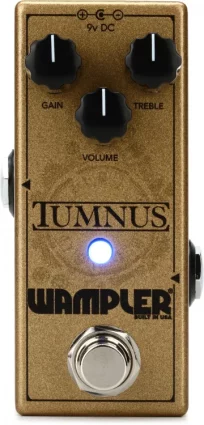
1. Wampler Tumnus & Tumnus Deluxe
The Wampler Tumnus is the gold standard for compact Klones, packing the massive sound of the original into a tiny chassis.
-
Tumnus (Standard): Faithful to the original’s simple three-knob layout and iconic buffer.
-
Tumnus Deluxe: Adds a 3-band EQ and a “Hot” switch for more gain, making it arguably the most versatile Klone on the market.
2. J. Rockett Archer Series
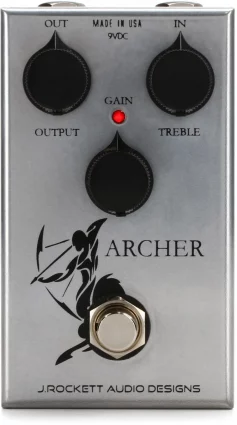
J. Rockett was involved in the production of the original Klon KTR, giving them a unique “insider” edge.
-
Archer (Silver): The classic, clear, and punchy boost.
-
Archer Ikon (Gold): Uses rare Russian germanium diodes for a slightly warmer, more compressed clipping.
-
The Jeff Archer: A signature version using specially selected vintage NOS components.
-
Archer Select: A powerhouse featuring a rotary switch that lets you choose between seven different clipping diode sets.
3. Warm Audio Centavo
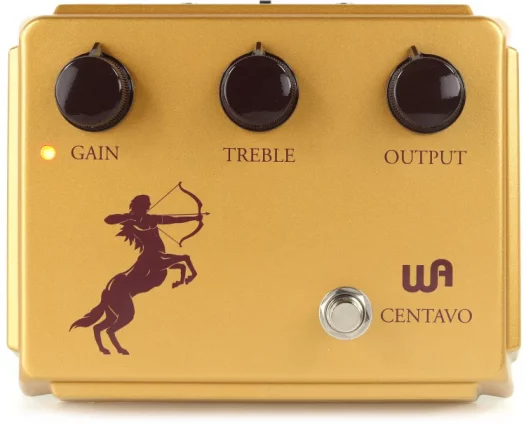
If you want the authentic “big box” experience, the Warm Audio Centavo is a meticulous recreation of the silver-era Klon. It features a “MOD” switch on the back to extend bass response—a favorite for players with single-coil pickups.
4. Origin Effects Halcyon Gold
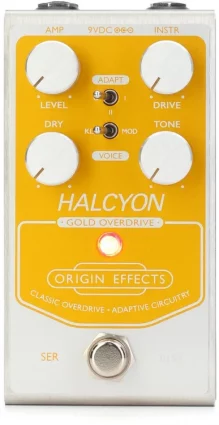
Origin Effects is known for studio-grade engineering. The Halcyon Gold features an “Adaptive” circuit that adjusts the pedal’s voicing in real-time based on your guitar’s volume and pick attack, solving the “stiffness” some find in traditional Klones.
5. Electro-Harmonix Soul Food
The EHX Soul Food is the most popular budget-friendly option. It nails the “transparent boost” functionality and the original’s grainy overdrive at a fraction of the cost.

6. MXR Sugar Drive & Fat Sugar
-
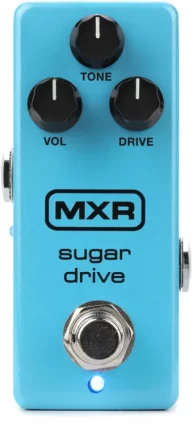
Sugar Drive: A mini-pedal that maintains the internal voltage doubling of the original for massive headroom. It features a side switch to choose between buffered and true-bypass.
-
Fat Sugar: The same circuit in a standard-sized MXR housing for those who prefer larger footswitches and top-mounted jacks.
7. TC Electronic Zeus Drive
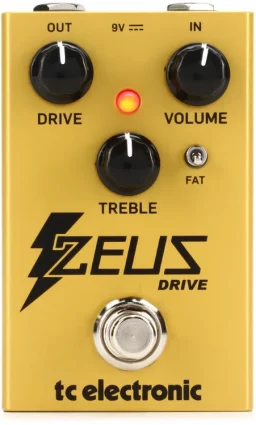
The Zeus Drive is an incredible value. It features a “Fat” switch to boost low-end definition and uses germanium clipping diodes to keep the grit authentic to the original’s character. This is also the most affordable Klone on our list, and so is great for anyone looking for a budget option.
8. Way Huge Conspiracy Theory
Part of the “Smalls” series, the Conspiracy Theory is widely regarded as one of the most accurate-sounding “part-for-part” replicas, known for its smooth, singing sustain.

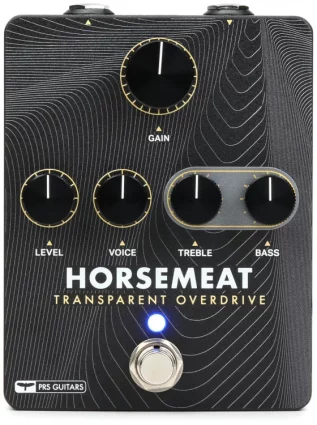
9. PRS Horsemeat
The PRS Horsemeat is a unique take on the circuit. While it stays in the “transparent” realm, it uses germanium diodes and a wide-range EQ to offer more “beef” and harmonic richness than a standard clone.
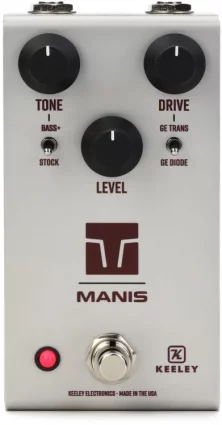
10. Keeley Manis Overdrive Pedal
Robert Keeley didn’t just clone the Klon; he evolved it. The Manis Overdrive Pedal offers more than a typical Centaur, with a choice of clipping a germanium diode or a germanium transistor. It also has two-tone options via its toggle switch, allowing you to choose between a bass boost and a stock Klon-style tone.
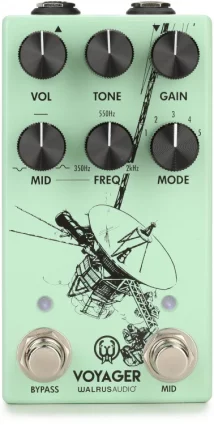
11. Walrus Audio Voyager
The Voyager is a preamp/overdrive that leans into the Klon’s transparent nature. At lower gain settings, it acts as a clarity-enhancing boost; at higher settings, it provides a thick, rich dirt that never masks your guitar’s tone.
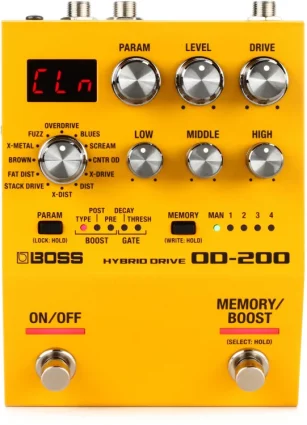
12. Boss OD-200 Hybrid Drive
For the modern player, the OD-200 includes a “Klon” style circuit among its many digital/analog hybrid modes. It adds MIDI, presets, and a built-in gate—perfect for complex rigs.
Klon Clone Comparison Table
| Pedal | Size | Highlight Feature | Best For |
| Wampler Tumnus | Mini | Iconic “Magic” Tone | Pedalboard Space |
| J. Rockett Archer | Compact | Pro-Grade Components | Transparent Boosting |
| Warm Audio Centavo | Large | Authentic Vintage Housing | Purists & Aesthetics |
| Origin Halcyon Gold | Compact | Adaptive Circuitry | Dynamic/Touch Sensitivity |
| EHX Soul Food | Compact | Incredible Price Point | Entry-Level/Budget |
| MXR Sugar Drive | Mini | Internal Voltage Doubling | High Headroom in Mini Form |
| TC Electronic Zeus | Compact | Fat Switch & Germanium | High Value/Low Cost |
| Way Huge Conspiracy | Compact | Smooth Midrange Response | Studio Recording |
| PRS Horsemeat | Compact | Wide-Range EQ Controls | Modern Harmonic Depth |
| Keeley Manis Overdrive | Compact | Germanium diode or a Germanium transistor | More Flexible Klone Tones |
| Walrus Audio Voyager | Compact | Preamp-Style Clarity | Always-On Sweetening |
| Boss OD-200 | Medium | Digital/Analog Hybrid MIDI | Professional Touring Rigs |

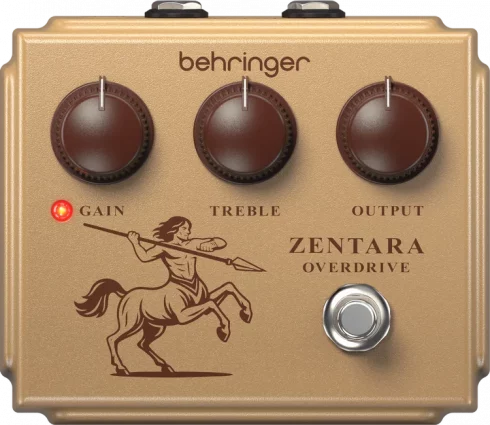
Bonus Budget Pick: Behringer Zentara Overdrive
If you are looking for an affordable entry point into the world of transparent overdrive, the Behringer Zentara is the ultimate “bang-for-your-buck” contender. Behringer has a long history of making classic circuits accessible to everyone, and the Zentara is their take on the legendary gold-box magic.
-
Why it stands out: It captures the essential characteristics of the Klon circuit—the transparent gain, the responsive tone control, and the high-headroom output—at a price point that is accessible to any beginner or hobbyist.
-
The Sound: Despite its budget-friendly price, it delivers that signature “clean-to-mean” transition. It functions excellently as an “always-on” sweetener, adding a bit of life to a solid-state amp or giving a tube amp that extra nudge into saturation.
-
Best For: Students, bedroom players, or anyone who wants to experiment with the Klon sound for the first time without a significant investment.
Frequently Asked Questions (FAQ)
What is the “Klon Buffer”?
The original Klon featured a high-quality buffer that stayed active even when the pedal was off. This helped preserve high-end frequencies over long cable runs. Most high-end clones (like the Tumnus or Archer) include this buffer.
Is it better as a boost or an overdrive?
While it has a unique overdrive sound, most professional guitarists use Klones as a “Clean Boost” (Gain low, Volume high). This pushes a tube amplifier into its own natural distortion, creating a “more of what you already have” feel.
Why are germanium diodes important?
The original Centaur used specific “magic” germanium diodes for clipping. These diodes create a smoother, more musical distortion. High-end clones like the Archer Ikon and Centavo go to great lengths to source these specific components.
Our Thoughts
Whether you are chasing the exact compression of a gold-box original or simply looking for a “transparent” way to push your favorite tube amp, there has never been a better time to be a gear collector. As someone who keeps two original Klons on my own shelf, I can tell you that while the magic of the vintage units is real, the gap between the “myth” and these modern recreations has never been smaller.
From the studio-grade precision of the Origin Effects Halcyon Gold to the incredible accessibility of the Behringer Zentara, the “K-style” circuit is no longer a gatekept secret—it’s a versatile tool available to every guitarist. The right choice ultimately depends on your board space, your budget, and how much you value those specific germanium diodes.
No matter which pedal you choose from this list, you’re adding a great option to your signal chain that will help your guitar cut through the mix with clarity and grit.
More Information
#Klon Centaur #Klon Clone
This article may contain affiliate links to Andertons, DeathCloud,Donner, Fender, Gear4Music, Positive Grid, Sweetwater, and Thomann that help finance the running costs of GuitarBomb. We will receive a small commission if you buy something through these links. Don’t worry; you pay the same price, and it costs you no extra to use these affiliate links for your purchases.


