

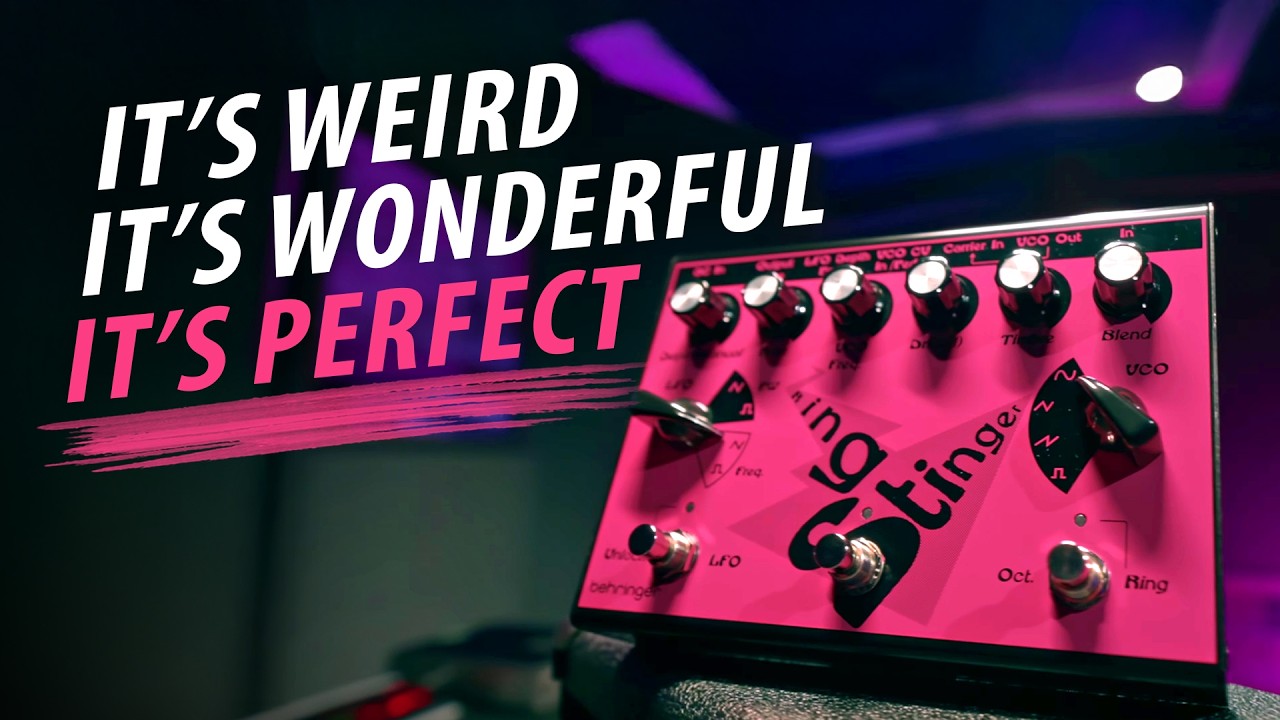
Behringer has officially announced the Ring Stinger, a faithful recreation of the legendary and elusive Lovetone Ring Stinger. This “psychedelic” analogue multi-effects pedal brings back the chaotic, clangorous, and beautiful textures of the 90s cult classic at a fraction of the original’s vintage market price.
UPDATE Lovetone Clone #2
For decades, the original Lovetone Ring Stinger has been a “holy grail” for experimental guitarists and synth enthusiasts alike. Known for its “Barbie-pink” aesthetic and unpredictable sonic character, it was a staple for artists seeking everything from metallic “Dalek” voices to rich, germanium-based octave fuzz.
Available now at Andertons now -£99
Available now at Sweetwater now -$119
Available now at Thomann now – €98
Following on from their recent Meatball clone, we now have another Lovetone copy from Uli and his team.
Behringer Meatball
Available at Andertons, priced at £99
Available at Thomann, priced at €98
Available at Sweetwater, priced at $119
Now, Behringer is making this complex piece of sound-design history accessible to everyone.
Key Features & Breakdown
The Behringer Ring Stinger is more than just a ring modulator; it is a comprehensive analogue workstation for signal destruction and transformation.
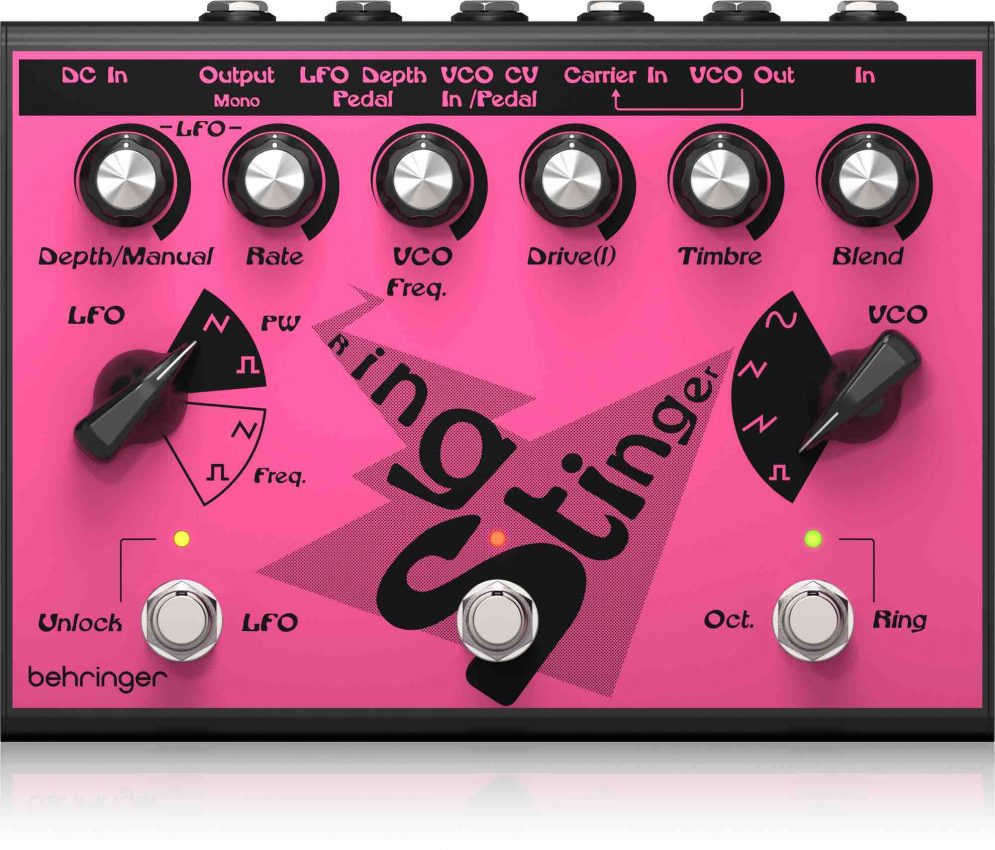
1. Dual Operating Modes: Ring Mod & Octave
-
Ring Mod Mode: The core of the pedal. It combines your input signal with an onboard VCO (Voltage Controlled Oscillator) to create “sum and difference” frequencies, resulting in bell-like, metallic, and sci-fi timbres.
-
Octave Mode: By disabling the VCO, the pedal acts as a unique “Octave Fuzz.” The original Lovetone used germanium diodes; this mode produces a biting, vintage-style fuzz that tracks your playing and raises the output by one octave.
2. Comprehensive Modulation Controls
-
Onboard LFO: Features selectable Triangle and Square waveforms to modulate the carrier VCO frequency or pulse width, creating rhythmic, pulsing, or “siren-style” effects.
-
VCO Waveshapes: Choose between Sine, Triangle, Sawtooth, and Square waves for the internal carrier to achieve vastly different textures—from smooth and subtle to sharp and aggressive.
-
Timbre & Drive: The Drive control manages input gain (and distortion), while the Timbre knob acts as a unique filter, shifting from “fizzy” highs to “pokey” mid-boosts.
3. Connectivity & Modular Potential
True to the original’s “modular-in-a-box” philosophy, the Behringer Ring Stinger is packed with I/O for integration with other gear:
-
Carrier In: Allows you to override the internal VCO and use an external sound source (like a second synth or a drum machine) as the carrier.
-
VCO Out: Lets you use the pedal’s internal oscillator as a standalone sound source.
-
CV/Expression Inputs: Modulate the LFO depth or VCO frequency in real-time using expression pedals or CV from an external synthesizer.
A New Chapter for Experimental Sound
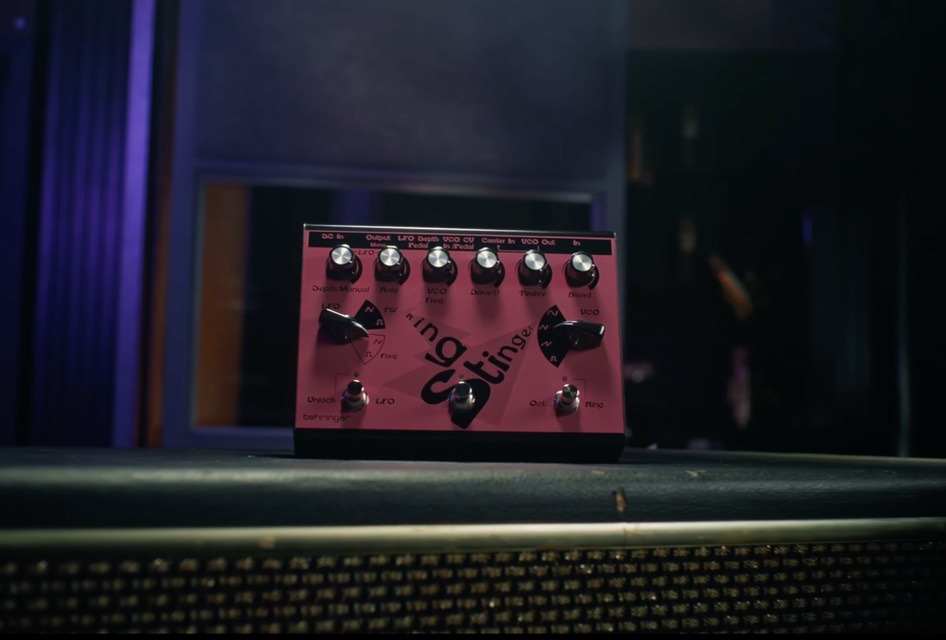
The original Lovetone unit was famous for its “unpredictability,” often requiring players to “suck-it-and-see” to find the perfect sweet spot. Behringer’s version retains this hands-on, experimental spirit while modernizing the form factor for today’s pedalboards.
Whether you are looking to recreate the iconic voices of 1960s sci-fi, add a “re-timed” industrial edge to your drum loops, or simply find a fuzz that cuts through any mix, the Behringer Ring Stinger promises to be one of the most versatile and “weird” additions to the Behringer lineup.
Verdict: A Chaos Machine for the Masses
The Behringer Ring Stinger is a triumphant restoration of one of the most eccentric pedals ever devised. While the original Lovetone unit has become a museum piece with a four-figure price tag, Behringer has successfully distilled its “mad scientist” DNA into a sturdy, accessible format.
This isn’t a pedal for those seeking subtle “set-and-forget” tones. It is a temperamental, highly interactive instrument in its own right. The combination of transformer-matrix ring modulation and germanium-diode fuzz produces a texture that digital emulations still struggle to capture—unpredictable, harmonically rich, and occasionally aggressive.
Who is it for?
-
Experimentalists: If you want to transform your guitar into a short-wave radio or a robotic choir, this is your primary tool.
-
Synth Users: The addition of CV inputs and a standalone VCO output makes it a powerful “semi-modular” expansion for any desktop rig.
-
Fuzz Connoisseurs: The Octave mode provides a unique, vintage germanium bite that stands apart from standard Big Muffs or Fuzz Faces.
Final Thought: At a price point that invites experimentation rather than hesitation, the Ring Stinger is a “no-brainer” for anyone looking to push the boundaries of their sound. It’s loud, it’s pink, and it’s gloriously weird.
Preorder at Andertons now -£99
Preorder at Sweetwater now -$119
More Information
#Behringer #Ring Stinger
This article may contain affiliate links to Andertons, DeathCloud, Donner, Fender, Gear4Music, Positive Grid, Sweetwater, and Thomann that help finance the running costs of GuitarBomb. We will receive a small commission if you buy something through these links. Don’t worry; you pay the same price, and it costs you no extra to use these affiliate links for your purchases.


