Death By Audio & Rainger FX Amp Crash: A Real Guitar Amp Inside a Pedal
Death By Audio and Rainger FX debut the Amp Crash: a stompbox with a real 3-watt amp, 2" speaker, and mic inside. $395.

In a world dominated by digital amp modelers and simulated cabinets, two of the most eccentric names in boutique guitar effects are bringing real, moving air back to your pedalboard.
Death By Audio and Rainger FX have officially joined forces to unveil the Amp Crash, a totally unprecedented stompbox that houses a real 3-watt amplifier, an internal 2-inch speaker, and a microphone. Instead of simulating the sound of a pushed amplifier, the Amp Crash actually is one.
By capturing the genuine physical interaction of air moving inside the pedal, this collaboration promises to deliver wild, unpredictable textures ranging from touch-sensitive overdrive to blooming harmonics and crushing fuzz.
Moving Real Air: Not Just Another Amp Sim
While traditional distortion pedals rely on clipping diodes and amp simulators rely on DSP chips, the Amp Crash creates sound physically.
A real 3-watt amplifier drives the internal speaker, while the built-in microphone captures the acoustic signal in real time.
Players can then blend their direct amplifier signal with the internal mic'd sound.
Because the speaker, microphone, and enclosure are physically interacting, the pedal generates genuine compression, natural acoustic feedback, and overtones that electronic circuits simply cannot fake. The result is a highly responsive instrument that breathes, reacts, and—as the builders note—sometimes fights back.

Amp Crash FX: Reverb, Echo, and Chorus
To push the sonic boundaries even further, Death By Audio integrated a multi-effects engine into the circuit, outfitting the Amp Crash with built-in Reverb, Echo, and Chorus.
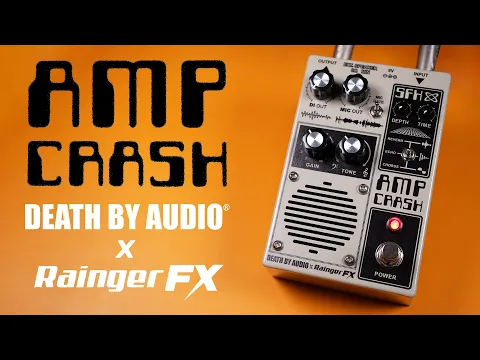
A Transatlantic Collaboration
The idea for the Amp Crash sparked when David Rainger (Rainger FX) traveled to New York to pitch a concept to Oliver Ackermann (Death By Audio): putting a microphone inside a pedal to blend ambient room noise with a guitar signal. Death By Audio took the concept to the extreme by asking, "What if the pedal contained its own speaker?"
“David from Rainger is who I always gravitate to at any event. His effects are bonkers in the best way possible,” says Ackermann. “When he told me he was coming to NY to work on a collaboration, it was a dream come true... Working on this project with Rainger pushed us to create something so extreme, and then we took it further.”
David Rainger echoed the excitement over the final design, noting:
“The Amp Crash is powerful, unique, flexible, and a whole load of fun to use! I'm knocked out by how Death By Audio developed this idea into an amazing product.”
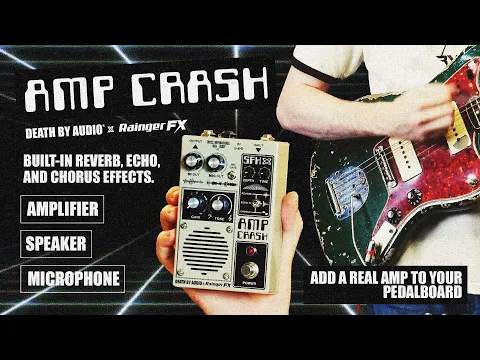
Amp Crash Key Features & Specifications
The Amp Crash isn't just an experimental noisemaker; it is a highly versatile tool. It functions as a compact recording device, a portable practice amp, and an endlessly inspiring tone generator. By utilizing the external 8Ω speaker output, players can even connect the stompbox to a traditional speaker cabinet, transforming the Amp Crash into a legitimate micro-amp head.
Pedal Highlights:
- Joint collaboration between Death By Audio and Rainger FX
- Internal physical 3-watt amplifier, 2" speaker, and microphone
- Blendable direct-amp and mic'd signals for unique harmonic generation
- Integrated Reverb, Echo, and Chorus effects
- External 8Ω speaker output to drive an external cabinet
- Buffered bypass with a lifetime warranty

Technical Specs:
- Dimensions: 5.9" × 3.76" × 2.85"
- Weight: 19.1 oz
- Power Requirements: 9V DC (2.1mm center-negative), 300 mA

Amp Crash Pricing & Availability
The Amp Crash is priced at $395 USD and is a must-have for tone chasers looking to add a truly unique, physical sound element to their recording setup or live rig.
For more information or to secure yours, visit the official sites of Death By Audio and Rainger FX.
What kind of guitar-and-amp setup would you pair with something this wild?

- +Real physical amplifier and speaker generate authentic compression and feedback
- +Blendable mic'd and direct signals create unique unpredictable textures
- +Can drive external speaker cabinet as standalone micro-amp head
- +Built-in reverb, echo, and chorus effects
- +Portable practice and recording solution
What makes the Amp Crash different from a typical amp simulator pedal?
Unlike digital amp sims, the Amp Crash contains a real 3-watt amplifier and 2-inch speaker that physically move air. An internal microphone captures the acoustic signal in real time, blending it with the direct amp output. This creates genuine compression, feedback, and overtones that electronic circuits cannot replicate.
Can you use the Amp Crash with an external speaker cabinet?
Yes. The Amp Crash features an external 8Ω speaker output, allowing you to connect it to a traditional speaker cabinet and use it as a legitimate micro-amp head for enhanced volume and projection.
What effects are built into the Amp Crash?
The pedal includes three integrated effects: Reverb, Echo, and Chorus. These can be blended with the amp and mic'd signal to expand the sonic palette beyond the core physical amplification sound.
Keep browsing

Get this stuff first.
Leaks, deals and reviews in your inbox, once a week. No spam, just gear.