Hungry Robot The Ghost Frequency: Lo-Fi Destruction in a Box
The Ghost Frequency from Hungry Robot Pedals combines bit crushing, sample rate reduction, VHS modulation, and filtering into one compact lo-fi pedal

Most lo-fi guitar pedals stop at gentle tape warmth and polite vinyl crackle. The Ghost Frequency from Hungry Robot Pedals takes a far darker, more adventurous route—exploring the destructive side of lo-fi by combining a bit crusher, a sub-audio sample rate reducer, VHS-style modulation, and a low-pass filter inside a single compact stompbox.
Designed to summon the spirits of degraded analog and early digital gear onto your pedalboard, it moves effortlessly from nostalgic tape chorus to sputtering, broken-radio chaos.
What Is Hungry Robot The Ghost Frequency?
Available directly from Hungry Robot Pedals, The Ghost Frequency is a multi-stage lo-fi and modulation pedal built for guitarists, synth players, and experimental sound designers. I'm a big fan of Hungry Robot Pedals and own a few of their older units, including the Moby Dick, The Wash, and Monastery.
These new batches look perfect for shoegaze, dreampop, and further textures, exploration, and creativity.
Rather than relying on a single static degradation algorithm, it breaks lo-fi tone-shaping into four interactive circuits that you can isolate, blend, or push into total sonic collapse.

Perfect if you want a slightly worn-out cassette warble for clean arpeggios or a fragmented, aliasing wall of noise for shoegaze leads, the pedal lets you dial in exactly how broken the moment sounds.
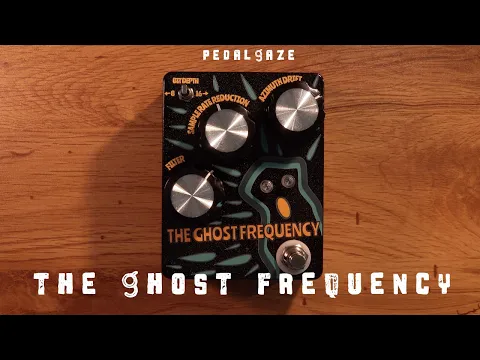
Inside the Four Signal-Shaping Controls
Every knob and switch on The Ghost Frequency controls a dedicated stage of signal degradation or modulation, allowing each section to stand alone or interact unpredictably with the others.
| Control | Type | Function & Tonal Range |
| Bit Depth | 3-Way Toggle | Selects 8-bit (left), Bypass/Off (center), or 16-bit (right) quantization |
| Sample Rate Reduction | Knob | Reduces clock speed down to sub-audio rates for aliasing and lo-fi crumble |
| Azimuth Drift | Knob | Controls VHS-style modulation via dual wandering LFOs and delay lines |
| Filter | Knob | Low-pass filter; fully open clockwise, progressively darker counter-clockwise |
1. Bit Depth: 8-Bit Grit vs. 16-Bit Dusty Radio
Positioned in the top-left corner, the Bit Depth 3-position toggle sets the digital resolution of your signal:
- 8-Bit (Left): Slashes dynamic resolution for a raw, aggressive, distorted digital crunch. Engaging 8-bit mode also pushes the modulation circuit into wilder, more harmonically complex territory.
- Center (Bypass): Completely removes the bit crusher from the signal path, letting you use the sample rate reducer, VHS modulation, and low-pass filter cleanly without bit-depth distortion.
- 16-Bit (Right): Delivers a subtler, textured vintage grit that preserves note clarity while giving your guitar the unmistakable character of a dusty, worn-out lo-fi radio.
2. Sample Rate Reduction: Down to Sub-Audio Rates
The top-center Sample Rate Reduction knob acts as a variable clock reducer that reaches down into sub-audio frequencies. At lower settings, it introduces a crisp, nostalgic lo-fi sheen. As you turn the dial clockwise, sample-and-hold stair-stepping becomes more pronounced, introducing metallic, ring-modulated overtones, spectral aliasing, and eventually breaking notes apart into sputtering, fragmented lo-fi crumble.
3. Azimuth Drift: Dual-LFO VHS Modulation
Named after the tape-head alignment angle on magnetic cassette and VHS decks, Azimuth Drift mimics the pitch instability of a malfunctioning tape reader. Under the hood, Hungry Robot built a non-traditional chorus architecture driven by two wandering LFOs set at a 98-degree phase offset, modulating two independent delay lines.
Because the two LFOs drift organically out of sync rather than sweeping in a predictable pattern, Azimuth Drift produces an eerie, three-dimensional blend of chorus, flange, and seasick tape warble. With the bit crusher bypassed, and the sample rate kept clean, this control alone turns The Ghost Frequency into a versatile, standalone modulation pedal.
4. Filter: Taming the Digital Chaos
Bit crushing and sample rate reduction naturally generate harsh upper harmonics. The bottom-left Filter knob gives you a musical low-pass filter to sculpt those high frequencies to taste:
- Clockwise (Fully Open): Lets every jagged digital artifact and bright harmonic cut through the mix.
- Counter-Clockwise (Darker): Rolls off high-end bite to soften sharp edges, creating warm, muffled, underwater textures while still letting ghostly harmonic overtones peek through.
Hardware Design and Pedalboard Layout
Hungry Robot Pedals housed The Ghost Frequency in a compact, pedalboard-friendly black-sparkle enclosure decorated with teal and burnt-orange spectral artwork. Stepping on the bypass footswitch illuminates two bright yellow LEDs set directly into the ghost's eyes, giving clear visual feedback on dark stages.
All connections are top-mounted—featuring standard 1/4-inch input and output jacks alongside a center-negative 9V DC power jack—making it easy to slot tightly alongside other effects without wasting horizontal board space.
How Does The Ghost Frequency Sound in Practice?
- Haunted Clean & Ambient Loops: Running clean baritone guitar arpeggios or ambient loops through Azimuth Drift with subtle sample rate reduction and a rolled-back Filter transforms sterile recordings into warm, decaying tape memories.
- One-Stop Modulation: Bypassing the Bit Depth switch and keeping Sample Rate Reduction low highlights the lush, unpredictable chorus-flange movement of the dual wandering LFOs.
- Lo-Fi Shoegaze & Blown-Out Leads: Stacking The Ghost Frequency into high-gain fuzz, overdrive, or ambient reverb—such as Hungry Robot's own The Wallflower—creates massive, crumbling walls of shoegaze texture and untamed, sputtering lead tones that slice through a dense mix.
Where to Buy Hungry Robot The Ghost Frequency
For players tired of polite chorus pedals and seeking genuine sonic character, The Ghost Frequency bridges the gap between expressive VHS tape modulation and full-scale digital destruction. You can order the pedal directly through the official Hungry Robot Pedals store for $219.60 USD plus shipping.
- +Four independent lo-fi stages work alone or stacked
- +Dual wandering LFOs create organic, unpredictable VHS modulation
- +Sub-audio sample rate reduction reaches genuine digital chaos
- +Top-mounted jacks save pedalboard space
- +Compact, pedalboard-friendly design
- +Works from subtle tape warmth to full sonic destruction
What does The Ghost Frequency do?
The Ghost Frequency combines four interactive circuits: 8/16-bit quantization, sample rate reduction down to sub-audio frequencies, dual-LFO VHS-style modulation (Azimuth Drift), and a low-pass filter. Each can work independently or stack together for anything from subtle tape warmth to fragmented lo-fi destruction.
Is The Ghost Frequency good for shoegaze?
Yes. The pedal excels at shoegaze textures—especially when stacked into fuzz, overdrive, or reverb. The Azimuth Drift modulation alone creates lush chorus-flange movement, while bit crushing and sample rate reduction add sputtering, broken-radio chaos perfect for dense, textured shoegaze leads.
How much does The Ghost Frequency cost?
$219.60 USD plus shipping, available directly from the official Hungry Robot Pedals store.
Does The Ghost Frequency have top-mounted jacks?
Yes. All connections are top-mounted, including 1/4-inch input and output jacks plus a center-negative 9V DC power jack, making it pedalboard-friendly and space-efficient.
Keep browsing

Get this stuff first.
Leaks, deals and reviews in your inbox, once a week. No spam, just gear.