Jeff Buckley Guitar Gear - A Deep Dive into Grace
Jeff Buckley Guitar Gear. Buckley was a major influence on many musicians and guitarists. We take a deep dive into the gear he used.

Jeff Buckley’s Grace album is a tour de force in songwriting. It also features some exceptional guitar playing and recorded guitar tones. We take you through that gear and talk about how to grab some of those tones and integrate them into your rig.
Jeff Buckley's Grace Album and Guitar Tone
Jeff Buckley’s album Grace is often regarded as the perfect debut by many, as it is so fully formed, with an ideal balance of songwriting and beautiful melodies.
In the early 1990s, boutique amplifiers and effects just weren’t a thing. Yet Jeff's whole album is full of sweet guitar tones and to this day it inspires many guitarists to go seek out those guitar tones.
It features beautiful melodies, amazing songwriting, and moments of complete abandon on the guitar. What stands out the most for me, is the depth of guitar tones on the recordings. With just a small amount of equipment, Jeff Buckley created something that still resonates with listeners to this day.

Jeff Buckley's Main Guitars
Most players will be familiar with the 1983 ‘Top Loader’ Fender Telecaster that Jeff wielded as his main guitar. This, along with a 1976 Gibson Les Paul Custom in the classic black finish, which he was also seen using frequently, were his main two guitars.

He had been given a copy of a Les Paul Custom for his 13th or 14th birthday, as a gift by his mother and stepfather. He retired it whilst he was attending the Hollywood Musicians Institute in 1986. Whilst on the course, he was often seen playing an Ovation Viper.

Jeff Buckley playing his Ovation Viper in the '80s
The Norlin Custom
I suspect that once he had the money, he went out and purchased the Norlin-era Gibson '76 Les Paul Custom. We know its neck was completely broken off at one point, as it was repaired in around July 1995 in Amsterdam. This guitar was featured in an exhibition at the Rock & Roll Hall Of Fame And Museum, in Ohio for two years. Along with many of his possessions, handwritten lyrics, poems, and some clothing.
As far as I am aware this Les Paul Custom was completely original with no modifications. These are great guitars and when you find a good one, they are worth holding on to.
I know a lot of players aren't keen on Norlin-era Gibsons, as they believe them to be very heavy and poorly put together. However, I've always found them to be good at that humbucker '70s & '80s rock thing. When you need a fuller sound, they are just perfect for the job.

Jeff Buckley's 1976 Gibson Les Paul Custom
Jeff Buckley's 1983 Fender Telecaster
His main 1983 Fender Telecaster sports a custom mirror pickguard and was retro-fitted with what was most likely a Seymour Duncan Hot Rails pickup, fitted in the guitar's bridge position. It had that ‘Top Loader ‘ bridge, which meant that the strings did not pass through the guitar body, and instead were strung through the back of the Telecaster bridge plate.

Jeff Buckley's borrowed 1983 'Top Loader' Telecaster, now owned by Matt Bellamy
The borrowed guitar
What is interesting is that this Telecaster was borrowed from Janine Nicholls, a director at a local arts institution in New York, while Buckley was still playing cafe shows in 1991. This guitar is a Butterscotch 1952-style Telecaster.
Apart from the bridge, which is a top loader and has six individual saddles, rather than three brass barrels, and that hot stacked bridge pickup, it's a pretty standard Telecaster to look at, just with a chrome mirrored pickguard.
The guitar was returned to its original owner after Buckley’s tragic death in 1997, and they eventually sold it at auction in 2011, selling for over $50,000. The guitar was also listed on Reverb, and you can see that listing here.
As we now know, Muse frontman Matt Bellamy purchased the guitar in 2020, and he is now the proud owner of this instrument.
Rickenbacker 12-String
On occasion, you would also see him with a Rickenbacker 360/12 “Fireglo”. Buckley bought this 12-string Rickenbacker 360 with the money from his first advance after getting signed with Sony. This 12-string was mainly kept in Open G tuning, and live, he would use it on the songs ‘Last Goodbye’ and *‘*Vancouver’.
This 12-string was then given to Chris Cornell from Soundgarden after Buckley’s death by Jeff’s mother. Chris had contributed to the posthumous album Sketches For (My Sweetheart The Drunk).

Jeff Buckley's original Flower Guitar the Series 10 Telecaster copy
The Flower Guitar
Jeff was also seen playing a cheap Telecaster replica made by Series 10, which was decorated with flower patterns. It is a cheap Korean-made guitar and he is seen using it a few times live. Most notably during a gig played at MTV London on March 3, 1995.

A Series 10 Professional Telecaster, identical to the one that Jeff owned
Acoustics
His main acoustic guitars included a 1967 Guild F-50, and a vintage Gibson L-1, a model synonymous with blues legend Robert Johnson.

The 'Robert Johnson' guitar, a Gibson L-1
The Guild F-50 was his main acoustic throughout the recording and touring of Grace. You’d often see the guitar covered in duct tape to help quash feedback issues when he played it live. It’s a guitar that is similar to the twelve-string model his estranged father Tim Buckley had used.
Whereas the smaller, warmer-sounding Gibson L-1 which Buckley got sometime around 1994, and often used for his finger-style playing. Buckley used this guitar on many of his demos and at his smaller shows.
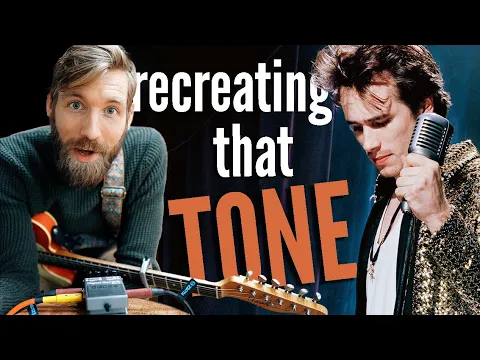
Jeff Buckley's Amplifiers
For amps, his usual setup was a ’90s Fender Vibroverb ’63 Reissue, and live you would also see him using a Mesa Boogie Dual Rectifier Trem-o-verb Combo.
Allegedly during the recording of Grace, they couldn’t get a good recorded sound out of his reissue Vibroverb and had to hire another one. I suspect they may have got a vintage one in to do the job.

Jeff wielding his '76 Custom through the Mesa Boogie Dual Rectifier Trem-o-verb Combo with an Alesis QuadraVerb on top.
Twin Amps
In the mid-nineties, the Mesa Boogie Dual Rectifier Trem-o-verb Combo was seen as the top end of amplifiers by many so I can see why he used one. In the studio and live he often used these two amps together. With the Fender providing the cleans and the Mesa Boogie handling all his gain tones.
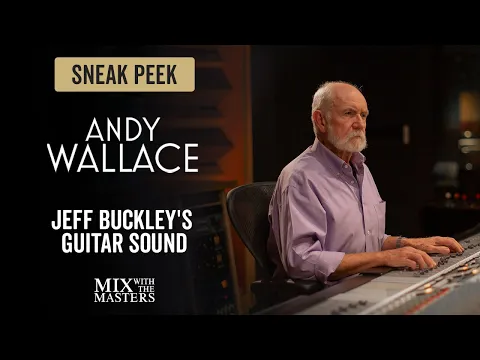
Alesis Quadraverb Effects Unit
As for effects, Mr. Buckley utilized an Alesis Quadraverb 19” rack unit and that was pretty much it for effects. Jeff supposedly used a modified Taj Mahal Reverb effect preset from the Quadraverb, on his rendition of Leonard Cohen’s Hallelujah.

Alesis Quadraverb 19" rack effects unit, a '90s classic
Jeff Buckley's Guitar Strings, Tunings and Chords
Jeff is known to have used Dean Markley Blue Steel strings on his electrics. I’d assume he played 10-gauge strings. He used Open G on Last Goodbye, which is D-G-D-G-B-D. Whereas, Hallelujah is achieved by using a capo at the 5th Fret which gives you A-D-G-C-E-A.
He also uses a lot of 6th chords, where you use a standard triad (the 1st, 3rd, and 5th) with the 6th added. With both major 6th and minor 6th chords featuring frequently in his repertoire.
These 6th chords have a lot more drama in them so the major 6th has a nice pleasant welcoming warm sound. Whereas the minor 6th has a much darker and more haunting sound.
For example Dream Brother uses Bb6 - Cm6 - Dm7 - Ebmaj7 and the song Grace uses Em - F#m6 - G6 - A6.
I'd suggest brushing up on your 6th chords will help you to cop some of that tension and drama that Jeff always coaxes out of his songs.
Achieving Jeff Buckley's Grace Guitar Tones
My advice would be when attempting to get some of the tones that Jeff achieved on Grace, don’t be afraid of reverb and letting it create space in your tracks.
Look for a good warm, Fender-style clean tone. If you are using a modeler or software, look for something that has a Fender Vibroverb or similar, to achieve this. Fender has reissued this amplifier a few times, so you can find them. Plus, a few boutique amp builders that will make you one.
His driven tones are definitely that Mesa Boogie sound. Again you can find these within software and modeling. Originals are loud, very loud, so if you're going to hunt one down be prepared for the volume.
The videos in this article discuss some of his recorded tones and how to achieve the 'reverb' sound, which he is famous for. You can certainly still pick up the Alesis Quadraverb models used, but there are also plenty of plugins that emulate them. Something along the lines of the Valhalla Vintage Verb will get you in the ballpark.
I hope this article helps you on your quest for great guitar tones, and if you have the time, pop Grace on your stereo and immerse yourself in the wonderful layers of guitar tones.
More Information
#Jeff Buckley #Grace #Guitar
- +Minimal, intentional gear choices that maximized tone rather than quantity
- +Warm, spacious reverb tones achieved through quality amplifiers and effects
- +Versatile guitar selection suitable for both clean and driven tones
- +Iconic tone that remains highly influential and achievable with modern modeling gear
- −Mesa Boogie Dual Rectifier is extremely loud, making it impractical for home recording without attenuation
- −Limited documentation on exact specs and modifications to some gear
- −Original Alesis Quadraverb units can be difficult to source and maintain
What guitars did Jeff Buckley use on the Grace album?
Jeff Buckley's main guitars were a 1983 Fender Telecaster with a custom mirror pickguard and Seymour Duncan Hot Rails bridge pickup, and a 1976 Gibson Les Paul Custom. He also used a Rickenbacker 360/12 12-string in Open G tuning for songs like 'Last Goodbye' and 'Vancouver'.
What amplifiers created Jeff Buckley's iconic Grace tone?
Buckley used a Fender Vibroverb '63 Reissue for clean tones and a Mesa Boogie Dual Rectifier Trem-o-verb Combo for driven sounds. He often ran both amps together in studio and live settings, with the Fender handling cleans and the Mesa Boogie providing gain tones.
What effects did Jeff Buckley use on Grace?
Jeff Buckley's effects setup was minimal—primarily an Alesis Quadraverb 19" rack unit. He used a modified Taj Mahal Reverb preset from the Quadraverb on his rendition of Leonard Cohen's 'Hallelujah' to achieve the distinctive reverb-drenched sound.
How can I get Jeff Buckley's Grace tones in my own rig?
Use a warm Fender-style clean amp like a Vibroverb or Vibroverb-style modeling plugin, combine it with Mesa Boogie-inspired gain tones, and layer reverb generously. Consider software like Valhalla Vintage Verb or hardware Alesis Quadraverb models to replicate his signature spacious, reverb-heavy approach.
Keep browsing

Get this stuff first.
Leaks, deals and reviews in your inbox, once a week. No spam, just gear.