The Modular Revolution: Are Shark Guitars Innovations the Future of the Electric Guitar?
Is the future of the electric guitar modular? Discover how Shark Guitars is shaking up NAMM 2026 with swappable titanium parts, onboard FX, and a stunning fretless demo by Dweezil Zappa.

As the electric guitar approaches its centennial, the instrument that redefined the 20th-century musical landscape is undergoing its most radical transformation yet. While the classic recipe of wood, wire, and magnets has remained largely unchanged for decades, a new contender from Antalya, Turkey, is betting that the future of tone isn’t just in the hands of the player—it’s in the modularity of the machine.
Shark Guitars has officially landed on the global stage, promising to disrupt the high-end market with their "Ocean Environment" platform. This isn't just another boutique build; it is a fully modular ecosystem designed to be disassembled, customized, and reconfigured in minutes.
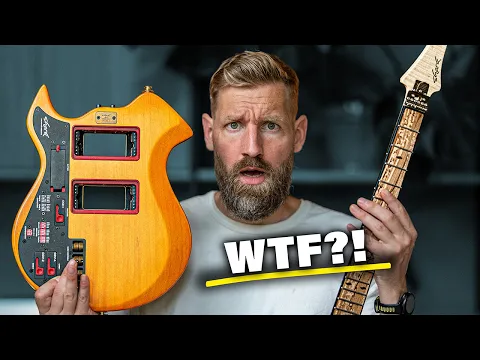
Shark Guitars Tour - Paul Davids YouTube Review
Paul Davids has just uploaded a video to his YouTube channel all about Shark Guitars, which is well worth a watch.
Dweezil Zappa and the "Future Axe" at NAMM
The buzz surrounding Shark Guitars reached a fever pitch at NAMM 2026, where virtuoso Dweezil Zappa was spotted putting the instrument through its paces.

Shark Fretless Guitar v2.0 and Microtonal Capabilities
In a recent video, Zappa is seen receiving a "Turkish guitar lesson" on a fretless version of the Shark platform.
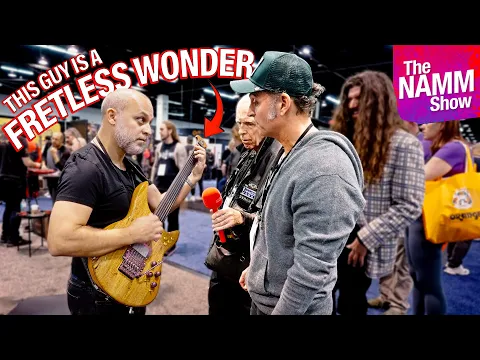
The demonstration highlighted the instrument’s staggering versatility. Zappa explored the microtonal possibilities of the fretless neck [03:54], while the guitar’s onboard electronics—including a built-in fuzz pedal—provided instant, high-gain feedback at the touch of a button [00:30]. "It has a fuzz pedal inside the guitar!" Zappa remarked, visibly impressed by the onboard bias controls that allow for everything from warm drive to searing lead tones [00:24].

Engineering the "Ocean Environment"
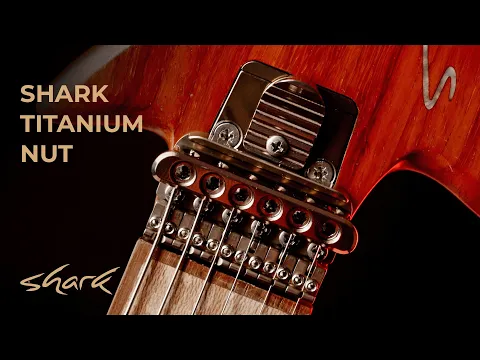
Founded in 2018 by guitarist Cem Koksal, Shark Guitars has spent years in R&D, racking up six patents. The heart of the innovation lies in its precision-machined titanium components.
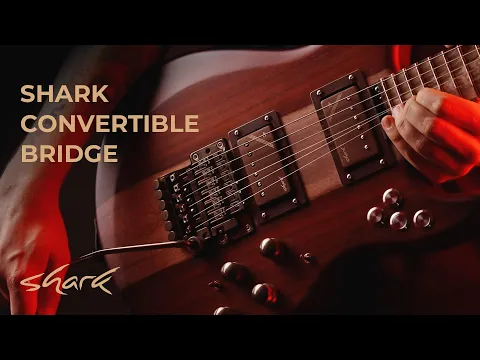
Unlike traditional bolt-on necks, Shark’s modular necks can be swapped or removed for travel without compromising the instrument's structural integrity or tuning stability.
Key features of the Shark system include:
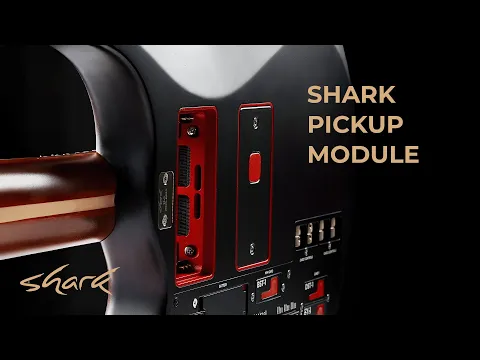
- Plug-and-Play Pickups: No soldering required. Players can swap a twangy single-coil for a high-output humbucker in seconds.
- Onboard FX Cards: The high-end models feature cartridge-like slots for analog and digital effects (overdrive, delay, reverb) controlled by front-mounted knobs and buttons.
- Rear-Panel Tone Shaping: A sophisticated system of DIP switches, resistors, and capacitors allows players to fine-tune loudness compensation and pickup gain.
- Travel-Ready Design: The entire guitar fits into manageable luggage, alleviating the age-old "airline cargo" anxiety for touring professionals.

The Cost of Innovation
With price tags ranging from $4,000 to $6,000, Shark is firmly targeting the professional and "prosumer" markets.
While brands like Reddick Guitars have experimented with modular blocks, Shark’s level of integration—combining structural modularity with advanced onboard signal processing—sets a new benchmark for what a guitar can be.

FAQ: Everything You Need to Know About Modular Guitars
What is a modular electric guitar?
A modular guitar is an instrument designed with swappable components. Unlike a standard guitar, you can change the neck (e.g., from fretted to fretless), the pickups, and even the internal electronics without specialized tools or soldering.
Are modular guitars good for touring?
Yes. One of the biggest advantages is portability. Instruments like those from Shark Guitars can be disassembled and packed into a carry-on-sized case, protecting the neck from being snapped in flight cargo holds.
Do onboard effects sound as good as pedals?
Shark Guitars uses "FX Cards" that are essentially individual pedal circuits shrunk down into cartridges. Because they are integrated directly into the guitar’s signal path, they often offer lower noise and unique feedback characteristics, as seen in Dweezil Zappa's NAMM demo.
Can I use my own pickups?
The Shark system allows you to mount almost any standard pickup into their proprietary modules, which then snap into the guitar body. You can even adjust the internal gain to ensure different pickup types (like a loud humbucker and a quiet single-coil) have the same output volume.
Where are Shark Guitars made?
They are manufactured in a specialized factory in Antalya, Turkey, capable of producing approximately 120 precision-machined instruments per month.
The Verdict: Shark Guitars as Guitar v2.0 or High-Tech Gimmick?
After seeing Shark Guitars in action—most notably in the hands of a tone-chaser like Dweezil Zappa—it’s clear that we are looking at a fundamental shift in instrument philosophy.
For a century, we’ve treated the electric guitar like a "closed system." If you wanted a different neck profile or a different electronics response, you bought a second guitar. Shark has turned that model on its head.
Why We're Excited About Shark Guitars' Precision
The most impressive feat here isn't just that parts can be swapped; it's the precision with which it happens. The use of titanium and the custom resistor/capacitor adjustment system solves the primary complaint against previous modular attempts: "tone loss" and structural instability.
In the NAMM 2026 footage, the way the fretless neck holds its resonance and how the onboard bias controls interact with the player's touch suggest that Shark has managed to keep the "soul" of the instrument intact despite the heavy engineering. For the touring musician, the ability to pack a professional rig into a backpack is a genuine game-changer.
The Reality Check: Shark Guitars Price and Technical Requirements
The price point is the elephant in the room. At $4,000 to $6,000, this is an investment for the "tone-obsessed" professional or the collector. It’s also worth noting that while modularity is the future, it requires a certain level of technical curiosity. This isn't a "plug in and forget" instrument; it’s a platform for those who view their guitar as a laboratory.
Final Thought: Shark Guitars and Musical Freedom
Shark Guitars isn't just selling a new instrument; they’re selling freedom. Freedom from airline cargo fees, freedom from the soldering iron, and freedom from the tonal limitations of a single-build guitar.
If this is "Guitar v2.0," the future of music sounds more customizable than ever.
More Information
- +Fully modular system eliminates need to buy multiple guitars
- +Travel-ready design breaks down into carry-on luggage
- +Precision titanium construction maintains structural integrity and tuning stability
- +Plug-and-play pickup swaps require no soldering
- +Onboard effects integrated into signal path with minimal noise loss
- +Sophisticated DIP switch tone-shaping system for custom voicing
- +Demonstrated reliability in hands of professional touring musicians like Dweezil Zappa
- −Price point of $4,000–$6,000 limits accessibility to professionals and collectors
- −Requires technical curiosity and comfort with guitar electronics adjustment
- −Not a "plug in and forget" instrument; modularity demands player engagement
- −Previous modular guitar attempts have struggled with tone loss and structural issues (though Shark addresses this)
What is a modular electric guitar?
A modular guitar features swappable components like necks, pickups, and internal electronics that can be changed without specialized tools or soldering. Shark Guitars' system allows you to swap from fretted to fretless necks, change pickup types, and reconfigure onboard effects instantly.
Are modular guitars practical for touring musicians?
Yes. Modular guitars like Shark's can be disassembled and packed into carry-on luggage, eliminating airline cargo damage risks. The entire instrument breaks down into manageable pieces while maintaining structural integrity and tuning stability through precision-machined titanium components.
How do onboard guitar effects compare to traditional pedals?
Shark's FX Cards integrate pedal circuits directly into the signal path, often delivering lower noise and unique feedback characteristics. In Dweezil Zappa's NAMM demo, the onboard fuzz and bias controls produced searing tones comparable to standalone pedals with less signal degradation.
Can I customize Shark Guitars with my own pickups?
Yes. The modular pickup system accommodates most standard pickups mounted in proprietary modules that snap into the body. Internal gain adjustment ensures different pickup types output equal volume, letting you mix high-output humbuckers with quiet single-coils seamlessly.
Keep browsing

Get this stuff first.
Leaks, deals and reviews in your inbox, once a week. No spam, just gear.