The Ultimate Shoegaze Pedal Guide: Building the "Wall of Sound"
Master the Wall of Sound with our 2026 shoegaze pedal guide. Find the best fuzz, reverb, and shimmer for MBV, Slowdive, Wisp, and Mk.gee inspired tones.

Who would have thought that the most introverted genre of the ‘90s would become the loudest comeback of the 2020s? In 2026, shoegaze isn't just a nostalgic throwback; it's a TikTok-fueled phenomenon. From the viral, ethereal textures of Wisp and Fleshwater to the experimental "preamp-core" of Mk.gee, the "Wall of Sound" is bigger—and more accessible—than ever.
Whether you're chasing the melting pitch of My Bloody Valentine or the oceanic ripples of Slowdive, this is your definitive guide to the history, the technique, and the pedals you need to gaze at your shoes in style.
1. A Brief History: From the "Scene That Celebrates Itself" to TikTok
The term "shoegaze" wasn’t originally a compliment. In the early '90s, British music journalists used it to mock guitarists who stood motionless on stage, their eyes locked on the floor. In reality, they weren't shy—they were just busy operating massive, complex pedalboards to keep their soundscapes from collapsing.
Shoegaze Foundations (1985–1991)
It all started with The Jesus and Mary Chain’s Psychocandy (1985), which proved you could marry 60s pop melodies with a hurricane of white noise. Soon, the "Holy Trinity" of shoegaze emerged:
- My Bloody Valentine: Kevin Shields pioneered "Glide Guitar," a technique using a floating vibrato arm to create a "seasick," melting sound.
- Slowdive: They traded noise for atmosphere, using chorus and delay to create a sound that felt like drowning in velvet.
- Ride: Blended the power of 60s psych-rock with the "Wall of Sound" intensity.
Be sure to check out our 30 Years of My Bloody Valentine’s Loveless.

Shoegaze Resurrection
After disappearing into the shadow of Britpop and Grunge, shoegaze has returned. Now artists like DIIV and Deftones are icons for a new generation. Modern "Nu-Gaze" incorporates elements of trap production, lo-fi aesthetics (the Mk.gee influence), and heavy "Doom-gaze" riffs, proving that as long as there is reverb, there is hope.
2. The Golden Rule: Reverb Before Fuzz
In almost every other genre, reverb goes at the end of the chain. In shoegaze, we flip the script. By putting a massive, wet reverb before your fuzz or distortion, the "trails" of the reverb get crushed and compressed.
The Result: Instead of a guitar sound with some echo, you get a solid, breathing wall of harmonic texture where individual notes disappear into a beautiful blur.
The Keeley Loomer lets users experiment with this order on a single compact pedal.

3. The Essential Shoegaze Pedalboard
Distortion: The "Dirt" that Breathes
Shoegaze distortion needs to be thick and harmonically rich.
- Behringer SF300 Super Fuzz: A legendary $30 secret. Its "Fuzz 2" mode is a mid-scooped monster that nails the crushing "Only Shallow" tone. Behringer SF300 Super Fuzz at Andertons, Behringer SF300 Super Fuzz at Sweetwater, Behringer SF300 Super Fuzz at Thomann.
- EHX Op-Amp Big Muff Pi: This is the Siamese Dream sound. It’s more aggressive and grainy than a standard Muff, perfect for heavy wall-of-sound textures. EHX Op-Amp Big Muff Pi at Andertons,EHX Op-Amp Big Muff Pi at Sweetwater, EHX Op-Amp Big Muff Pi at Thomann.
- JHS 424 Gain Stage: The "Mk.gee" pedal. It mimics the sound of an old Tascam 4-track recorder’s preamp being pushed into the red. It’s lo-fi, crunchy, and very 2025. JHS 424 Gain Stage****at Sweetwater, JHS 424 Gain Stage at Andertons, JHS 424 Gain Stage at Thomann
- Benson Deep Sea Diver: A boutique choice that combines delay with a unique fuzz circuit for "nightmare" textures. Deep Sea Diver at Andertons. Deep Sea Diver at Sweetwater. Deep Sea Diver at Thomann.

Reverb: Reverse, Shimmer, and Wash
- Catalinbread Soft Focus: This recreates the "Soft Focus" patch from the Yamaha SPX90 rack unit—the exact sound Neil Halstead used on Slowdive’s Souvlaki. Catalinbread Soft Focus Deluxe at Andertons, Catalinbread Soft Focus Deluxe at Sweetwater, Catalinbread Soft Focus Deluxe at Thomann.
- Strymon Cloudburst: A compact powerhouse. Its "Ensemble" mode adds string-like textures to your reverb tails, perfect for those cinematic, epic swells. Strymon Cloudburst at Andertons, Strymon Cloudburst at Sweetwater, Strymon Cloudburst at Thomann.
- EHX Oceans 12: The king of versatility. It features a "Reverse" mode (crucial for MBV sounds) and a "Tide" control that mimics ocean movement. EHX Oceans 12 at Andertons, EHX Oceans 12 at Sweetwater, EHX Oceans 12 at Thomann.
- Mooer R7 X2: An incredible value option with 14 reverb types, including a "Crush" mode that adds a bit-crusher to your reverb. Mooer R7 X2 at Andertons, Mooer R7 X2 at Thomann.

Volume Swells: The "Slow Gear" Effect
To get those violin-like leads that fade in and out of nowhere, you need an auto-swell pedal.
- TC Electronic Crescendo: The most affordable way to get the "Slow Gear" sound. TC Electronic Crescendo at Andertons, TC Electronic Crescendo at Sweetwater, TC Electronic Crescendo at Thomann.
- Boss PX-1: The modern digital solution for perfect, consistent swells**. Boss PX-1 at Andertons, Boss PX-1 at Sweetwater, Boss PX-1 at Thomann.**
- EHX Attack Decay: A "tape-reverse" simulator that also includes a built-in fuzz. It’s a shoegaze Swiss Army knife. EHX Attack Decay at Andertons, EHX Attack Decay at Sweetwater, EHX Attack Decay at Thomann.

4. Multi-Effects: The Modern Shoegazer’s Shortcut
Since shoegaze is about stacking effects, a multi-effects pedal is often the smartest entry point.
| Pedal | Best For... | Why it Gazes |
|---|---|---|
| Zoom MS-70CDR+ | Budget/Space | The "Chorus-Delay-Reverb" pedal found on 90% of pro boards. |
| Valeton GP-5 | Beginners | App-based control makes building complex chains easy. |
| Eventide H90 | Professionals | The "Endgame." It can replicate almost any boutique pedal on this list. |
5. Pro Tips for Shoegaze Sound
- The "Glide" Setup: If you have a Jazzmaster or Jaguar, leave the tremolo arm in your hand while you strum. Move it slightly up and down to create that "out of tune but beautiful" shimmer.
- Use Open Tunings: Try DADF#AD or EBEG#BE. These allow for droning strings that ring out through your effects, adding to the "Wall" effect.
- Don't Over-Gain: It’s tempting to crank the fuzz, but too much gain can turn your sound into mush. Keep the gain at 60% and let the reverb do the heavy lifting.
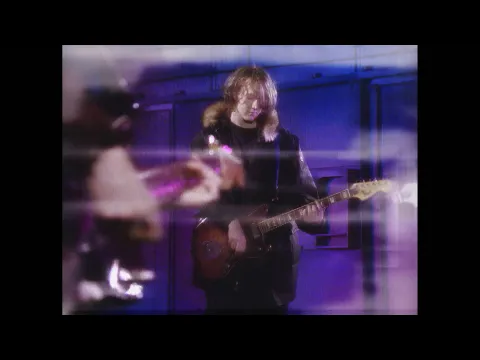
1. The "Kevin Shields" Setup (My Bloody Valentine)
The Vibe: Melting, physical, chaotic, and "liquid." This setup focuses on Reverse Reverb and Glide Guitar.
Kevin Shields Signal Chain
- Fender Jazzmaster/Jaguar: (Crucial for the tremolo arm manipulation).
- Wah Pedal: Used more as a static filter to find a "honky" or "piercing" frequency.
- Reverse Reverb (The Key): Use an EHX Oceans 12 or Keeley Loomer on the Reverse setting. Set the mix to 100% wet.
- Why? This creates those "vacuum cleaner" swells that define the album Loveless.
- Heavy Fuzz: EHX Op-Amp Big Muff or Behringer SF300. Place this after the reverse reverb.
- Why? The fuzz "squares off" the reverse swells, making them sound like a synthesised wall of noise.
- Pitch Shifter: Boss PS-6 or Digitech Whammy. Set it to a subtle "Detune" to add more thickness.
The Secret: Set your Reverb decay to be very short (around 300ms). You want the "thwack" of the reverse sound to hit right after you strum, creating a rhythmic, pulsing wall.

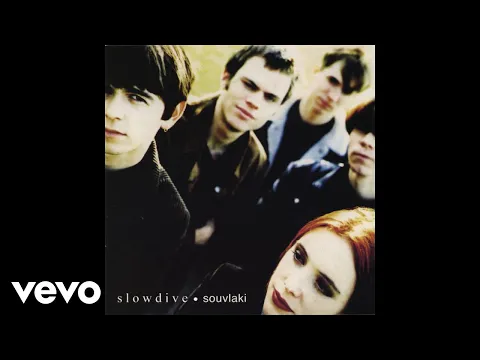
2. The "Neil Halstead" Setup (Slowdive)
The Vibe: Deep, oceanic, melancholic, and crystalline. This is about Delay Stacking and Soft Focus.
Neil Halstead Signal Chain
- Chorus: Boss CE-2W or Mooer Ensemble King.
- Why? Slowdive’s sound is rooted in 80s Goth and Post-Punk. A slow, deep chorus is the foundation.
- Multi-Tap Delay: Yamaha FX500 (Vintage) or Catalinbread Soft Focus.
- Why? You want a delay that has several "taps" hitting at once, creating a shimmering cloud of notes rather than distinct echoes.
- Light Overdrive: Fulltone OCD or Boss OD-3.
- Why? Unlike MBV, Slowdive often uses lower gain. You want enough grit to sustain the notes, but not so much that it hides the clarity of the chorus.
- Massive Ambient Reverb: Strymon Cloudburst or Boss RV-6 (Shimmer mode).
- Why? This goes at the end of the chain to wash everything in a cathedral-like space.
- Volume Pedal: Used at the very beginning of the chain to manually "fade in" chords, removing the percussive sound of the pick hitting the strings.
3. The "Modern Nu-Gaze" Setup (Wisp / Fleshwater / Deftones)
The Vibe: Heavy, metallic, high-fidelity, and punchy.
Modern Nu-Gaze Signal Chain
- High-Gain Distortion: ProCo Rat 2 or Boss DS-1W.
- Bitcrusher: Mooer Lo-Fi Machine.
- Why? Modern shoegaze often incorporates "digital artifacts" and lo-fi grit.
- Stacked Reverbs: Zoom MS-70CDR+.
- Why? Use the Zoom to stack a "Carbon Copy" delay into a "Space Hole" reverb.
- Noise Gate: EHX Silencer.
- Why? With this much gain and reverb, you need a gate to keep the silence "black" between the massive chords.
Comparison Table: Which path are you on?
| Feature | MBV Style | Slowdive Style | Modern Style |
|---|---|---|---|
| Primary Effect | Reverse Reverb | Multi-tap Delay | High-Gain + Shimmer |
| Gain Level | Extreme (Fuzz) | Moderate (Drive) | High (Distortion) |
| Guitar Type | Offset (Jazzmaster) | Anything (Tele/Strat) | Humbuckers (PRS/ESP) |
| Mood | Aggressive/Ethereal | Sad/Beautiful | Heavy/Angsty |
Your Next Step
To get started without breaking the bank, I recommend the "Shoegaze Starter Pack":
- Behringer SF300 Super Fuzz ($30)
- Zoom MS-70CDR+ ($150) — This one pedal can do the Reverse Reverb, Chorus, and Shimmer all at once.

Conclusion
Shoegaze is the art of turning a guitar into a synthesizer, a cathedral, or a jet engine. Whether you’re a bedroom producer or a gigging musician, the key is experimentation. No sounds are "wrong"—only beautiful accidents.
To help you dial in the exact "Wall of Sound" you're looking for, I’ve broken down the two most iconic shoegaze signal-chain approaches. While they share common ground, their philosophies on distortion and space differ.

Our Top Shoegaze Pedal Suggestions
- KHDK Digital Bath
- Boss CE-2W at Andertons, at Sweetwater, and at Thomann
- Zoom MS-70CDR+at Andertons, at Sweetwater, and at Thomann.
- Keeley Loomer at Thomann
- Old Blood Noise Endeavors Dark Star Stereo Reverb at Andertons, Thomann
- Eventide H90 Harmonizerat Andertons, at Sweetwater, and at Thomann
- Catalinbread Soft Focus Gold at Thomann
- Mooer Slow Engine at Andertons, Thomann
- Electro Harmonix Oceans Abyss Reverbat Andertons, at Sweetwater, and at Thomann
More Recommended Shoe Gaze Related Articles
- 30 Years of My Bloody Valentine’s Loveless
- Fender Shields Blender limited edition fuzz pedal
- The Legendary Roar: A History of the Electro-Harmonix Big Muff Pi
- Top 5 Big Muff Clones/Alternatives: Big Muff Circuits With a Twist
- Might as well face it: you’re Addicted to Fuzz!
- The Filthiest Guitar Fuzz Tone: A Beginner’s Guide to Sonic Destruction
#The Ultimate Shoegaze Pedal Guide #My Bloody Valentine #Shoegaze
- +Comprehensive guide covering three distinct shoegaze styles
- +Detailed signal chains with specific pedal recommendations
- +Mix of budget options and professional gear
- +Historical context and modern influences included
- +Multiple YouTube demonstrations embedded
Keep browsing

Get this stuff first.
Leaks, deals and reviews in your inbox, once a week. No spam, just gear.