TONE3000 Launches $78 DIY Pedal Kit for NAM A2 Modeling
Build a full Neural Amp Modeler A2 pedal for $77.98 with TONE3000's new DIY kit. Includes NAM modeling, IR loader, and 3-band EQ.

Guitarists can now solder together a full-featured, open-source Neural Amp Modeler (NAM) A2 and Impulse Response player at home for $77.98—bringing boutique digital amp capture tech to the DIY pedalboard.
TONE3000 has teamed up with embedded audio platform Daisy Audio to bring one of the guitar industry’s biggest technological disruptors directly to the workbench. The newly announced TONE3000 x Daisy DIY Pedal Kit allows players to build a dedicated, stompbox-ready NAM A2 and Impulse Response (IR) player from scratch for just $77.98 in parts.
Unlike traditional do-it-yourself guitar pedal kits—which typically center on simple analog fuzz, boost, or overdrive circuits—this project puts high-resolution neural network amp modeling inside a stage-ready enclosure. Once assembled, builders gain hardware access to hundreds of thousands of free amp, cab, and pedal captures hosted on the TONE3000 platform.
Why NAM A2 Is Disrupting the Guitar Amp Modeling Market
Over the past year, TONE3000 and the open-source NAM A2 engine have reshaped expectations around digital guitar tone. Widely praised for its dynamic feel and touch sensitivity, NAM A2 has famously outperformed several flagship commercial amp modelers in blind listening tests—all while remaining completely free to download, capture, and share.
Legacy and modern modeling heavyweights—including Fractal Audio, Line 6, Fender, HeadRush, Positive Grid, and Blackstar—have all taken notice as neural capture workflows rapidly become the industry standard. TONE3000 previously lowered the barrier to entry in the studio by releasing a free DAW plugin for playing captures, and this new hardware partnership extends that same open-source philosophy to live pedalboards.

Inside the Pedal: Controls, Presets, and Capture Stacking
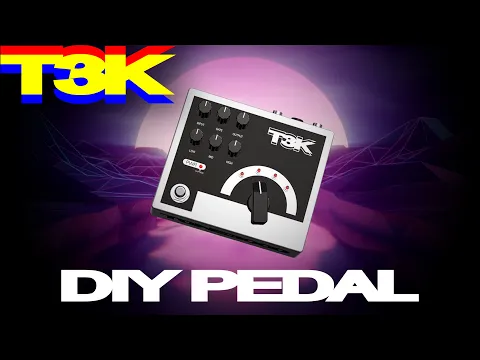
Despite its sub-$80 parts cost, the finished unit is engineered as a practical, gig-ready tone workstation rather than a stripped-back proof of concept. Builders get hands-on tactile control over their rig without menu-diving:
- Four Onboard Presets: Switch rapidly between four saved rigs using a dedicated rotary selector switch.
- Full Front-Panel Tone Shaping: Includes a responsive three-band EQ alongside dedicated knobs for Input gain, Output volume, and an integrated Noise Gate.
- Capture Stacking & IR Loading: Beyond hosting any single NAM A2 capture from TONE3000’s massive library, the pedal can stack captures (such as running an overdrive capture into an amplifier model) or route a primary amp capture directly into a speaker cabinet Impulse Response (IR).
What’s in the $77.98 Kit? Full Parts and Cost Breakdown
To keep costs transparent and sourcing straightforward, the hardware is split between two suppliers: Daisy Audio supplies the DSP processing core, while Tayda Electronics provides the custom PCB, enclosure, and electromechanical hardware.

| Component Source | Included Hardware | Price |
| Daisy Audio | Daisy Seed3 Module (embedded audio DSP brain) | $34.99 |
| Tayda Electronics | Custom PCB, aluminum enclosure, rotary switch, footswitch, potentiometers, jacks, and passive components | $42.99 |
| Combined Total | Complete DIY NAM A2 & IR Pedal Build | $77.98 |
Build Difficulty and Specs: What DIY Builders Need to Know
While the kit is priced like an entry-level project, assembling a digital neural modeler is significantly more involved than wiring a three-knob analog distortion box. TONE3000 openly advises that builders should have at least two prior DIY pedal builds under their belt before tackling this kit.
- 100% Through-Hole Construction: To keep the build accessible to home hobbyists with standard soldering irons, the board uses exclusively through-hole components—meaning zero microscopic surface-mount (SMD) soldering is required.
- Solder & Wiring Count: Expect roughly 150 solder joints across the main PCB, plus 14 off-board wires connecting the audio jacks, bypass footswitch, and preset rotary control.
- Mod-Friendly Enclosure: TONE3000 intentionally spec'd a spacious aluminum chassis, leaving plenty of internal real estate for experienced tinkerers to add custom hardware modifications.

100% Open-Source From Firmware to Drill Templates
True to the ethos of the Neural Amp Modeler community, TONE3000 has made every aspect of the pedal completely open-source. Builders and developers have unrestricted access to the embedded firmware, companion app, circuit schematics, PCB files, and enclosure drill templates, inviting the community to inspect, fork, and expand the platform.
“Daisy was built so anyone could turn an idea into a real piece of audio hardware,” said Andrew Ikenberry, co-founder of Daisy. “TONE3000 has taken state-of-the-art neural modeling and open-sourced every piece of the pedal around it, which is exactly the kind of project we hoped Daisy would make possible. We can't wait to see what builders do with it.”
Guitarists and DIY builders ready to source parts or inspect the schematics can read the full announcement on the TONE3000 blog, step through the official TONE3000 DIY Pedal Build Guide, and order the hardware pack directly from Tayda Electronics alongside the Daisy Audio Seed3 module.
- +Sub-$80 price point with full neural modeling capability
- +Open-source firmware, schematics, and PCB files for inspection and modification
- +100% through-hole construction eliminates need for microscopic SMD soldering
- +Access to hundreds of thousands of free NAM A2 amp and cab captures
- +Practical controls: three-band EQ, four presets, noise gate, and capture stacking built-in
- +Spacious aluminum enclosure designed for future custom modifications
- −Requires at least two prior DIY pedal builds to attempt safely
- −Approximately 150 solder joints and 14 wires to connect demand soldering skill
- −More complex assembly than typical analog DIY pedal kits
What is the TONE3000 x Daisy DIY pedal kit?
It's a $77.98 do-it-yourself guitar pedal kit that builds a Neural Amp Modeler A2 and Impulse Response player with through-hole soldering. It includes a three-band EQ, four preset slots, noise gate, and stacking capability for amp and cab captures.
How much does the TONE3000 DIY pedal kit cost?
The complete kit costs $77.98 total: the Daisy Seed3 DSP module from Daisy Audio is $34.99, and the custom PCB, enclosure, and components from Tayda Electronics are $42.99.
Do I need soldering experience to build this kit?
Yes. TONE3000 recommends having at least two prior DIY pedal builds completed before attempting this kit. It requires roughly 150 solder joints and 14 off-board wires, though all components are through-hole to avoid microscopic SMD soldering.
What can the finished pedal do?
Once built, it plays any free NAM A2 amp or pedal capture from TONE3000's library, stacks multiple captures together, loads cabinet Impulse Responses, and offers hands-on front-panel control via three-band EQ, input/output knobs, noise gate, and a four-slot rotary preset selector.
Keep browsing

Get this stuff first.
Leaks, deals and reviews in your inbox, once a week. No spam, just gear.