Tune Up Your Guitar: A DIY Guide to Truss Rod and Intonation
Fix Your Guitar, Fast! Learn how to adjust your guitar’s truss rod and intonation to eliminate buzzing and improve playability.

As a guitarist, you've probably experienced the frustration of a guitar that's suddenly out of tune or plays poorly. Two common culprits behind these issues are the truss rod and intonation. Let's dive into these concepts and how to address them.
Understanding the Truss Rod
A truss rod is a metal rod running along your guitar's neck. It maintains the neck's curvature, ensuring optimal string action and playability.
Over time, factors like temperature, humidity, and string tension can affect the truss rod, leading to neck warping.
Signs of a Misadjusted Truss Rod
- High Action: Strings are too far from the fretboard, making it difficult to play cleanly and comfortably.
- Buzzing: Strings touch the frets, causing unwanted noise, especially on higher frets.

Adjusting the Truss Rod:
- Identify the Issue:
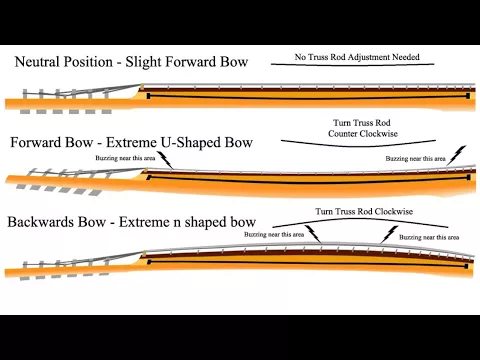
- Upbow: Neck curves upward, causing high action.
- Backbow: Neck curves downward, causing buzzing.
- Use the Allen Wrench:
- Upbow: Turn the truss rod clockwise to add tension.
- Backbow: Turn the truss rod counterclockwise to release tension.
- Re-tune and Check:
- After adjusting, retune your guitar and play to assess the change.
- Make minor adjustments and retune as needed.
Mastering Intonation
Intonation refers to the accuracy of the pitch across the entire fretboard. If your guitar is out of tune, even when you've tuned it, it's likely an intonation issue.
Adjusting Intonation:
- Identify the Problem:
- Sharp Notes: The note on the 12th fret is higher than the open string's harmonic.
- Flat Notes: The note on the 12th fret is lower than the open string's harmonic.
- Adjust the Saddle:
- Sharp Notes: Move the saddle closer to the bridge.
- Flat Notes: Move the saddle closer to the neck.
- Re-tune and Check:
- After adjusting, retune your guitar and recheck the intonation.
- Repeat the process for each string until all notes are in tune.
For more complex bridge systems, such as Floyd Rose, consult a professional luthier or watch detailed online tutorials.

Preventing Future Guitar Truss Rod and Intonation Issues
- Maintain Proper Humidity: A humidifier keeps your guitar's wood hydrated.
- Avoid Extreme Temperature Changes: Sudden temperature shifts can stress the wood.
- Regular Tune-Ups: Schedule regular professional setups to ensure optimal performance.
Understanding and addressing truss rod and intonation issues can significantly improve your guitar's playability and sound.
Guitar Tool Kits
It is often worth investing in dedicated tools to help you set up your guitar. However, most guitars come with the correct tool to adjust the truss rod when purchased. Below are some guitar tool kits that we recommend. You may also want to read our Easy Guitar Setup Guide.
- Ernie Ball Tool Kit
- Fender Custom Shop Tool Kit
- GrooveTech Tools Guitar Player Tech Kit
- Wera 9100 Guitar Set
More How-To Guides on Guitar Bomb #Truss Rod #Intonation
What is a truss rod and why does it matter?
A truss rod is a metal rod running through your guitar's neck that maintains its curvature for optimal string action and playability. Temperature, humidity, and string tension can warp it over time, causing high action or fret buzzing.
How do I know if my truss rod needs adjustment?
Check for high action (strings too far from the fretboard) or buzzing (strings touching frets). High action indicates an upbow; buzzing indicates a backbow. Adjust by turning the truss rod clockwise (tighten) or counterclockwise (loosen).
What is intonation and how do I fix it?
Intonation is pitch accuracy across the fretboard. If the 12th-fret note sounds sharper than the open string harmonic, move the saddle closer to the bridge. If flatter, move it toward the neck. Adjust one string at a time and retune.
How often should I have my guitar professionally set up?
Regular professional setups help prevent truss rod and intonation issues. Schedule them periodically, especially after temperature or humidity changes, to maintain optimal playability and sound.
Keep browsing

Get this stuff first.
Leaks, deals and reviews in your inbox, once a week. No spam, just gear.