

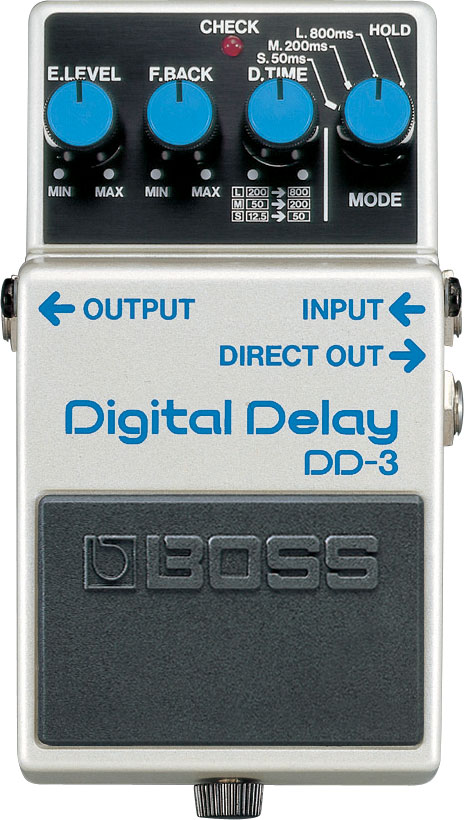
If you look down at the pedalboard of almost any gigging guitarist from 1986 to today, there is a very high probability you will spot a familiar white-knobbed, blue compact pedal: the BOSS DD-3 Digital Delay.
While modern delays offer touchscreens, cloud connectivity, and enough processing power to launch a rocket, the DD-3 has remained a best-seller for nearly four decades. Why? Because it does one thing—pristine, percussive digital repeats—better than almost anything else.
In this Pedal of the Week feature, we’re deep-diving into the history of the DD-3, the different versions (and how to spot them), and why this 12-bit wonder is still a smart buy in 2026.
BOSS DD-3 Digital Delay
This is my third installment of Pedal of the Week, and I had to write about the BOSS DD-3 because it is one of the few pedals I have owned for well over 35 years. I still have the original pedal I purchased in the late ’80s. It is still my favourite delay pedal (and I own many) and the one I gravitate to most frequently for my delay tones. It’s digital, super easy to dial in, and sounds AMAZING!
When I was a teenager, it also trumped all the analog delays available at the time, and I think its core tone/sound has become part of why I love it so much.

The History: From DD-2 to Industry Icon
To understand the DD-3, you have to understand its predecessor, the BOSS DD-2. Released in 1983, the DD-2 was the world’s first compact digital delay pedal. It used a custom IC chip from Roland, essentially a rack-mount delay shrunk down to stompbox size. It was revolutionary, but it was also expensive to manufacture.
The DD-3 was born in 1986, not as a new pedal, but as a cost-effective rebrand. As DRAM memory prices dropped, BOSS realized they could produce the same circuit for less. They re-labeled the DD-2 as the DD-3, and a legend was officially born.
The Version Timeline (Know Your Chips)
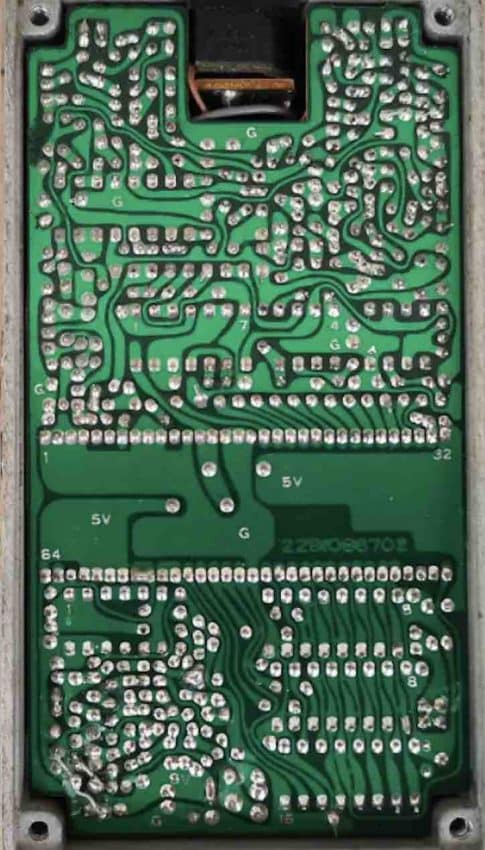
Collectors love the DD-3 because not all units are created equal. Over the years, the internal circuitry has changed drastically even while the outside remained the same.
-
Version 1 (1986): The “Long Chip”
-
Identified by: Blue foil “Made in Japan” label on the back.
-
The Guts: Features the massive RDD63H101 custom chip that spans the width of the circuit board. This is the exact same circuit as the original DD-2.
-
The Sound: Warm, lo-fi digital repeats. Highly sought after by collectors.
-
-
Version 2A (1991): The “Square Chip”
-
The Change: BOSS moved to a more compact Gate Array chip (MN51010RBA) and changed the input buffering.
-
Tech Note: The input capacitor was increased, allowing more low-end into the wet signal. This version is often considered “clearer” than the Version 1.
-
-
Version 2B (2002): The Move to SMD
-
The Change: Through-hole components were largely replaced by Surface Mount Devices (SMD).
-
Identified by: You usually have to open the back to see the smaller components, though later models moved the power jack from the casing to the circuit board itself.
-
-
Modern Era (2014 – Present)
-
The Change: A shift to modern DSP (Digital Signal Processing) chips. While purists debate the sound differences, these units are incredibly reliable and consistent.
-
Features & Specs: Why Simplicity Wins
The DD-3 is deceptive. It looks simple, but its limitations are actually its greatest strength.
-
Delay Time: 12.5ms to 800ms.
-
12-Bit Audio: unlike modern 24-bit delays, the DD-3’s 12-bit architecture adds a slight “grit” and compression to the repeats. It sits in a mix perfectly without muddying up your rhythm playing.
-
Direct Out: A secret weapon for stereo rigs. Plugging a cable into the
DIRECT OUTjack removes the dry signal from the mainOUTPUT, sending only the delay repeats to one amp and your dry signal to another -
The “Hold” Function: Before loopers were standard, the DD-3 offered a “Hold” mode. By holding down the footswitch, you could capture up to 800ms of audio and have it repeat indefinitely—a glitchy, stutter effect made famous by artists like Tom Morello and Radiohead.

BOSS DD-3 vs. DD-3T vs. DD-8
If you are in the market for a BOSS delay today, you have three main choices. Here is the quick breakdown:
| Feature | BOSS DD-3 (Vintage/Used) | BOSS DD-3T (New Standard) | BOSS DD-8 (Modern Flagship) |
| Best For | Purists & Collectors | Gigging Pros who need Tap | Experimental Players |
| Tap Tempo | No | Yes (On-board & External) | Yes |
| Delay Types | 1 (Digital) | 1 (Digital) | 11 (Analog, Tape, Shimmer, etc.) |
| Loop Time | 800ms (Hold Mode) | 800ms (Short Loop) | 40 Seconds |
| Vibe | Classic “Plug & Play” | Classic sound + Modern utility | “Do-it-all” workstation |
Verdict: If you want the classic sound but need to sync with a drummer, get the DD-3T. If you just want a rock-solid slapback or solo thickener, a used DD-3 is the best value on the market.

FAQ: Common Questions About the BOSS DD-3
Q: Does the BOSS DD-3 have analog dry-through?
A: Yes and No. The earlier versions of the DD-3 (and the DD-2) split the signal, keeping the dry path analog while digitizing the wet path. However, the mixing of the two signals happens right at the end. It is generally considered “Analog Dry Through” in spirit, preserving your core tone better than many cheap multi-effects units.
Q: What is the current draw of the BOSS DD-3?
A: The DD-3 draws between 45mA and 65mA, depending on the version. This is relatively low by modern standards (a Strymon Timeline draws 300mA+), meaning you can easily power it with a standard 9V battery or almost any pedalboard power supply (like a Voodoo Lab or Truetone 1 Spot).
Q: How do I get the “stutter” effect?
A: Set the Mode knob to HOLD. Play a note or chord, and immediately press and hold the footswitch. The pedal will repeat that snippet of audio as long as your foot is down. Release the switch to stop the loop.
My Thoughts
The BOSS DD-3 isn’t just a delay pedal; it’s a rite of passage. Whether you are hunting for a “Long Chip” Made-in-Japan classic or picking up a shiny new DD-3T, you are investing in a sound that defined the ’80s, ’90s, and ’00s. I could not imagine being without mine, and I have purchased newer, fancier digital delays, vintage rack delays, and boutique digital delays, but the DD-3 is still top dog for me!
It doesn’t have menus. It doesn’t have Bluetooth. It just delays your signal, and it does it perfectly every single time.
Rating: ★★★★★ (5/5)
Pros: Indestructible build, cuts through a mix, simple interface.
Cons: Short loop time compared to modern standards, no modulation controls.
DD-3T
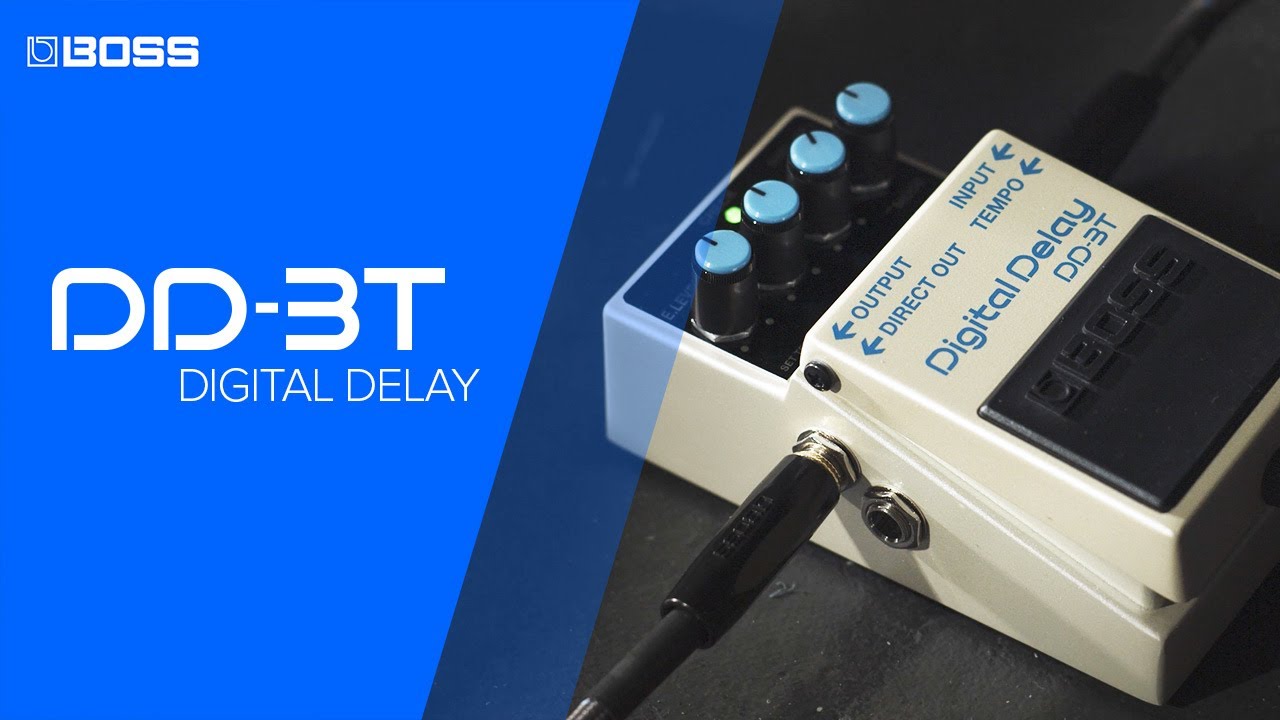
The BOSS DD-3 is now ‘officially’ discontinued, with the DD-3T (with added Tap Tempo via optional external footswitch) the closest to the original that you can buy new from BOSS.

Tap Tempo
Essentially, the same pedal as the last generation of the DD-3, just with an added Tap Tempo enhancement, which is going to be useful for many modern musicians.
Available from Andertons, Sweetwater, and Thomann.
More Information
#BOSS DD-3 #Pedal of the Week #Digital Delay
This article may contain affiliate links to Andertons, DeathCloud,Donner,Fender, Gear4Music, Positive Grid,Sweetwater, andThomann that help finance the running costs of GuitarBomb. We will receive a small commission if you buy something through these links. Don’t worry; you pay the same price, and it costs you no extra to use these affiliate links for your purchases.


