
$1 DIY Amazon Fuzz Pedal: High-Gain Tone for the Price of a Candy Bar
Can you really build a fuzz pedal for a dollar? Discover the "dirt cheap" DIY secret using an LM386 mono amp. Step-by-step guide and components list included inside.

Mark Gutierrez has shared a great video on how to make a $1 Fuzz Pedal using parts found on Amazon, and it is well worth a watch.
To help you expand this article, I’ve added technical context, a step-by-step assembly guide, and a section on why this specific build works so well for beginners.
The "Dirt Cheap" Secret: Why the LM386?
While most professional fuzz pedals use transistors (like the classic Fuzz Face), this $1 build utilizes the LM386 audio power amplifier chip. Originally designed for low-power battery applications like clock radios or portable speakers, the LM386 has a unique characteristic: when you push its gain beyond its intended limits, it produces a thick, "square-wave" clipping that sounds remarkably like a vintage velcro fuzz.
What You’ll Need (The Shopping List)
In addition to the core components Mark mentioned, you'll want a few household items to finish the build:
- The Core: LM386 Mono Amp Module (pre-assembled PCB).
- The Jacks: 1/4" Mono Panel Mount Jacks (one for Input, one for Output).
- The Connections: Solderless Jumper Wires.
- Power: A 9V Battery and a battery clip/connector.
- The Enclosure: An Altoids tin or a small plastic box.
How to Assemble It
Because Mark uses a pre-assembled LM386 module, the "heavy lifting" of soldering tiny resistors and capacitors is already done for you. Here is the general flow of the build:
- Prepare the Enclosure: Drill two holes for your 1/4" jacks and one small hole for the battery wires.
- Wire the Input: Connect your guitar's input jack to the IN and GND (Ground) pins on the LM386 module using the jumper wires.
- Wire the Output: Connect the OUT and GND pins of the module to your output jack (which leads to your amp).
- Add Power: Connect the Red wire of your 9V battery clip to VCC and the Black wire to GND.
- The "Fuzz" Mod: Most of these modules have a small blue potentiometer (trimmer) on board. Turning this all the way up increases the internal gain, transforming the clean signal into a saturated fuzz.
Why This is the Perfect First Project
This build is a "gateway drug" into the world of DIY Guitar Pedals. It teaches the basics of signal flow (Input -> Gain Stage -> Output) without the frustration of complex circuit board etching.
Pro Tip: If the fuzz is too bright or "fizzy," you can solder a small capacitor (0.05) across the output jack to bleed off some of the high-end harshness, giving it a smoother, more "muff-style" tone.
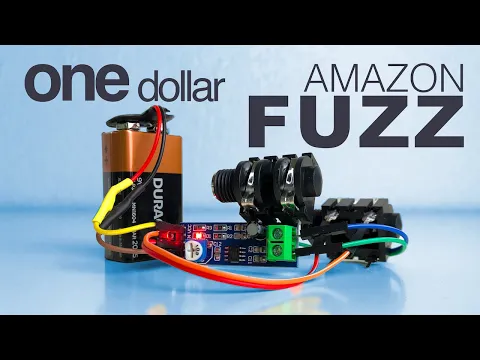
$1 Dollar DIY Amazon Fuzz Pedal Parts List
The short video explains everything you need to build a $1 Fuzz Pedal**.** Below are Mark's links to the components you need from Amazon. LM386 Mono amp Panel Mount 4 Pin 1/4" Mono Jack Solderless Ribbon Jumper Wires It is based on a LM386 mono amp, requires minimal soldering (if any), and could be a great way for musicians to make a simple yet effective fuzz pedal.
Altoids Tin?
All you need are the simple components and maybe something to house it, like an old Altoids tin.

Conclusion: Boutique Tone on a Basement Budget
The beauty of the $1 Amazon Fuzz lies in its simplicity. While professional boutique pedals can cost hundreds of dollars, Mark Gutierrez’s project proves that great tone doesn't always require a massive investment—just a bit of curiosity and about ten minutes of assembly time.
Whether you are a seasoned guitarist looking for a unique, lo-fi "velcro" sound or a complete beginner wanting to dip your toes into the world of DIY electronics, this build is the perfect starting point. It’s more than just a cheap effect; it’s a hands-on lesson in how guitar gear actually works. So, grab an old Altoids tin, order your parts, and start building—your new favorite signature sound might just be a dollar away.
#diypedals, #stompbox, #guitargear, #fuzzpedal, #knowyourtone, #geartalk, #guitarist, #diyproject, #musicianhacks, #budgetpedal board, #pedalbuilder, #electronicsdiy
- +Extremely affordable (around $1 for core components)
- +Minimal soldering required; pre-assembled LM386 module included
- +Quick assembly (~10 minutes)
- +Teaches core DIY electronics and signal flow
- +Produces usable vintage fuzz tones
- +No circuit board etching needed
- −Tone can be bright or fizzy without modification
- −Limited control (single trimmer potentiometer)
- −Enclosure quality depends on DIY effort
- −No tone-shaping knobs on finished pedal
Can you really build a fuzz pedal for $1?
Yes. Using a pre-assembled LM386 module from Amazon (around $1), plus jacks and wires (a few dollars), you can construct a working fuzz pedal. The LM386 was designed for low-power applications but produces useful fuzz tones when its gain is pushed to saturation.
Do I need to solder to build this fuzz pedal?
No. The LM386 module comes pre-assembled, and jumper wires allow solderless connections. However, soldering a small output capacitor (0.05µF) across the output jack can smooth harsh high-end frequencies if needed.
What makes this a good beginner DIY project?
It teaches core signal-flow concepts—input, gain stage, output—without requiring etching circuit boards or soldering surface-mount components. Assembly takes about ten minutes and uses readily available Amazon parts.
What tone does the LM386 fuzz produce?
The post describes it as a thick, square-wave clipping that sounds like vintage velcro fuzz. It can be bright or fizzy out of the box, but a small output capacitor smooths it into a rounder, more muff-like character.
Keep browsing

Get this stuff first.
Leaks, deals and reviews in your inbox, once a week. No spam, just gear.