

Beginner’s Guide To Buying Your First Guitar
A beginner's guide to choosing your first guitar or bass—covering body shapes, pickups, tonewoods, and essential gear to get you playing today.

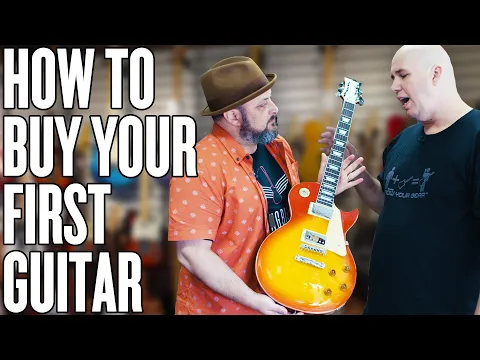
Stepping into the world of guitars is a thrill, but staring down a wall of instruments at a local shop—or endlessly scrolling through gear sites—can easily induce decision fatigue. Whether you are hunting for your own first axe or buying one for a kid ready to make some noise, getting it right matters.
Here is the no-nonsense breakdown of what to look for, stripping away the jargon so you can invest your money where it counts.
Rule Number One: Looks Matter
Forget the purists for a second. The perfect guitar is the one that makes you want to pick it up every single time you walk past it.
If you don't love the shape, the finish, or the general vibe of the instrument, it’s just going to gather dust. Find something that visually screams at you to play it.

The Body Shapes (And What They Actually Do)
Beyond looking incredibly cool, the body shape and the electronics inside it dictate your sound. Different styles have historically carved out their own specific genres:
- S-Style (The Swiss Army Knife): The undisputed chameleon of the guitar world. Known for its glassy, cutting tone, it handles everything from pop and blues to classic metal.

- T-Style (The Workhorse): The original solid-body pioneer. It serves up a raw, twangy bite that cuts straight through a full band mix. It is absolutely indispensable for country, indie, and punk.

- Single-Cut (The Heavy Hitter): Thick, warm, and majestic. Often equipped with dual humbuckers, this shape is built for pushing out massive classic rock and metal riffs.

- Hollow & Semi-Hollow: Originally designed so jazz players could be heard over loud brass sections, these offer a gorgeous, airy resonance perfect for soul, blues, and roots rock.

- Offsets (The Alt-Rock Kings): If you're chasing the massive, fuzz-drenched walls of sound from bands like Dinosaur Jr. or My Bloody Valentine, you need an offset. The slanted waist is incredibly comfortable when playing seated, and they look impossibly cool on stage.

The Zero-Fuss Setup: If you want total reliability and massive rock tones straight out of the box, grab a twin-humbucker hardtail guitar. By skipping the wobbly tremolo bridge, your tuning stays rock-solid, and those dual humbuckers give you a beautifully thick, noise-free signal.
Guitar Pickup Types
Guitar pickups are the magnetic "microphones" of an electric guitar, responsible for capturing the strings' vibration and converting it into an electrical signal. At their core, they consist of magnets—usually Alnico or ceramic—wrapped in thousands of coils of fine copper wire.
When a metal string vibrates within this magnetic field, it generates a small voltage that travels through the guitar's wiring, down the instrument cable, and into an amplifier, where it is boosted into audible sound.
The two most common designs are the single-coil, known for its bright, snappy, and articulate tone, and the humbucker, which uses two side-by-side coils wired together to cancel out background interference, resulting in a thicker, warmer, and more powerful sound.
Or Beginner Guide to Single-Coils, Humbuckers, and P90s can help you learn more.

Acoustic Guitars
The acoustic guitar is the most versatile, organic-sounding instrument you can buy. Because it doesn't require an amplifier, it's a fantastic grab-and-go option. You generally have two choices:
- Steel-string acoustics: These offer a bright, loud sound and a feel somewhat comparable to that of an electric guitar.

- Nylon-string acoustics: These are specialized classical instruments with a softer, mellower tone and strings that are gentler on beginner fingers.

An acoustic is the ultimate tool for singers, songwriters, and anyone looking to play country, folk, indie, Americana, or classical music.
To bridge the gap between unplugged intimacy and stage-ready volume, many acoustic guitars are equipped with onboard electronics, transforming them into "electro-acoustics."
The most common system relies on a piezoelectric transducer tucked seamlessly beneath the bridge saddle. Unlike magnetic pickups that sense the disruption of a magnetic field, piezos detect the actual physical pressure and vibration of the strings against the guitar's top, yielding a bright, highly articulate sound with excellent feedback resistance.
For players seeking a warmer, more traditional electric feel—or an easy aftermarket modification—magnetic soundhole pickups can be clamped directly across the strings, either temporarily or permanently.
To capture the truest natural resonance of the instrument, high-end systems often blend these piezo or magnetic signals with a small internal microphone, allowing a built-in active preamp mounted on the side of the guitar to sculpt the final EQ before the signal ever reaches an amplifier or PA system.

The Tonewood Matrix
While pickups do the heavy lifting for guitar tones, the actual timber your guitar is carved from fundamentally shapes its resonance, weight, and natural sustain.
| Tonewood | Sonic Flavor | Where You'll Find It | Weight Class |
| Alder | Highly balanced, rich upper-mids. | Classic S-Style and T-Style bodies. | Medium |
| Swamp Ash | "Scooped" mids, sweet highs, fast attack. | Vintage bodies with transparent finishes. | Light to Medium |
| Mahogany | Dark, warm, thick low-end, massive sustain. | Single-cuts and set-neck designs. | Heavy |
| Maple | Articulate, bright, snappy. | Necks, fretboards, carved tops. | Heavy |
| Rosewood | Sparkling highs, deep lows. | Fretboards, acoustic backs/sides. | Heavy |
Getting Your First Guitar and Amplifier Setup Together
Standard guitars can feel like a boat anchor to younger players, so definitely look into 1/2- or 3/4-size models if you are shopping for a child.
If you go the electric route, you need an amplifier. Stick to a sensible budget—around $450/£350 is the perfect sweet spot for a quality starter pack (usually including the guitar, a practice amp, a cable, a strap, a tuner, and a gig bag).
While heavyweight brands like Squier and Epiphone are well-known among beginners, do not sleep on Harley Benton, Eastcoast, Cort, and Sire. These brands are currently building absolute workhorse guitars loaded with incredible specs for absolute bargain prices.
Master the basics first. Eventually, you’ll be dropping a classic ProCo RAT, a Klon, or a vintage Tone Bender in front of a roaring valve amp—but for now, just focus on making some glorious noise!

Holding Down the Low End: Your First Bass Guitar
A bass is not just a guitar with fewer strings; it is the glorious rhythmic anchor of the entire band. While the guitarist might be off exploring sonic textures and wild delay pedals, the bassist is busy locking in with the kick drum to build the track's actual groove. You are the glue that holds the music together.
Standard bass tuning is exactly one octave below guitar tuning (E-A-D-G). To produce those chest-rattling frequencies, a bass requires much thicker strings and a longer "scale length" (the distance from the nut down to the bridge). A standard electric guitar sits around 25.5 inches, while a standard bass stretches to a massive 34 inches.

The Bass Learning Curve
Is bass easier to pick up than a six-string? Initially, yes. Because you rarely play full chords, you can start tracking along to your favorite rock songs using just single notes. But do not be fooled for a second—mastering the timing, dynamics, and groove of the instrument takes a lifetime.
Essential Bass Body Shapes
Before you get overwhelmed by the sheer variety of low-end machines, narrow your focus to these primary archetypes. (A standard 4-string is highly recommended for your very first instrument).
- P-Bass (Precision): The industry standard. Boasting a single, split-coil pickup and a famously chunky neck, it delivers a thunderous, punchy tone that sits perfectly in rock, punk, and dub reggae.

- J-Bass (Jazz): Featuring a sleek, offset body and two single-coil pickups, the J-Bass offers immense tonal flexibility and articulation. It is the weapon of choice for funk, progressive rock, and highly technical players.

- Offsets & Double Cuts: Ranging from aggressive, angular shapes to modern ergonomic designs. Instruments like the Sterling by Music Man StingRay deliver an aggressive punch with their distinct dual-cutaway design.

- Modern & Headless: Aimed at contemporary metal and fusion players, these basses are sleek, often feature active humbuckers, and sometimes eliminate the headstock entirely to save weight and balance the instrument perfectly against the body.

Bass Tonewoods Decoded
Because a bass body is so physically large, the timber plays a massive role in both the acoustic resonance and the sheer weight on your shoulder.
| Tonewood | Sonic Flavor | Best Suited For | Physical Weight |
| Alder | Classic vintage "honk," beautifully balanced EQ. | Versatile, all-around playing. | Medium |
| Ash | Snappy attack, deep lows, airy highs. | Slap technique, highly EQ'd active tones. | Varies (Swamp is light, Hard is heavy) |
| Mahogany | Massive low-end, rich and warm. | Vintage rock, thick foundational sub-bass. | Heavy |
| Basswood | Very flat, neutral, and transparent. | Entry-level basses, active electronics. | Light |
Necks, Scale, and Playability
The neck profile will dictate how comfortable you feel playing for hours on end. A vintage-style bass might have a thick "C" shape, while modern shred-basses feature a flat, lightning-fast "D" shape.
- Short-Scale Basses (30-inch): If that 34-inch stretch is too brutal on your hands, look for a short-scale. The looser string tension creates a massive, thumpy, vintage tone—think classic 70s rock or modern alt-rock grooves.

- Fanned Frets: Found on modern, extended-range basses, these slanted frets accommodate different scale lengths across the fretboard, keeping the lowest strings tight and punchy even in extreme drop tunings.

- Fretless: Exactly what it sounds like. Stripping out the metal frets allows for smooth, upright-bass-style glides, but requires impeccable ear training to hit the notes perfectly in tune.

The Power Plant: Pickups & Electronics
Bass pickups dictate how that heavy string vibration gets translated to your amplifier.
- Single Coils: Clear, articulate, and highly dynamic (standard on J-Basses).
- Split Coils: Two offset halves acting as one. Punchy, aggressive, and completely immune to background hum (standard on P-Basses).
- Humbuckers: Massive, high-output, and smooth. Brilliant for heavy overdrive.
- Active vs. Passive: Passive circuits deliver a classic, organic tone with simple volume and treble-roll-off controls. Active circuits require a 9V battery and feature an onboard preamp, allowing you to heavily boost or cut specific bass, mid, and treble frequencies right from the instrument.

Ultimately, bringing home your first instrument is just the opening chapter of a glorious, lifelong obsession.
Whether you are anchoring a heavy groove on a bass or hammering out your very first chords on an electric, the most crucial thing is simply that you start. Do not sweat finding the "perfect" tone on day one—that will come naturally with time and practice. Master the absolute basics, get comfortable moving around the neck, and let your own ears be your guide.
Before you know it, you will be hunting down a roaring valve amplifier and building your own towering pedalboard of fuzz and overdrive to sculpt a sound that is entirely yours. Welcome to the club. Now plug in, turn up, and go make some noise.
Where To Buy Your First Guitar or Bass
Guitar Bomb would recommend these retailers worldwide, and you can also purchase Squier directly from Fender, which is available worldwide.
Andertons in the UK- Eastcoast, Epiphone, Squier, Sire, Cort Guitars and more
Guitar Center in the US- Epiphone, Squier, Sire, Cort Guitars and more
Sweetwater in the US- Epiphone, Squier, Sire and more
Thomann in the EU- Harley Benton, Epiphone, Squier, Sire, Cort Guitars and more
Don't forget to sign up for our free mailing list to keep up to date with all the latest guitar news and useful how-to guides and articles all about guitar.
Some of the links in this guide are affiliate links. This means that if you click through and buy your first axe (or some shiny new accessories), we might earn a small commission at absolutely no extra cost to you.
It helps keep the lights on and the gear guides flowing. Thanks for the support!
What's the best body shape for a beginner guitarist?
S-Style guitars are the most versatile—they handle pop, blues, and metal equally well. T-Style guitars deliver raw twang for country, indie, and punk. Single-Cut guitars produce thick, warm tones perfect for classic rock and metal. Choose based on the genres you want to play and what visually appeals to you.
Do I need an expensive guitar when starting out?
No. A quality $450 starter pack with a reputable brand like Squier, Epiphone, Harley Benton, Cort, or Sire is sufficient. These offer excellent specs at bargain prices. Focus on learning basics first; upgrading comes later once you've mastered fundamentals.
What's the difference between single-coil and humbucker pickups?
Single-coils produce bright, snappy, articulate tones ideal for clean and classic rock sounds. Humbuckers use two coils wired together to cancel hum, delivering thicker, warmer, more powerful tones perfect for rock and metal. Single-coils suit blues and pop; humbuckers suit heavy genres.
Should I start with acoustic or electric guitar?
Steel-string acoustics suit rock and indie songwriters and need no amp, but have a harder feel. Nylon-string classical acoustics are softer and more forgiving on beginner fingers. Electric guitars offer immediate gratification with effects and amps. Choose based on what music inspires you and what feels comfortable in your hands.
Is bass easier to learn than guitar?
Initially, yes—bass rarely requires full chords, just single notes, so you can play songs faster. However, mastering timing, dynamics, and groove takes a lifetime. Don't underestimate the learning curve; bass is deceptively deep.
Keep browsing

Get this stuff first.
Leaks, deals and reviews in your inbox, once a week. No spam, just gear.