The Rise of the Baritone Guitar: From Country Twang to Wall-of-Sound Shoegaze
Explore baritone guitars: extended-scale instruments ranging from 1950s Nashville twang to modern shoegaze. History, specs, and iconic models explained.

Baritone guitars often get pigeonholed as strictly “metal” instruments thanks to their aggressive, low-end rumble. But if you think the baritone is just a one-trick pony for drop-tuned chugging, you're missing out on over half a century of musical history.
From the 1950s Nashville studios that birthed "Tic-Tac" country bass, to iconic Surf Rock anthems, and straight through to alternative rock heroes creating massive fuzz-drenched soundscapes, the extended-scale guitar has secretly shaped the sound of popular music.
Let's break down the mechanics, the history, and clarify the biggest point of confusion in the low-end guitar world: the difference between a true baritone and the legendary Fender Bass VI.
What Exactly is a Baritone Guitar?
At first glance, a baritone guitar looks like a standard electric or acoustic. The secret lies entirely in the neck.
While a standard Stratocaster or Les Paul has a scale length (the distance between the nut and the bridge) of around 24.75 to 25.5 inches, a true baritone extends that scale to usually around 27 inches (though some stretch up to 29.75 inches).
This longer neck allows the guitar to handle much lower tunings without the standard guitar strings becoming loose or floppy. The most common tuning for a baritone is a perfect fourth below standard: B Standard (B-E-A-D-F♯-B), with the 5th string (E) matching the pitch of a standard guitar's low E string. Some players take it even lower to A Standard (A-D-G-C-E-A).

Fender Bass VI: Not a True Baritone Guitar
It's time to clear up a massive misconception: The Fender Bass VI is not a baritone guitar. However, in recent years the Squier Classic Vibe Bass VI has been gaining popularity with guitarists as a way to access the lower registers.

According to Fender's official categorization—dating back to its original run from 1961 to 1975—the Bass VI is a six-string short-scale bass guitar. Here is what sets it apart from a true baritone:
- Scale Length: The Bass VI boasts a 30-inch scale length (standard for short-scale basses), whereas true Fender baritones (like the Sub-Sonic Baritone Stratocaster or the Blacktop Telecaster Baritone) feature a 27-inch scale.
- Strings: The Bass VI requires a specialized set of actual bass strings. Putting bass strings on a 27-inch baritone would be incredibly floppy, and the tuning pegs on a baritone are too small for bass string gauges anyway.
- Tuning: A Bass VI is tuned in standard E-A-D-G-B-E, but exactly one full octave lower than a standard guitar.
Despite the technical distinction, players often lump them together. Why? Because when you run either a 27" baritone or a 30" Bass VI into a massive, scooped-mid fuzz pedal and a swirling flanger, both deliver that identical, floor-shaking wall of sound favored by alternative rock and shoegaze pioneers.
Check out our "How to Set up a Squier Bass VI" article for tips on getting these playing great.

The Anatomy of Iconic Baritones
Not all baritones are created equal. The woods, pickups, and exact scale lengths drastically change how these instruments perform. Here are some of the most prominent models and their defining specs:
1. Danelectro Baritones: The Original Twang Machine
When Danelectro introduced the electric baritone in the late 1950s, they built it using their signature methods: a semi-hollow body made of Masonite over a pine frame, and a sprawling 29.75-inch scale length.
The magic lies in the Lipstick pickups—Alnico magnets wrapped in surplus cosmetic tubes. This combination yields an incredibly bright, percussive "cluck" that cuts through any mix with ease.

2. Fender's True Baritones
While Fender pushed the Bass VI as a bass, they have released genuine baritone guitars over the years. Models like the Sub-Sonic Baritone Stratocaster (2000-2002), the Jaguar Baritone Special HH (2005-2010), and the Blacktop Telecaster Baritone (2012-present) all feature true 27-inch scale lengths.

These offsets and Teles are absolute canvases for pedal enthusiasts. Stack a vintage-style octave fuzz into a gritty overdrive, and these 27-inch scale Fenders produce a massive, atmospheric texture perfect for cinematic soundscapes.

3. Gretsch: The Moody Midrange
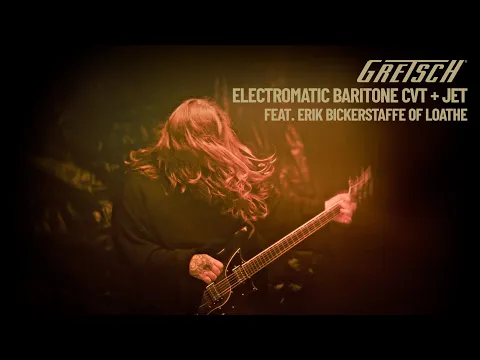
The Gretsch G5260 Electromatic Baritone offers a different flavor altogether. Sporting a solid mahogany body (and a 29.75-inch scale), it's equipped with Gretsch mini-humbuckers. These pickups are thicker than single-coils but brighter than standard humbuckers, making them perfect for Spaghetti Western soundtracks or moody indie rock.

4. ESP/LTD Baritones: Modern Metal Options
For players pushing high-gain amps, vintage specs won't cut it. ESP and their LTD line build absolute tanks at the low end.
Models favored by heavy players feature a 27-inch scale, mahogany bodies, and neck-thru-body construction for endless sustain. Crucially, they are often loaded with active pickups (like EMGs or Fishman Fluences) to ensure the low B or A tuning stays tight, focused, and punchy under high-gain distortion.

5. Alvarez Acoustic Baritones
Acoustic baritones face a physics problem: lower frequencies require more air to be pushed to be heard clearly.
The Alvarez AEBT70CE solves this by using a massive Jumbo body shape paired with a 27.75-inch scale length. Built with a solid AA Sitka Spruce top and mahogany back/sides, it produces a rich, cello-like acoustic tone that singer-songwriters love.

The Secret History: "Tic-Tac" Bass and Surf Rock
Long before modern alternative bands discovered the baritone, it was a staple of 1950s Nashville Country music.
Upright acoustic basses were famously difficult to record on early radio equipment—the low frequencies would often drop out entirely on car stereos.
Enter the "Tic-Tac" Bass technique. Session legends would use a Danelectro baritone to literally double the upright bass line. Played with a pick and heavily palm-muted, it created a sharp, percussive "click" that sliced right through AM radio mixes. You can hear this distinct sound clearly on classic tracks like Patsy Cline’s "Walkin' After Midnight" and Roy Orbison’s "Working for the Man".
Soon, that same twang crossed over into Surf Rock, cementing the baritone's place as the ultimate instrument for moody, reverb-heavy instrumentals.
4 Famous Baritone Tracks
- Glen Campbell – Wichita Lineman: The iconic, emotional guitar solo that breaks the song open? That’s Campbell working his magic on a baritone guitar.
- Duane Eddy – Kommotion: Released in 1960, this instrumental hit leans heavily on the unmistakable twang of a Danelectro baritone to drive its catchy hook.
- Van Halen – Spanked: Eddie Van Halen used a custom Music Man double-neck guitar for this sleazy, grinding riff—playing the main rhythm on the baritone neck and switching to the standard 25.5" neck for the solo.
- Frank Sinatra – The World We Knew (Over and Over): In this 1967 classic, a baritone guitar sits perfectly in the background, accentuating the root notes like a bass.




- +Extended low-end range enables massive ambient textures with effects
- +Distinctive tonal character across genres (country, surf, shoegaze, metal)
- +Longer scale maintains clarity in drop tunings without floppiness
- +Iconic models from Fender, Gretsch, Danelectro offer tonal variety
- +Perfect for cinematic, moody soundscapes and wall-of-sound production
- −Steeper learning curve due to longer neck reach
- −Fewer mass-market options compared to standard guitars
- −String sets and hardware less standardized than 25.5" guitars
- −Heavier low-end can muddy mixes without careful EQ and effects management
- −Not ideal for traditional blues or rock styles favoring standard scale
What's the difference between a baritone guitar and a standard guitar?
A baritone has a 27-inch scale length versus 24.75–25.5 inches on standard guitars. This longer neck accommodates lower tunings (B Standard or A Standard) without string floppiness. Both look similar; the difference is entirely in the neck length and tuning range.
Is the Fender Bass VI a baritone guitar?
No. The Bass VI is a six-string short-scale bass with a 30-inch scale, tuned one octave below standard guitar pitch (E-A-D-G-B-E). True Fender baritones like the Jaguar Baritone Special feature 27-inch scales and standard guitar tuning ranges, just lower.
What tuning do baritone guitars use?
The most common is B Standard (B-E-A-D-F♯-B), a perfect fourth below standard tuning. Some players tune even lower to A Standard (A-D-G-C-E-A). The 5th string on B Standard matches a regular guitar's low E.
Why are baritones popular in shoegaze and alternative rock?
Their extended low end stacks perfectly with fuzz, reverb, and flange pedals to create massive, wall-of-sound textures. The lower fundamental frequencies blend seamlessly into ambient effects chains that define the shoegaze aesthetic.
Keep browsing

Get this stuff first.
Leaks, deals and reviews in your inbox, once a week. No spam, just gear.