The Tone Arsenal: Inside Waves Crashing - Josh Calisti's Live Rig
Waves Crashing guitarist Josh Calisti reveals his live rig: Jazzmasters, tape saturation, fuzz walls, and the analog approach shaping their shoegaze sound.

Waves Crashing have been bringing their own brand of heavy, melody-driven shoegaze to the Olympia, Washington scene since 2019. Over the last four years, the trio has hit their stride, sharing stages with heavyweights like Ringo Deathstarr, Cloakroom, Wavves, and Lauren Lakis. Following the release of their May album In The Blur and its companion summer remix EP, the band is gearing up to drop a brand new single, "Stars," ahead of their first-ever UK tour this November.
Guitarist and vocalist Josh sat down with us to walk through the offsets, fuzz circuits, and tape saturation that shape the Waves Crashing sound, which draws heavily from 80s and 90s alternative pioneers.
"My main influences are in that 80-90's alternative realm," Josh explains. "Anything from early Smashing Pumpkins to The Jesus and Mary Chain... to New Order. I could listen to SP's Siamese Dream over and over (and sometimes do). It's the perfect album. Right now the track 'Mayonnaise' is pure genius to me and I often get lost in it."
The Guitars: Japanese Offsets and Custom Harnesses
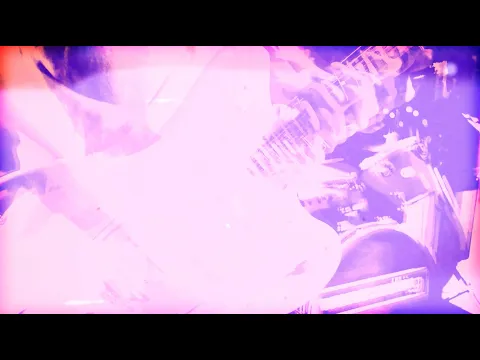
When it comes to guitars, the live sound relies heavily on offset bodies and custom-wired harnesses. Josh's rotation centers around three main guitars, primarily 90s and early 2000s Japanese Fender Jazzmasters, plus one very special "partsmaster."
"The Fender Japanese necks of the 90s and early 2000s are very easy to play with their very thin C-shape profiles," he notes. To handle the rigors of the road, the hardware is heavily modified, utilizing Mastery bridges and upgraded vibrato units.
For pickups, he stays local, relying on Tacoma, Washington's Lollar Pickups. "All 3 Jazzmasters have a Lollar 60's JM pickups in the neck and a Lollar Blademaster in the bridge. Together in the middle position is really the best configuration I have ever heard for a Jazzmaster. Clean, articulate with more output but still has that chime."
As a guitar tech himself, Josh handles all of his own wiring and soldering. "I do anything out of the ordinary besides just using quality parts and keep it clean in there so nothing breaks or when it does, it's easy to diagnose. I make sure all of them are grounded and shielded properly (which you'd be surprised how often that is not the case with guitars from the factory)."
His three main live guitars are set up for three distinct tunings: FACGCE, Drop C#, and Eb (Half-Step Down). When he's not using a Jazzmaster, he relies on a stock Fender Johnny Marr Signature Jaguar, which he considers "probably the best Jaguar model ever created in my opinion."

Amplification: The Mono Pedal Platform
While many shoegaze bands rely on complex stereo setups—and Josh does own a Roland JC-40 for exactly that—he takes a practical, road-ready approach for touring.
"I love stereo effects and have gigged in the past with a stereo rig... but it's not practical for live use or traveling for gigs. So my board is mono and in the front of the amp right now."
His amp of choice is a Marshall DSL40CR combo, upgraded with better tubes and a replacement speaker. For Waves Crashing, the amp serves one specific purpose: a massive, clean pedal platform.
"I just need an amp with well-rounded clean that has chime but is not brittle. More importantly, it takes big muff fuzz well," he says. "I love the clean channel. That is all I use it for. The dirt channels are average and the reverb on it is so subtle even dimed out you can barely notice it."
The Pedalboard: Tape Saturation and Fuzz Walls
Rather than relying on MIDI switchers or heavily automated workstations, Josh prefers an analog-minded, old-school approach. "As the years go on I try to keep it simple with a less is more approach. I think that guitar effects are often done with a lot of overthinking. There are a lot of products out there that are intriguing, but you can often get that same sound by combining your existing effects pedals in a different order."

Shaping the Tone
His core tone avoids traditional overdrive pedals entirely. "It's pretty clean or full on fuzz. That's my sound. I like the loud/soft dynamics of it."
To get that massive clean sound, he relies on a Strymon Deco. "I love a little tape saturation at the start like a pre-amp. The Strymon Deco is one of the best. I leave it all all the time as part of my 'clean tone'. It also makes my big muff sound even better with a lot of that saturation going in." He also leaves the Deco's doubler engaged to add a subtle width that "gives you a nice reaction on leads."

The Shoegaze Textures
For modulation and ambiance, his signal chain includes:
- Caroline Guitar Co. Météore: "It is perfect for anything gazey but it is strictly my before-fuzz reverb I use on all my leads. It never gets old for me."
- Oneder Burn Pile: A Muff-style fuzz/distortion with a clean blend. "For someone like us with one guitarist live, it's great to blend some of the Jazzmaster jangle into the full on fuzz wall. Almost sounds like there are two guitars there sometimes. Provides more depth and texture."
- Diamond Vibrato: A wonderful chorus/vibrato pedal that "doubles the speed when you hold down the footswitch. Again, simple but powerful."
- Strymon Cloudburst: A symphony-like shimmer reverb used for specific textures, like their live cover of Radiohead's "Creep."
- Boss Delay & Tremolo: Kept strictly manual with tap tempo.
To minimize tap-dancing, he uses a simple two-button loop switcher for his Météore and Fuzz pedal, since he turns them on and off together frequently mid-song. "I have several friends who run a lot of effects via midi in workstations etc. I have gigged with them and they are not for me. I like everything out in front of me... it's a fact that physical pedals and more analog or manual approach simple sounds better. More full and organic."
Dynamics and Delivery
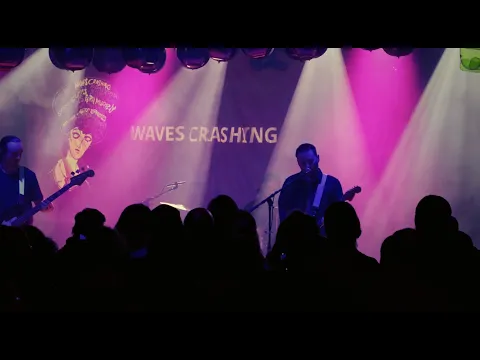
Josh’s playing style complements his loud/soft gear setup perfectly. "At a young age I've learned to hit the strings hard but be delicate on the attack," he explains. "I rarely break a string or pick. The only time I remotely get out of hand is at the end of set I may get aggressive with behind the bridge play for noise etc haha, but I think my fingers take more the abuse there."
To thicken his vocal delivery live, he incorporates a TC Helicon VoiceTone D1 doubler pedal. "I always keep coming back to it," he notes, praising its affordability and reliability on the road.
Shoegaze Dreampop Weekender #6
Catch Waves Crashing on their inaugural UK tour this November, anchoring 5 UK dates, including a performance at Shoegaze Dreampop Weekender #6 in London.
- Official Website & Tickets: wavescrashing.net
- Instagram: @wearewavescrashing
- Bandcamp: Waves Crashing
- Spotify: Waves Crashing
- TikTok: @wavescrashingband

What guitars does Waves Crashing's Josh Calisti use live?
Josh primarily uses three 90s and early 2000s Japanese Fender Jazzmasters, each tuned differently (FACGCE, Drop C#, Eb). All are fitted with Lollar 60's JM neck pickups and Lollar Blademaster bridge pickups, Mastery bridges, and upgraded vibrato units. He also uses a Fender Johnny Marr Signature Jaguar as backup.
What's the core of Josh Calisti's pedalboard tone?
A Strymon Deco provides tape saturation always-on as a preamp. For texture, he uses Caroline Guitar Co. Météore reverb, Oneder Burn Pile fuzz (with clean blend), Diamond Vibrato chorus, Strymon Cloudburst shimmer reverb, and Boss Delay/Tremolo—all kept manual and analog-minded.
Why does Josh avoid stereo and MIDI setups?
He prioritizes simplicity and organic sound for touring. He states: "Physical pedals and a more analog or manual approach simply sounds better. More full and organic." His mono board runs in front of a Marshall DSL40CR, eliminating complexity for live reliability.
Keep browsing

Get this stuff first.
Leaks, deals and reviews in your inbox, once a week. No spam, just gear.