Warm Audio Dan Auerbach Peach Fuzz Review: Vintage Chaos with Modern Control
Warm Audio's Dan Auerbach Peach Fuzz delivers '70s Foxx Tone Box chaos with modern switching. NOS transistors, Germanium diodes, octave footswitch, & peach velvet flock!

The Warm Audio Peach Fuzz—developed in collaboration with Dan Auerbach of The Black Keys—takes the legendary, searing aggression of the '70s Foxx Tone Box circuit and packages it into a surprisingly gig-friendly footprint. Wrapped in a wild, peach-hued flocked velvet enclosure, this pedal isn't trying to be a polite, transparent overdrive or a polished modern high-gain fuzz; it is an unapologetic, vintage tone monster through and through.
Build Quality, Aesthetics & Puss?
Warm Audio kindly provided Guitar Bomb with their latest fuzz pedal for us to check out, with the understanding that we'd pull no punches and test it rigorously.
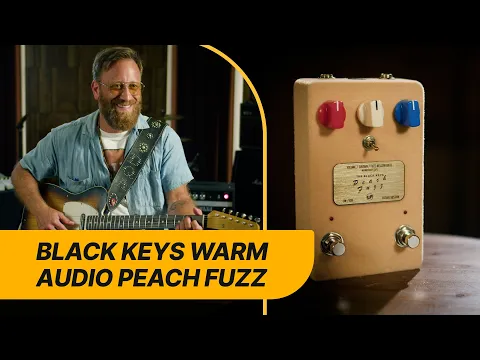
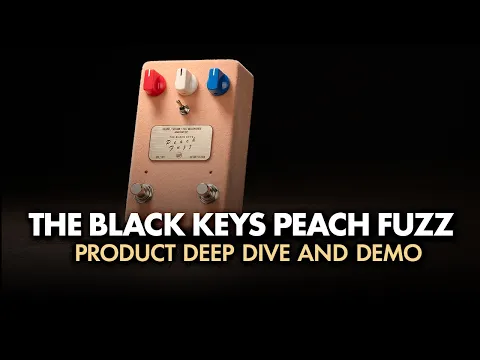
Beyond the eye-catching shag velvet-like exterior that pays homage to classic '70s "flocked" fuzzes, the Peach Fuzz feels solid and well-engineered. Inside, Warm Audio loaded the circuit with premium components, including NOS Fairchild 2N3565 transistors, 1N34A Germanium diodes, high-watt carbon resistors, and film capacitors.
I showed my girlfriend this pedal because I thought she would appreciate its peach-fuzzy look. She misread the name as "Peach Puss," and that name stuck with me throughout this review. Apart from the 'in-house' renaming, the rest of my review went well.
This vintage-voiced fuzz pedal runs on either a modern power supply (yay) or a 9 V battery, and I opted for the latter, since I like seeing how fuzz pedals react on battery whenever that is an option. However, I later ran it through a few power supplies to test it, and it worked either way flawlessly.
The build is solid, the switches feel robust, and the control knobs have enough resistance to feel premium. I was a little concerned about the toggle switch, which sets the second footswitch to momentary, as I thought I would kick it accidentally, but that was never an issue in use.

Tone, Neck Tracking & Touch Dynamics
Running the Peach Fuzz through several of my tube amps and different guitar setups reveals just how interactive and dynamic this circuit truly is:
- Guitar Control Sensitivity: Unlike many blunt-force vintage fuzzes, the Peach Fuzz responds heavily to your guitar's volume and tone controls. Rolling back your volume cleans up (more tames the gain) the fuzz into a gritty, dynamic crunch, while adjusting your tone knob drastically shapes the octave-generation frequency response.
- Fretboard Tracking: The octave-up character depends heavily on position. Play rhythm riffs lower on the neck, and you get thick, raspy '70s fuzz. Move past the 12th fret—especially with your neck pickup and the tone pot backed off—and the octave overtone pops out with singing, vocal clarity and screaming sustain.
The pedal has that vintage fuzz quality, so when you aren't pushing hard enough to trigger it, it stays pretty quiet, with no buzzing or hiss, even when you crank the amp. This can be useful for riffs, etc. It lets you do that solo thing, but it won't sustain forever unless you are really digging in or adding aggressive vibrato.
I own many fuzz pedals, and I could use this one in a band situation or in the studio because it has character. My current go-to vintage-voiced modern octave fuzz is an Orange Fur Coat or the Voodoo Labs Proctavia. The Peach Fuzz offers enough difference that I could easily justify owning one.
It was well worth playing with the three control knobs, as you can go mellow or full-on dirty, with lots of useful tones in between. The octave switch really opens up this fuzz pedal's versatility. I had a lot of fun switching it in and out for riffs and other parts.
This could be a great studio tool or a standout voice for parts of a song when playing live.

Ease of Use
Three different-colored knobs are really useful: red is Volume, white is Sustain (fuzz), and blue is Fuzz Mellow Brite (tone). The writing on the pedal is small; my eyes aren't what they once were, and after the 'Peach Puss' earlier incident, it would be impossible to read this pedal whilst on stage anyway, so the knob colors really help.
I can't overstate how useful the extra octave switch is for a player like me. If you need to take a solo and want that singing upper octave, kicking it in when required is a great option. The old Foxx Tones never had this, so it is well worth the extra for that added feature.
My love of fuzz pedals does border on addiction, so I have many, many of them to choose from. This one has a great flavor, and I found it worked in lots of my setups. It played ball with my J Mascis Jazzmaster, my '60s Telecaster, and a Supro Dual-Tone, and it didn't wig out when I switched to my Telecaster with Wide Range humbuckers and my 77 Les Paul Custom.
It is pretty versatile if you like vintage fuzz tones.
Control Breakdown & Features
| Control | Functionality & In-Use Feel |
| Volume & Sustain | Generous output headroom to push an amp's front end. The Sustain sweep covers everything from light vintage breakup to wall-of-sound fuzz chaos. |
| Mellow / Brite | Acts as a crucial voice shaper. Mellow tames the top-end harshness for thick, woolly riffing, while Brit pushes upper-mid bite to cut through a dense band mix. |
| Latching vs. Momentary Octave | A standout feature on stage. The Octave switch can operate as a standard latching toggle or a momentary hold, letting you step in for quick octave-up stabs during solos without leaving it engaged for the whole song. |
The Verdict
The Warm Audio Peach Fuzz nails the raw, uninhibited charm of '70s psychedelic and garage-rock fuzz. It is extreme, rude, and retro, but modern switching options (especially the momentary octave hold) and premium internal components make it far more practical on a modern pedalboard than fragile vintage originals.
My only gripe: that lovely peach color will get dirty after a few shows, so be prepared to own a moldy peach fuzz if you gig regularly.
As a guitarist who already owns crates full of old and new fuzz pedals, I would happily add this limited edition one to my collection in a heartbeat. Turn up your amp and get down and dirty with this peach!
If you love classic Foxx-style octave fuzzes, Dan Auerbach's riff tones, or simply want a highly expressive fuzz that responds directly to your playing dynamics and fretboard placement, this pedal is well worth checking out.
Price-wise, it is about $50-ish more than the regular Warm Audio Foxy Tone Box Fuzz pedal, but if you need that extra octave footswitch, it is worth it. I also really appreciate the updated layout, as it's much more user-friendly than the more vintage-accurate Foxy Tone Box.
These are a limited run, so I'm guessing they won't be around forever, which is a shame, since the updates make this vintage-voiced fuzz much more usable in modern guitar setups. If you like some vintage fuzz filth, this peach provides.
MSRP - $199.00/£199.99
Thank you to Warm Audio for providing the unit for review.
- +Expressive touch dynamics responding to guitar volume and tone controls
- +Fretboard position directly affects octave tracking and character
- +Momentary octave footswitch for solo stabs without leaving it engaged
- +Premium NOS germanium components and solid construction
- +Versatile across different guitar types and pickup configurations
- +Color-coded knobs aid stage visibility and quick adjustments
- + 5-year warranty
- −Small text difficult to read on stage
- −Peach velvet finish gets visibly dirty after regular gigging
- −Gated fuzz behavior requires aggressive playing or vibrato for long sustain
- −Approximately $50 more than standard Foxy Tone Box pedal
How does the Warm Audio Peach Fuzz compare to the regular Foxy Tone Box?
The Peach Fuzz adds a dedicated octave footswitch with momentary/latching modes, improved layout for stage use, and premium NOS transistors. It costs about $50 more but offers better user-friendliness and the practical octave toggle missing from the vintage-accurate Foxy Tone Box.
Does the Peach Fuzz work well with different guitar types?
Yes. The pedal responds to guitar volume and tone controls, tracking well across neck pickups, wide-range humbuckers, and single-coils. It proved versatile with a J Mascis Jazzmaster, '60s Telecaster, Supro Duo Tone, and other setups without unwanted noise or feedback.
What makes the octave function different from other fuzz pedals?
The octave-up character depends heavily on fretboard position and pickup selection. Play low on the neck for thick '70s fuzz; move past the 12th fret with the tone pot backed off and you get singing, vocal-clarity octave overtones with screaming sustain.
Is the peach velvet finish practical for gigging?
The flocked velvet enclosure looks striking but will get visibly dirty after regular shows. Be prepared for a moldy appearance if you gig frequently, though it doesn't affect tone or reliability.
Keep browsing

Get this stuff first.
Leaks, deals and reviews in your inbox, once a week. No spam, just gear.