Was the TC Electronic G-System Too Perfect for a Sequel?
Why TC Electronic never made a G-System 2: exploring the perfect integrator that solved its own problem.

The music gear industry thrives on sequels. From pedals to digital modelers, manufacturers routinely churn out "Version 2" or "Mark III" iterations to keep product lines alive. Yet, every so often, a revolutionary piece of hardware hits the market, dominates its niche, and then completely vanishes from the catalog without a successor.
When TC Electronic dropped the G-System in 2005, it was hailed as a masterpiece of rig integration. It bundled world-class digital processing, intricate loop switching, MIDI mapping, and amp control into a single, bulletproof floorboard.
At the time, I worked in studio recording and also fitted out studios. This unit got a lot of buzz when it launched and was being used by touring musicians worldwide by 2006/7.
Today, decades after its debut, a true second-generation model remains entirely absent. Writing this off as a casualty of aging technology or the rise of amp-less modeling misses the bigger picture. The real reason the G-System lineage stalled lies in the exact, highly specific problem it was engineered to conquer.
In this article, I explain why I think the G-System never got a Version 2 and why those reasons still matter twenty years after its initial release.
The Three Philosophies of Rig Building
To understand this unit's unique place in history, look past the generic "multi-effects" label. Grouping all large pedalboards together turns the conversation into a superficial debate over feature counts. The defining question in any complex guitar rig is which piece of gear forms the core of your tone.
Modern rig design generally falls into three distinct camps:
- The Modeler (The Device as the Star): Think of all-in-one digital units. The amplifier and speaker cabinet exist purely as software algorithms inside the box. You plug into a PA system, and the tone is instantly ready.
- The Switcher (The Pedals as the Star): In this setup, the player relies on a curated collection of, for example, boutique analog pedals. A programmable loop switcher acts as the manager, dictating signal flow and keeping tap-dancing to a minimum, but the pedals themselves generate the magic.
- The Integrator (The Amplifier as the Star): Here, a traditional tube amp is the undisputed heart of the sound. The floor unit's job is strictly to serve that amplifier by managing spatial effects, routing external overdrive pedals, and switching amp channels seamlessly.
TC Electronic engineered the G-System explicitly for this final camp. It was built for purists who loved their vacuum tubes and simply wanted a smarter way to control them.
Shrinking the 90s Rack Experience
Before floor-based integrators existed, the "amp as the star" philosophy required massive, refrigerator-sized rack systems.
During the 1990s, players connected standalone preamps, power amps, discrete modulation units, and MIDI interfaces with miles of cabling. TC Electronic was a titan of this era, producing studio-grade rack processors like the G-Force and G-Major. These units sounded immaculate, but they demanded high technical expertise and a separate foot controller to operate.
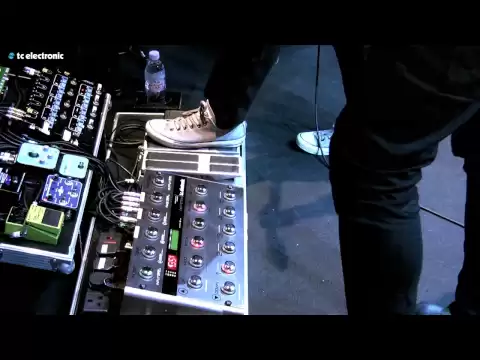
The G-System brilliantly condensed that entire ecosystem into a single product. Featuring a tank-like aluminum chassis and 18 heavy-duty footswitches, it merged the brains of a rack unit with the practicality of a pedalboard. In a clever homage to its studio roots, the main DSP brain could actually be unscrewed, mounted in a rack case next to your amplifier, and tethered back to the foot controller via a standard Ethernet cable.
I've seen a lot of guitarists exploring (myself included) 1980s and 1990s rack gear the last few years, as it is now affordable (for the most part) and plentiful on the used market.
This also means you can pick up a G-System for a fraction of the original cost, and if you know what you're doing, it's still a pretty potent system in 2026. Yes, there are limitations, but like any old gear, if it is well made and has the sounds you like, then it is more than usable today.
I recently picked one up myself, since I previously bought a TC Nova (also a great budget unit on the second-hand market) and wanted to explore beyond that system.

The G-System's Four-Cable Method Architecture
The G-System's true genius lay in its signal-routing architecture. It was built to honor the physical laws of audio clipping.
When you push a tube amp into overdrive, it creates harmonic distortion. If you place a delay or reverb pedal before that distortion, the echoes become clipped, creating a muddy, chaotic wash of noise. Modulation and time-based effects belong after the preamp, while wahs, compressors, and overdrives belong before the amplifier.
To accommodate this, the G-System was designed around the four-cable method. It featured:
- Four independent, true-bypass analog loops with dedicated 9V power to seamlessly patch in your favorite stompboxes before the amp.
- A dedicated "insert loop" meant specifically to isolate your amplifier's preamp stage.
- Pristine, 24-bit studio-quality digital delays, reverbs, and modulations positioned post-preamp.
With a single stomp, a guitarist could activate an analog tube screamer in loop one, switch their physical amplifier from the clean channel to the lead channel via onboard relays, and bathe the entire signal in a lush digital delay.
The Stealth Upgrades: A Tale of Three Buffers
While the G-System never officially received a "V2" product name, TC Electronic was quietly refining the hardware behind the scenes. Because the integrator was designed to be the very first thing your guitar plugged into, the input section's impedance loading was critical to preserving tone.
Over its lifespan, the GFX-01 processing brain went through three distinct hardware generations, easily identified by looking at the serial number.
- 1st Generation (Serial #6537538 and lower): These feature the original input buffer design. While functionally brilliant, this early buffer tended to negatively load certain passive guitar pickups, subtly robbing the signal of its high-end sparkle. To counteract this "tone suck," tone-conscious players often placed a dedicated, high-quality external buffer pedal directly in front of the unit.
- 2nd Generation (Serial #6537539 to 6539340): Acknowledging the input impedance issues, TC engineers redesigned the front end. This updated circuitry debuted on the striking "Red Limited Edition" G-System, but the improved specs were eventually rolled into the standard silver production models in this serial number range.
- 3rd Generation (Serial #6539340 and higher): The final and most coveted hardware iteration. This era featured an entirely revamped, high-headroom input section derived from the sleek, highly sought-after black "iB Modified" G-System; however, the standard silver versions with this serial number are also carrying that upgrade. This final revision offered perfectly optimized loading characteristics for all pickups, completely eliminating the need for an outboard buffer and preserving the guitar's natural tone flawlessly.
This quiet, under-the-hood evolution proves that while the G-System's core routing philosophy was perfect from day one, its physical circuitry required a few tweaks over the years to fully realize that vision.
My recent purchase falls under the last batch of serial numbers (If you are looking at a silver unit with a serial number above 6539340, it officially carries the iB Modified circuit update), and so it has that high-headroom buffer upgrade. Which, in my opinion, sounds absolutely fine, and when I'm playing it through a 50-watt tube amp stack, it works perfectly.
The Unseen Barriers to a Successor
If this unit offered such flawless control, why did TC Electronic never build a G-System 2? The answers lie in shifting industry trends and the hidden costs of complex hardware.
These tour-worthy units are rock-solid and heavy, with high-quality hardware throughout. They are also loaded with high-end effect algorithms from a studio-style 19" rack, and not just copied, modeled versions of effects.
The Hidden Cost of Complexity
Modeling amps are incredibly easy for retailers to sell: you plug in a guitar, and a finished tone comes out. The G-System, however, came with a massive barrier to entry. To even explain its value, a salesperson had to educate the customer on serial vs. parallel effects loops, the physics of preamp distortion, and the intricacies of MIDI control.
The demographic of players with this technical knowledge—and the budget for high-end gear—was incredibly niche.
The Rise of the Silent Stage
By the 2010s, the live music and recording landscape had shifted dramatically. Guitarists began leaving their heavy tube amps at home in favor of direct-in (DI) solutions, impulse responses (IR), and in-ear monitors. The G-System demanded a strict set of prerequisites: you needed to own a fantastic amp with a transparent effects loop, and you needed the logistical means to transport a heavy, multi-piece rig to every gig.
As the market gravitated toward ultra-portable, amp-less solutions, the target audience for a massive analog-digital integrator shrank.
A Problem Already Solved
Perhaps the most compelling reason for the lack of a sequel is that the fundamental routing problem had already been solved. Adding a faster processor or more memory to a hypothetical G-System 2 wouldn't change the underlying architecture. The original unit already consolidated every necessary switching decision into a single foot press. Once you reach that level of operational perfection, the blueprint doesn't need rewriting.
Why Did I Buy a G-System?
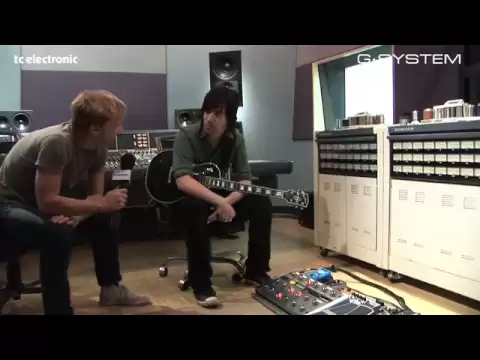
My purchase was based on two main experiences: I have owned the TC Electronic D-Two rack delay in my studio in the past and liked the character of the delays. Then last year I picked up a TC Nova System for a song, and have been exploring that unit in my studio.
I also picked up the extra three-button footswitch for that one, to expand the functionality. This then sent me on a quest to hunt down a G-System.

The G-System I had seen toured in the past by players including Pete Thorne, who at the time used one live with Chris Cornell. Plus, players like Steve Sevens, Steve Vai, and Steven Wilson (Porcupine Tree) used them, which meant they were pro-level gear for guitarists at the time (especially ones named Steve).

When these were originally built, TC was based in Denmark and was really pushing the gear market forward with high-quality products. Now they are part of Music Tribe (Behringer) as of 2015 and no longer have the same team.
Yes, they are old, and I know that, but I also have effects pedals from the 60s and 70s, and I still use those.
My personal reasoning is that I like to play with guitar and studio equipment, which is out of vogue and has fallen out of favor. Plus, I can get modern modeling and FX for free with systems like TONE3000's Neural Amp Modeler.
These older pieces of 'forgotten gear' are now priced so low that they make for a useful tool for getting creative, especially in the studio.
I highly recommend the Facebook Group below for resources, as they host many of the old files, including the Laird Williams White Paper on the G-System.
TC Electronic G-System Users Facebook Group
An Inherited Legacy
While TC Electronic eventually pivoted toward single-function, compact pedals with their TonePrint series, the core philosophy of the G-System never actually died—it just migrated to other brands.
Competitors recognized the enduring value of the "amplifier as the star" approach and adapted the format for modern players. Line 6 released the HX Effects, leveraging their flagship DSP purely for effects and routing without forcing amp models onto the user. Fractal Audio introduced the FX8, catering specifically to the four-cable method crowd. BOSS brought the MS-3 to market, offering a scaled-down hybrid of loop switching and built-in effects.
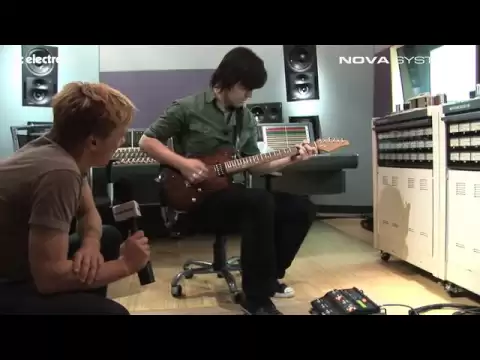
TC Electronic even released the Nova System I mentioned earlier, a streamlined floorboard that included an analog overdrive circuit for players who wanted G-System-style effects but didn't have an amp with channel switching. Plus, a version specifically for acoustic guitars, called the G-Natural.
Ultimately, the G-System's lineage didn't end; it really just fragmented and became the foundation for modern rig integration. I feel it stands as a unique piece of gear that accomplished exactly what it set out to do, so comprehensively that a sequel simply wasn't necessary.
Let me know if you still use a G-System over on r/GuitarBomb. I'll explore more used and older gear in future articles.
If you enjoyed this, then I would also recommend A Brief History of Tube Overdrive Pedals: Classics vs. Modern by our guest writer Jerome Conreen.
- +Perfectly implements four-cable method routing for tube amp-centric rigs
- +Studio-quality 24-bit digital effects with no degradation
- +Comprehensive MIDI control for amp integration
- +Bulletproof aluminum construction
- +Modular design allows GFX-01 brain to mount separately in rack
- +Three hardware generations show continuous refinement
- −Steep learning curve requires technical knowledge of signal routing
- −Demands compatible amp with transparent effects loop and channel switching
- −Heavy and impractical for modern portable touring setups
- −Target market shrank as industry shifted to amp-less modeling
- −1st and 2nd generation units have (barely noticeable at volume) buffer impedance issues affecting tone (if you are a tone snob)
What is the TC Electronic G-System and what does it do?
The G-System is a floor-based integrator released in 2005 that manages complex guitar rigs by serving a tube amplifier as the core tone source. It features four independent analog loops, MIDI amp control, and 24-bit digital effects for post-preamp processing, implementing the four-cable method in a single unit.
Why was there never a G-System 2?
TC Electronic never made a sequel because the original unit's architecture solved its design problem completely. The fundamental routing philosophy didn't need rewriting—adding faster processors or more memory wouldn't improve operational perfection. Additionally, the target market shrank as the industry shifted toward amp-less modeling and portable solutions.
What are the three hardware generations of the G-System?
The original 1st generation had input buffer issues causing tone suck on passive pickups. The 2nd generation (Red Limited Edition onwards) addressed this with redesigned front-end circuitry. The 3rd generation (final revision) featured a high-headroom input section from the black iB Modified version, eliminating buffer issues entirely.
Is a used G-System still worth buying in 2026?
Yes. If well-maintained and purchased at current used prices, the G-System remains a capable studio and live tool for players committed to tube amps. Its routing architecture and effects quality hold up today, especially the 3rd generation models. However, it requires technical knowledge and a compatible amp with effects loops.
Keep browsing

Get this stuff first.
Leaks, deals and reviews in your inbox, once a week. No spam, just gear.